
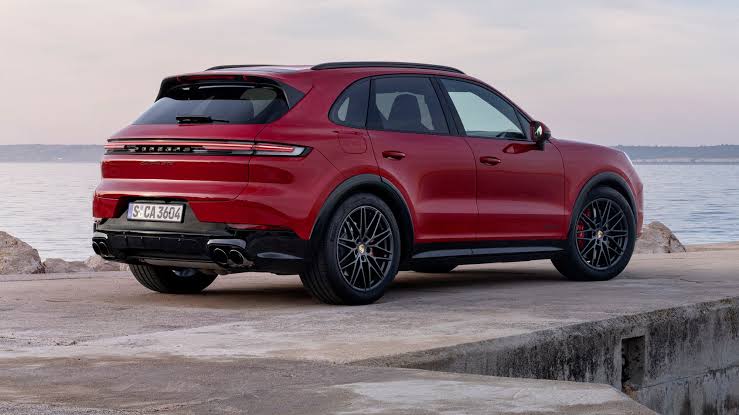
The Porsche Cayenne is one of the most common luxury SUVs on Dubai roads, and one of the most misunderstood when it comes to maintenance. It is built to sports car tolerances but carries over two tonnes, tows, sits in traffic and spends most of the year in ambient temperatures above 35°C. That combination is what drives Cayenne repair bills, far more than mileage does.
Most Cayenne owners in the UAE are not dealing with worn-out engines. They are dealing with plastics, adhesives, seals and rubber that have been heat-cycled thousands of times. Understanding that one point explains almost every fault listed below, and explains why prevention on a Cayenne is mostly about fluids, cooling and inspection rather than replacing parts on a schedule.
This guide covers the common Porsche Cayenne problems by system, why each one happens, what the repair actually involves, indicative costs at a specialist Porsche repair workshop in Dubai, and what prevents them.
Cayenne Generations and Why They Fail Differently
Before any diagnosis, identify the generation. The faults are not shared.
The 955 and 957 (2003–2010) use the M48 4.5 and 4.8 V8. These are the cars with the notorious plastic coolant pipes, coolant tee failures and, on 4.8 units, cylinder bore scoring.
The 958 and 92A (2011–2018) brought the 3.6 VR6, the 4.8 twin-turbo, the diesel and the S E-Hybrid, along with the ZF 8-speed and a transfer case that becomes a known wear item.
The 9Y0 (2018 onward) uses the EA839 3.0 V6, the 2.9 biturbo and the 4.0 hot-V twin-turbo V8, with multiple separate cooling circuits, 48V systems on some models and far more electronic control over suspension and cooling.
A workshop that does not ask which generation you have before quoting is guessing. Model-specific work is handled on our Porsche Cayenne service page, and the same generational logic applies across the Macan, Panamera and 718 ranges.
Porsche Cayenne Coolant Pipe and Water Pump Problems
This is the single most expensive avoidable failure on early Cayennes. The V8 coolant pipes sit inside the engine V, and the factory joints are plastic sections bonded with adhesive. Under repeated heat soak the adhesive releases, and coolant dumps into the valley with almost no warning. The correct repair is not another plastic pipe — it is a full aluminium pipe conversion, which requires the intake to come off and, on many cars, the engine to be lifted.
Water pumps fail separately, usually through a cracked plastic impeller or a weeping shaft seal, and thermostats stick open or closed after years of thermal cycling. Sand and dust packed behind the radiator and condenser stack makes all of this worse by reducing airflow, so a Cayenne that reads slightly hot in summer traffic often just needs the cooling stack cleaned from behind.
Expect roughly AED 6,000–12,000 for a full aluminium coolant pipe job depending on generation and access, AED 2,500–5,000 for water pump and thermostat replacement with a proper coolant fill and bleed, and AED 800–1,800 for radiator stack cleaning and a pressure test. Related cooling costs are broken down in our guide on car radiator repair cost in Dubai.
Prevention: change coolant every three years rather than leaving it “lifetime”, pressure test the system at every major service, and treat any pink or orange residue under the car as urgent.
Porsche Cayenne Oil Leaks: Cam Covers, Seals and Coolers
Oil leaks on a Cayenne are normal with age, but chasing the visible drip is the mistake most workshops make. The first check is crankcase pressure. If the oil separator or PCV system is blocked, internal pressure pushes oil past healthy seals, and a resealed cam cover will leak again within months.
Once pressure is confirmed normal, the usual sources are cam cover gaskets, the VarioCam solenoid seals, the oil cooler seals, the oil filter housing and, in worse cases, the rear main seal. On V8 Cayennes several of these are engine-out or engine-lifted jobs, which is where the labour cost sits.
Indicative costs run AED 3,500–7,000 for cam cover resealing, AED 1,500–3,000 for oil cooler or filter housing seals, and AED 8,000–15,000 for a rear main seal once gearbox removal is included. A UV dye test plus degrease and drive cycle, which is the only reliable way to identify the source, is a fraction of that. Routine Porsche oil change service is the point at which most of these leaks should be caught early.
Prevention: use the correct Porsche-approved oil grade, do not extend intervals in Dubai heat, and have the crankcase ventilation checked at every service.
Cayenne Engine Problems: Carbon Buildup, Timing Chains and Bore Scoring
Direct injection engines, including the VR6 and the EA839 family, build carbon on the intake valves because no fuel washes over them. Symptoms are rough cold starts, misfires and a slow loss of throttle response. The fix is walnut blasting the intake ports, typically AED 2,500–4,500, and it is maintenance rather than repair — plan it around 80,000–100,000 km.
Timing chain tensioners and guides are the second concern, particularly on 4.8 V8 units. A rattle on cold start that lasts a second or two is the warning. Ignoring it risks valve-to-piston contact. Chain and guide work sits around AED 12,000–25,000 depending on how far into the engine the job goes.
Cylinder bore scoring on the 4.8 V8 is the most serious Cayenne fault. It shows as rising oil consumption, a ticking noise when warm and eventually misfires on the affected cylinder. It is diagnosed with a borescope through the plug holes, and the only real fix is a rebuild or replacement engine, which is a five-figure job. Any pre-purchase inspection on a 957 should include a borescope check — that is exactly the kind of check covered in a proper pre-purchase car inspection. Deeper engine work is handled through our engine repair department.
Cayenne Transmission and Transfer Case Problems
The ZF 8-speed and earlier Aisin units are strong, but “lifetime” fluid is a marketing term, not an engineering one. In UAE conditions the fluid oxidises and the symptoms follow a pattern: a shudder at light throttle around 60–80 km/h from the torque converter lock-up, a delay engaging Drive, or harsh 1–2 shifts. A fluid and filter service at AED 1,500–3,000, done every 60,000–80,000 km, prevents most of it.
The transfer case is the bigger cost. Cayennes drive the front axle through a chain and an electronically controlled clutch pack, and worn chains or a failing actuator motor produce a whine, a shudder on tight turns or a drivetrain warning. Replacement or rebuild runs AED 8,000–18,000. Mismatched tyre sizes across axles accelerate this failure faster than anything else, so keep tyres matched and rotated through proper tyre servicing. Gearbox diagnosis and repair is covered on our Porsche transmission repair and gearbox repair pages.
Porsche Cayenne Air Suspension and PDCC Problems
Air springs fail in Dubai for a specific reason: the rubber bellows lose plasticiser in the heat, and fine silica sand works into the rolling lobe and abrades it from the inside. The result is a car that sits low overnight, a compressor that runs constantly, and eventually a compressor that burns out from the extra duty cycle.
The order of failure matters. Replacing a compressor without replacing the leaking bellows kills the new compressor. Expect AED 3,500–6,000 per air strut, AED 2,500–4,500 for a compressor with a new dryer, and AED 1,200–2,500 for a valve block or level sensor.
Porsche Dynamic Chassis Control adds hydraulic anti-roll bars with their own pump and lines, and a PDCC leak is routinely misdiagnosed as an engine oil leak because the fluid appears in the same area. PDCC repairs range from AED 6,000–15,000. Full details on our Porsche suspension repair page, with related steering work covered under Porsche steering repair.
Cayenne Brake and AC Problems
Brakes wear faster on a Cayenne than owners expect because of weight and stop-start traffic. Front pads and discs together typically run AED 3,000–6,000 in steel, while ceramic composite brakes are several times that and must never be fitted with standard pads. Wear sensors are single-use and should be replaced with every pad set.
Air conditioning failures are usually the condenser or the compressor. The condenser sits at the front of the stack and takes stone and sand damage; the compressor fails from age and low refrigerant charge running the system dry. A regas alone on a leaking system is money wasted — the leak must be found with dye or nitrogen first. Compressor replacement is typically AED 4,500–8,000, condensers AED 2,500–4,500. See our car AC repair, brake repair and Cayenne AC and brake service pages.
Cayenne Electrical and Battery Problems
Batteries in the UAE last 24–36 months, not five years. A weak battery on a modern Cayenne does not just fail to start the car — it triggers suspension faults, transmission adaptation loss and random warning lights that look like expensive problems. Any Cayenne diagnosis should start with a load test, not a scan.
Replacement batteries must be coded to the vehicle so the energy management system charges them correctly. An uncoded battery is undercharged from day one and fails early. Battery supply, fitting and coding is typically AED 1,200–2,500.
Porsche Cayenne Service Schedule for Dubai Conditions
Porsche’s published intervals assume European climate. In the UAE, shorten them:
- Engine oil and filter: every 10,000 km or annually, whichever comes first
- Brake fluid: every 2 years
- Coolant: every 3 years, with a pressure test
- Transmission fluid and filter: every 60,000–80,000 km
- Transfer case and differential fluid: every 60,000 km
- Spark plugs: every 40,000–60,000 km on turbo engines
- Air and cabin filters: every 10,000–15,000 km due to dust
- Air suspension inspection: annually after year five
Routine servicing at these intervals is what separates a Cayenne that costs a few thousand dirhams a year from one that costs tens of thousands. Standard servicing is covered under oil change services.
How to Avoid Expensive Cayenne Repairs
Keep the cooling system clean and its fluid fresh, because heat is the root cause of most Cayenne failures. Do not accept “lifetime” fluid claims on transmission, transfer case or coolant. Fix small leaks before they become engine-out jobs. Replace air springs in pairs and before the compressor fails. Keep tyres matched to protect the transfer case. Have the battery load-tested every year and coded when replaced. And before buying any used Cayenne, insist on a borescope check on 4.8 V8 cars and a full underbody fluid inspection.
Carzilla is a Porsche specialist workshop in Al Quoz, Dubai, with factory-level diagnostics and generation-specific repair procedures for every Cayenne from the 955 to the 9Y0. To discuss a specific fault or book an inspection, contact our team.