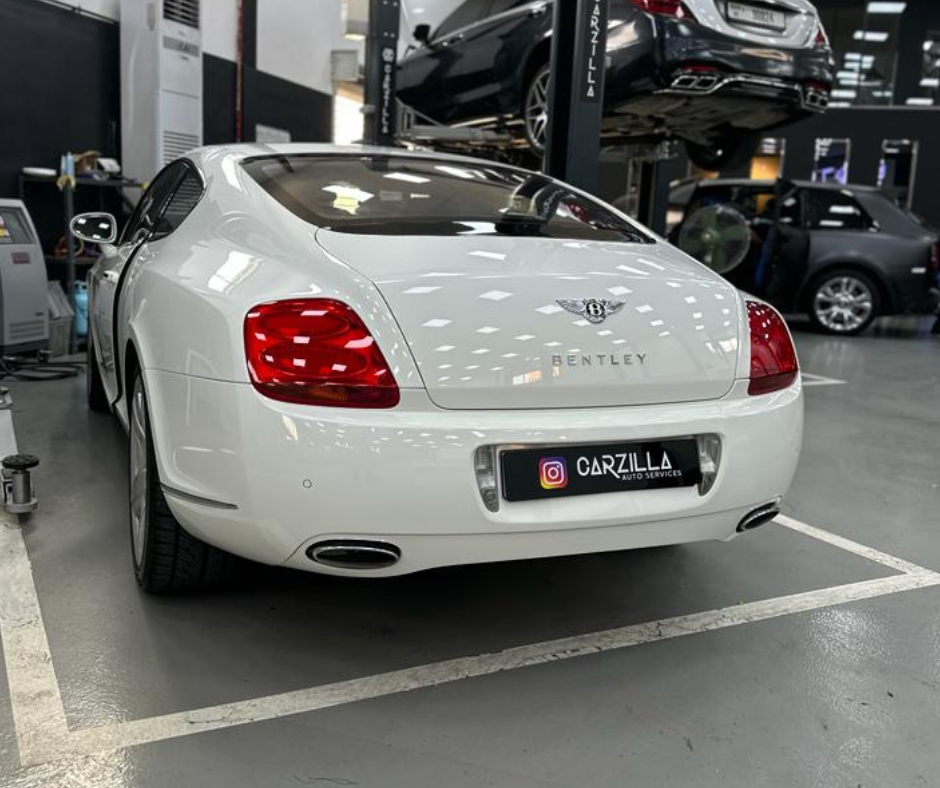
The Continental GT is a heavy car. Depending on the generation and engine, it sits between roughly 2,200 kg and 2,450 kg, and all of that mass is carried on air springs rather than steel coils. That single design choice explains almost every suspension complaint Bentley owners bring into a workshop in Dubai: the system is doing more work, in worse conditions, than the equivalent setup on an ordinary car.
This guide explains how the Continental GT suspension is built, what actually fails, why it fails faster here than in Europe, how a proper diagnosis is carried out, and what to look for before you approve any Bentley suspension repair work.
How the Bentley Continental GT Suspension System Works
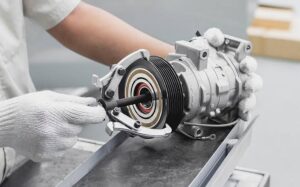
Every Continental GT uses four-corner air suspension with electronically adjustable dampers. Instead of a steel spring, each corner has a rubber air bellows wrapped around a piston. An electric compressor feeds air through a dryer and a valve block, and the valve block sends air to each corner individually. Ride height sensors at each wheel tell the control module where the body is sitting, and the module adds or vents air to keep it there.
The dampers are separate from the springs electrically. They contain a solenoid that varies the oil flow inside the damper, changing how firm the car feels, and this changes with speed, drive mode and steering input.
Two things follow from this. First, the system holds the car up by air pressure alone, so a leak of a few millimetres in the wrong place will eventually put the car on its bump stops. Second, because the compressor, the valve block, the sensors, the dampers and the springs all talk to one control module, a single failed component often triggers a general “suspension fault” message that tells you nothing about which part is at fault.
Continental GT Suspension Differences by Generation
Generic advice is where most suspension diagnosis goes wrong, because the hardware is not the same across the model’s life.
First generation (2003–2011)
The original Continental GT and GT Speed use air struts that combine the bellows and damper in one assembly at each corner, with continuous damping control. These cars are now old enough that rubber age, not mileage, is the main failure driver. A 60,000 km first-generation car in Dubai will often need air springs before a 150,000 km European example.
Second generation (2011–2018)
Mechanically similar but revised, with wider tracks, retuned damping and lowered ride height on Speed models. Failure patterns match the first generation, though the electronics are more sensitive to low battery voltage.
Third generation (2018 onward)
Built on a newer platform, this car uses three-chamber air springs. Each spring can open or close internal chambers to change the effective spring rate, which is why the difference between Comfort and Sport is far larger than on the older cars. Many are also fitted with a 48-volt active anti-roll system, which is a completely separate assembly from the air suspension. This is the single most common misdiagnosis on modern Continentals: body roll or a firm ride can come from the active anti-roll actuators while the air system is working perfectly.
Common Bentley Continental GT Suspension Problems
Air spring leaks. The most frequent fault by a wide margin. The bellows folds and unfolds every time the wheel moves, and the fold line is where cracks eventually appear. The classic sign is one corner sitting low after the car has been parked overnight, then levelling itself within a minute of starting.
Compressor failure. A compressor rarely dies on its own. It dies because a leak somewhere else made it run far more than it was designed to. It overheats, the thermal protection cuts in, ring and bore wear increases, and output pressure drops until the car will not lift at all. Replacing the compressor without finding the original leak simply repeats the failure.
Valve block and air line faults. Solenoids in the valve block can seep internally, letting a corner bleed down or letting two corners cross-feed. The plastic air lines and their push-fit collets also leak, usually where a line has been disturbed during other work or chafed against the body.
Damper faults. Adaptive dampers fail in two ways: mechanically, by weeping oil and losing control, or electrically, when the solenoid or its wiring goes open circuit. The second sets a fault code and often locks the car into its firmest setting.
Ride height sensor and link failure. The sensors are connected to the suspension arms by small plastic drop links. When one breaks, the module receives an impossible height reading and can park the car high, low or refuse to level at all.
Worn bushings, ball joints and drop links. Behind all the electronics is a conventional multi-link layout. Control arm bushings, top mounts, ball joints and anti-roll bar links all wear, and on a car this heavy they wear early. This is where knocks over speed bumps, vague steering and uneven tyre wear come from — not from the air system.
Why Continental GT Suspension Parts Fail Faster in Dubai
Heat is the main factor. Underbody temperatures in a Dubai summer accelerate the loss of plasticisers from bellows rubber, so the material hardens and cracks years earlier than the design assumption. The same heat thins damper oil and shortens seal life.
Fine airborne dust is the second factor. Silica is harder than rubber, and it collects in the rolling fold of the air spring. Every suspension movement then works that grit against the bellows wall like a very slow abrasive.
Road conditions add impact loading. Speed bumps, construction access roads and expansion joints, taken on 21 or 22-inch wheels with short sidewalls, transfer shock directly into bushings, top mounts and sensor links.
Finally, storage. Many Continental GTs sit unused for weeks or months while owners travel. The bellows takes a set at the parked height, the battery drains, and a car with low voltage cannot level itself properly. A stored car frequently returns to service with a suspension fault that was created by standing still.
How a Bentley Continental GT Suspension Fault Should Be Diagnosed
A dashboard message is a starting point, not a diagnosis. Correct testing follows a fixed order.
- Battery and charging check first. Low voltage produces false suspension faults on these cars.
- Full fault memory scan with brand-level diagnostic equipment, not a generic OBD reader, so live corner pressures and individual sensor heights can be read.
- Measured ride heights from hub centre to arch at all four corners on level ground, compared against specification.
- Static pressure hold test. The car is left overnight with pressures logged so a slow leak can be located.
- Valve block isolation. This separates a leaking air spring from a leaking valve — an important distinction, because the parts and cost are very different.
- Leak detection spray around the bellows crimp rings, line fittings and valve ports.
- Physical inspection on a lift with the suspension loaded and unloaded, checking bushings, ball joints, top mounts and damper bodies for oil.
Only after these steps should any part be quoted. Anyone offering a firm price for a Bentley suspension repair over the phone, before testing, is guessing.
Things to Look For in a Bentley Suspension Repair Workshop in Dubai
- Brand-level diagnostic capability. Ride height calibration and basic settings cannot be performed with a generic scan tool.
- Parts grade stated in writing. Original or original-equipment-grade struts behave differently from budget replacement bellows, particularly in heat.
- Axle-pair replacement. If one front air spring has failed on an eight-year-old car, the other is the same age and has had the same exposure.
- Dryer replacement with any compressor job. A saturated desiccant dryer will destroy a new compressor and corrode valve seats.
- Bushings torqued at ride height. Suspension bushes tightened with the car in the air are pre-loaded incorrectly and tear early. This is a real quality marker.
- Ride height calibration and a four-wheel alignment afterwards. Any strut, sensor, arm or subframe work changes geometry. Wheel alignment is part of the job, not an extra.
- A documented post-repair pressure hold test and a clean fault memory after a road test.
- Bentley-specific experience. Ask what the workshop has actually replaced on a Continental GT, and whether they can explain the difference between the air system and the active anti-roll system on a third-generation car.
Carzilla works on these cars daily at its Bentley workshop in Al Quoz, Dubai, including dedicated Continental GT repair and Continental GT V8 service work, alongside Bentley Bentayga repair and full Bentley servicing.
How to Prevent Bentley Continental GT Suspension Problems
- Repair small leaks immediately. A corner that drops overnight is cheap to fix. The same fault ignored for six months takes the compressor with it.
- Keep the car on a battery maintainer if it is stored, and move it at least every two weeks so the bellows do not take a set.
- Wash the underbody and wheel arch areas regularly to clear dust from the air spring folds.
- Maintain correct tyre pressures and treat speed bumps at walking pace.
- Have the suspension inspected at every service, including during a routine oil change or brake service, so worn bushings and sensor links are caught before they affect geometry.
- Do not clear a suspension fault and keep driving. The code is a record of what the module saw, and it is the fastest route to the cause.
Suspension faults on a Continental GT almost always start small and become expensive only because they were left running. Early measurement, correct parts and proper calibration are what separate a repair that lasts from one that comes back. If a fault message, an uneven stance or a knock has appeared, have the car tested properly before parts are replaced — and if steering feel has changed at the same time, have the steering system checked with it.