
Repainting a car in Dubai is not the same job it is anywhere else. The paint system on your car was engineered for average conditions, and Dubai is not average: UV index above 10 for months at a time, surface temperatures on a dark bonnet well past 70°C, airborne silica sand, and coastal humidity that sits on the panel while the paint is still curing. That combination is why paint fails early here, and it is also why a repaint done in the wrong workshop fails again within a year or two.
This guide explains what actually goes wrong with car paint in the UAE, what the different types of car repaint services in Dubai really involve, how to judge a paint shop before you hand the keys over, and how to protect the finish once the work is done.
Why Car Paint Fails Early in Dubai
Factory paint is a layered system: e-coat for corrosion protection, primer, basecoat for colour, then clear coat. The clear coat carries the UV absorbers. Everything you see — gloss, depth, colour stability — depends on that top layer staying intact.
In this climate the clear coat is the part under attack. UV absorbers deplete with exposure, and once they are spent the ultraviolet starts breaking down the resin underneath. That is when you see chalky, dull patches on horizontal panels first — roof, bonnet, boot lid — because those take the most direct sun. Left alone, the clear coat delaminates and peels away in sheets, exposing raw basecoat that has no protection at all.
Sand accelerates it. Silica is harder than automotive clear coat, so every dusty wash without a proper pre-rinse drags abrasive particles across the surface. Add automated brush washes and strong alkaline traffic-film removers and you get micro-scratching that lets moisture and UV work deeper. Coastal humidity and salt do the rest, particularly around panel edges, seams and stone-chipped areas where bare metal is exposed.
Heat also affects the repair itself. Paint flashes off far quicker at 45°C ambient, so solvent can skin over before it has fully escaped, and humidity can cause blushing in the clear. A shop that does not control booth temperature and airflow will produce a finish that looks acceptable on collection day and fails months later.
The Types of Car Repaint Services in Dubai
“Repaint” covers several very different jobs, and knowing which one you actually need is the first filter when choosing a workshop.
Spot repair. A localised repair for a small scratch or chip, sanded, primed and blended within the same panel. Fast and cheap, but only appropriate on solid colours and small damage — on metallic or pearl finishes a spot repair will usually show as a halo.
Single panel respray. The panel is stripped or flatted back, primed, painted and cleared as a unit. Correct for a damaged door, wing or bumper, and normally combined with blending into the adjacent panels so the eye cannot pick up any variation.
Blending. Not a shortcut — a required technique. The new colour is faded into neighbouring panels and the clear is carried across the whole panel to a natural break line. Without it, even a perfect colour match can look off under direct sunlight.
Full body respray. Every exterior panel taken back and repainted. This is the job where preparation matters most: door shuts, jambs, engine bay lip and boot channels must be included, or the original colour will show every time a door opens.
Colour change. A full respray plus jambs, shuts and hidden surfaces, and it changes the vehicle’s registered colour. In the UAE the colour on your Mulkiya has to reflect the car, so the change needs to be recorded properly — worth confirming with the workshop before booking, alongside the wider car modification rules in Dubai.
Specialist and multi-stage finishes. Tri-coat pearls, candy finishes, matte and satin. These behave differently from standard two-stage paint and are covered further below. If you want a reversible finish instead of permanent paint, peelable paint is a separate route that leaves the original paint untouched underneath.
Paint Matching Is Where Most Repaint Jobs Are Won or Lost
A paint code is a starting point, not an answer. Manufacturers issue variants of the same code across production batches and plants, and your car’s paint has aged in UV for years, so the panel in front of the sprayer is never a laboratory match to the code in the book.
A proper car paint shop reads the panel with a spectrophotometer, selects the closest variant, then sprays a let-down or spray-out card and checks it against the car in daylight before mixing a full batch. Metallic and pearl colours also depend on spray technique: gun distance, pressure and flake orientation change how the metallic lies, which is why the same paint can look darker or lighter depending on who sprayed it.
Multi-stage colours make this harder. A tri-coat pearl needs the correct number of mid-coat passes to reach the target — too few and it reads pale, too many and it goes deep. Matte and satin finishes are the strictest of all: they cannot be polished, buffed or spot-corrected, so any dust nib or run means the panel gets redone. If you own a car with a factory matte or bespoke finish, ask directly whether the workshop has sprayed that finish before.
Common Repaint Problems, Why They Happen and How They Are Fixed
Orange peel. A textured, dimpled surface. Caused by wrong gun setup, incorrect viscosity or paint drying too fast in high ambient heat. Light cases are corrected by flatting and polishing; heavy texture means respray.
Overspray. A gritty haze on glass, trim, tyres or adjacent panels from poor masking. Removed by clay and machine polishing, but it is a reliable sign of rushed preparation.
Dry spray and dust nibs. Poor booth filtration or spraying outside a controlled booth. Corrected by flatting and polishing if the clear is thick enough — otherwise the panel is redone.
Solvent pop. Small pinholes appearing after the job. Solvent trapped under a skinned surface, usually from insufficient flash-off between coats in the heat. There is no cosmetic fix; the affected area must be stripped back.
Peeling clear coat after a repair. Almost always adhesion failure: paint applied over inadequately sanded or contaminated surfaces, or over an existing failing clear that was not stripped. The fix is to take the panel back to a sound layer and rebuild it properly.
Colour mismatch under sunlight. The result of spraying to the code without a spectrophotometer reading, without a spray-out card, or without blending. It is corrected by re-spraying with a corrected variant and blending into adjacent panels.
Bubbling along edges and seams. Corrosion working outward from underneath, common on cars living near the coast. Sanding and painting over it hides it for a few months. It has to be cut back to clean substrate and treated before any colour goes on.
How to Judge a Car Repaint Workshop Before You Book
Ask what happens before the gun comes out. A workshop that talks about stripping, substrate assessment, primer choice and panel-gap alignment is thinking about the repair. A workshop that only talks about turnaround time is thinking about throughput.
Check that painting happens in a proper spray booth with filtered air and controlled temperature, not in an open bay. Ask about bake and cure: standard two-pack clear is baked at around 60°C, while aluminium and composite panels need low-bake schedules to avoid distortion. A same-day full respray is not physically possible if it is being cured correctly.
Ask how the car goes back together. If a bumper came off, parking sensors and radar units go back in with specific alignment, and driver-assistance systems may need recalibration afterwards. Body work and paint work sit next to each other here, which is why a full-service auto body shop is usually a safer choice than a paint-only unit — panel alignment, body kit fitment and carbon fibre panel work all affect how the finished paint looks.
Finally, ask what is written on the quote: which panels, whether jambs and shuts are included, whether blending is included, the paint system being used, and what the warranty covers. On premium and exotic cars, ask whether the shop regularly works on your marque — the substrate rules differ, and a workshop handling Mercedes, Porsche, Range Rover or Ferrari bodywork day to day will know them.
Aluminium, Carbon and Steel Are Not the Same Substrate
Most modern luxury cars mix materials. Aluminium panels do not have the shape memory steel has, so damage is repaired differently, and aluminium must be kept away from steel dust to avoid galvanic corrosion — which is why serious shops keep aluminium work separated. Carbon fibre panels need flexible primer systems and careful heat control during cure. Plastic bumpers need a flex additive so the finish does not crack. If the same primer and the same schedule are used on every panel regardless of what it is made from, the finish will not last equally across the car.
Protecting a New Paint Job in Dubai
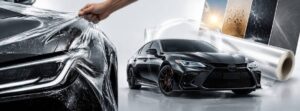
New paint continues to outgas after it leaves the booth. Give it around 30 to 90 days before applying ceramic coating or paint protection film — sealing it too early traps solvent and can cause hazing or adhesion problems later.
In the meantime, wash by hand with a pre-rinse to flush sand off before anything touches the panel, and keep the car off automated brush washes. Avoid strong alkaline cleaners on fresh paint, and park in shade or covered parking whenever possible; consistent sun exposure is the single biggest factor in how long the finish holds gloss.
Once the paint has cured, professional detailing and paint protection is worth doing properly — a good ceramic coating or PPF layer takes the UV and sand abuse instead of the clear coat. And if you are buying a used car in the UAE, a pre-purchase car inspection with a paint depth gauge will show you which panels have already been resprayed, alongside a VIN check for the history behind them.
Car Repaint Service at Carzilla, Al Quoz
Carzilla handles car painting and repaint work for luxury, premium and exotic vehicles from our Al Quoz workshop — spot repairs, single panel resprays with blending, full body resprays and colour changes, with the panel, body and mechanical work handled in the same auto garage in Dubai rather than sublet out. You can see the full range of services we cover, and if the car is due for registration renewal, the RTA testing side can be handled at the same time.
A repaint is worth doing once, properly. The preparation, the colour match, the booth and the cure are what decide whether the finish still looks right after three Dubai summers.