A misted windscreen is a visibility problem before it is a comfort problem. In the UAE it usually appears at the worst moment — pulling out of a basement car park into humid morning air, or on the first cool morning after a rain shower, when the glass turns opaque in seconds. Most drivers clear it with a sleeve and carry on. That works for about thirty seconds, and it tells you nothing about why the glass fogged in the first place.
This guide explains what causes windscreen fogging, how to demist a car windscreen correctly and quickly, which mechanical faults keep the fog coming back, and how to stop it happening again. It applies to any car, though the electronics on modern luxury and performance models make some of these faults harder to spot without proper diagnostic access at a specialist auto garage in Dubai.
Why a Car Windscreen Mists Up in the First Place
Fog on glass is condensation. Air holds a certain amount of water vapour depending on its temperature, and the point at which that air can hold no more is its dew point. When a glass surface drops below the dew point of the air touching it, water leaves the air and forms thousands of tiny droplets on the glass. Those droplets scatter light, which is what turns a clear windscreen into a white haze.
Two things therefore control fogging: how much moisture is in the air, and how cold the glass is compared to that air. Change either one and the fog clears. That is the whole principle behind every fix in this guide.
In the Gulf, coastal humidity is the complicating factor. Dubai, Sharjah and Abu Dhabi regularly sit above 70% relative humidity in the early morning, and the dew point in summer can be higher than the temperature you set your climate control to. That is why cars here fog in ways drivers from cooler countries never expect.
Inside or Outside? How to Tell Where the Fog Is
Before touching any button, work out which side of the glass is wet. Run a finger across the inside of the windscreen. If it wipes clear, the condensation is inside the cabin. If nothing changes, it is on the outside.
Interior fogging means the cabin air is holding more moisture than the cold glass can tolerate. This is the common case in winter mornings, after rain, when several people are in the car, or when carpets and mats are damp.
Exterior fogging is the classic UAE summer problem and it catches people out because it is the reverse of what they expect. The air conditioning chills the glass from inside, hot humid outside air hits that cold surface, and the condensation forms on the outside. Turning the AC colder makes it worse, not better. The fix is the wipers plus a small increase in cabin temperature so the glass is not chilled so aggressively.
Knowing which side you are dealing with saves you from applying the wrong fix and concluding your climate control is broken.
How to Demist a Car Windscreen Fast
For interior fogging, the correct sequence is the same in almost every car:
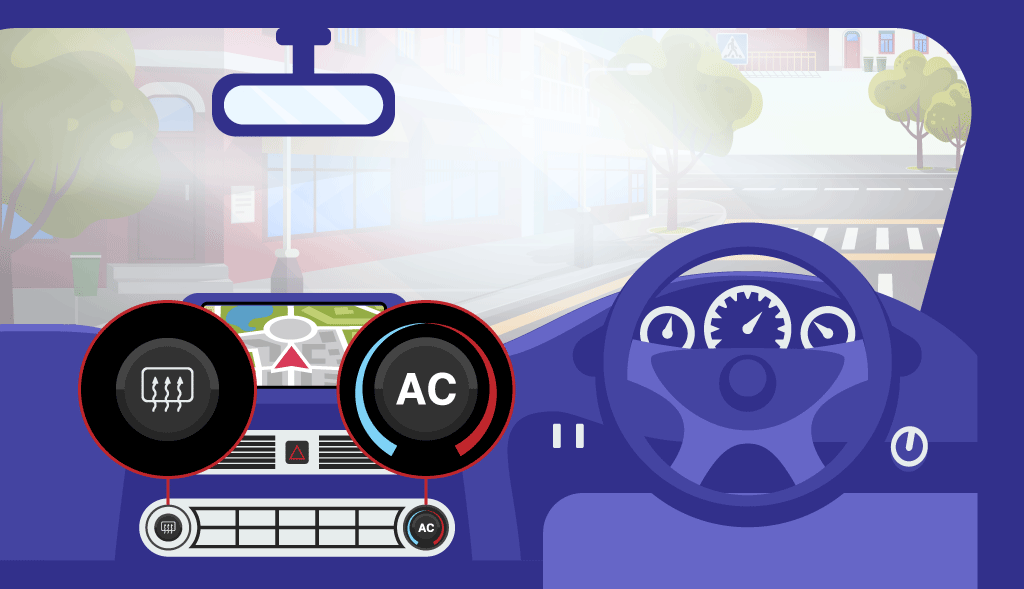
- Select the windscreen demist or defrost setting so airflow is directed at the glass.
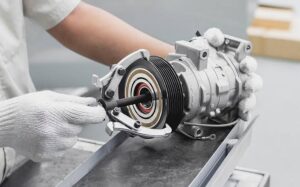
- Turn the air conditioning on. The AC compressor is a dehumidifier — air passing over the cold evaporator loses its moisture as condensate before it ever reaches the screen.
- Turn recirculation off. Recirculation traps the humid air you are trying to get rid of and keeps feeding it back to the glass.
- Set the temperature warm, not cold. Cold air clears the glass quickly by lowering the dew point, but warm air raises the glass temperature above the dew point and keeps it clear.
- Run the blower high until the glass is fully clear, then reduce it.
Warm air with the AC running looks contradictory, but it is the fastest and most stable combination: the compressor dries the air while the heater core warms it. Cars with automatic climate control do exactly this on their own when you press the defrost button, which is why the AC light often comes on by itself.
If your climate control cannot deliver dry air, none of this works — and that points at a mechanical fault rather than a technique problem. That is when a proper car AC repair inspection is worth the time.
Why Windscreen Fog Keeps Coming Back
If the fog returns within a minute or two of clearing, one of three things is true: there is a water source inside the car, the glass has a film on it, or the climate system is not drying the air.
The film is the most overlooked. Dashboard plastics outgas plasticisers in high heat, silicone-based dressings evaporate and redeposit, and both settle on the inside of the windscreen as a thin oily layer. That film gives condensation something to cling to, so the glass fogs faster and clears slower than a clean screen would. Interiors that have been treated with heavy shine products fog noticeably more. A thorough interior glass clean — dedicated glass cleaner, two microfibre towels, one to clean and one to buff — often fixes what looks like a climate control problem, and it is a standard part of a proper car detailing service.
Car Faults That Stop the Windscreen From Demisting
When the settings are right and the screen still will not clear, the fault list is short and specific.
Blocked cabin air filter. UAE dust loads filters far faster than the manufacturer’s home-market interval assumes. A clogged filter starves the demist vents of airflow, and a damp, dust-caked filter becomes a moisture source of its own.
Weak or failed air conditioning. Low refrigerant, a failing compressor or an electrical fault means air reaches the glass without being dehumidified. Cars often keep blowing “cool enough” air while having lost the dehumidifying capacity that demisting depends on.
Blocked evaporator drain. The evaporator strips water out of the air, and that water must drain out under the car. Sand and dust block the drain tube, water pools in the housing, and the evaporator switches from drying the cabin to humidifying it. A musty smell on start-up is the giveaway.
Faulty blend or vent flap actuator. Air distribution is handled by motorised flaps. When one fails, air reaches the face vents but not the windscreen, so the screen never clears no matter what you select. On German luxury models these faults are usually stored as fault codes and read out with manufacturer-level tools.
Blower or final stage resistor failure. Loss of high fan speeds slows demisting dramatically, and the fault is often mistaken for a general AC weakness.
Heated windscreen or rear defogger faults. The rear screen’s printed heating grid can break where the tabs are soldered, and heated front screens fail the same way. If one section stays fogged while the rest clears, the grid line serving that area is broken and needs testing rather than replacement of the whole glass.
Hidden Water Leaks That Keep the Cabin Damp
A permanently damp cabin will always fog. If the carpets feel cool or the windows mist overnight with nobody in the car, look for water entry.
The usual sources are blocked scuttle and plenum drains packed with sand, blocked sunroof drain tubes that dump water into the A-pillars and headliner, perished door vapour barriers, boot seals, and a windscreen urethane bead that was not bonded properly during a cheap glass replacement. A leaking heater matrix is a separate and more serious case: it produces a sweet coolant smell, a greasy film on the inside of the glass, a damp passenger footwell and a slowly falling coolant level. That belongs with the cooling system, not the climate controls, and should be looked at alongside the rest of the engine repair work.
Trapped water also damages what it sits in. Soaked underlay, mould in the foam and corroded floor connectors are common outcomes, and drying the car properly is part of the repair — not an optional extra. Badly affected carpets and seats often need car upholstery attention, and any body seam or seal leak is a job for an auto body shop.
How a Workshop Diagnoses Persistent Windscreen Fogging
A structured diagnosis starts with humidity, not with parts. A technician checks whether the cabin itself is wet, lifts the mats and probes the carpet underlay, then inspects the cabin filter housing and the evaporator drain for standing water. Vent temperatures are measured at every outlet with the demist mode selected, which immediately shows whether a distribution flap is stuck. AC performance is checked properly with gauges rather than by feel, and the climate module is scanned for stored faults, since actuator and sensor failures rarely light a warning lamp.
If water ingress is suspected, the car is water-tested in sections — screen surround, sunroof drains, door seals, plenum — with the interior trim lifted so the entry point can actually be seen. Guessing at this stage is what causes repeat visits. A general car inspection is the sensible starting point when the source is not obvious, and poor forward visibility from persistent misting or a damaged screen is also a fail point when the car goes for RTA testing.
How to Prevent Your Windscreen From Fogging Up
Prevention comes down to keeping the cabin dry and the airflow healthy.
Change the cabin air filter more often than the handbook says — every 10,000 to 15,000 km is realistic in this climate. Run the air conditioning for a few minutes every week, including in winter, so the compressor seals stay lubricated and the system keeps its dehumidifying capacity. Switch to fresh air for the last few minutes of a drive so the evaporator dries out instead of sitting wet in a closed cabin.
Keep the scuttle area at the base of the windscreen clear of leaves, dust and sand so the drains work, and have sunroof drains checked annually. Do not drive with wet mats after a wash — lift them out and dry them. Avoid silicone-heavy dashboard dressings, and clean the inside of the glass regularly rather than only when it fogs. If the car is stored for long periods, a moisture absorber in the cabin makes a measurable difference.
Finally, treat a sudden change in fogging behaviour as information. A car that never used to mist and now does has developed a leak, a blocked drain or a climate fault, and the fog is simply the first symptom you can see.
When to Get It Looked At
Occasional fogging on a humid morning is normal physics. Fogging that returns within seconds, appears only on one part of the screen, comes with a musty or sweet smell, or is paired with damp carpets is a fault. Owners of high-end models in particular benefit from having the climate system read properly, since multi-zone systems on Mercedes, BMW, Range Rover, Porsche and Bentley hide actuator and sensor faults behind normal-looking airflow.
You can see the full range of workshop services and brand specialisations on the Carzilla site, or get in touch to have a fogging or water-ingress complaint diagnosed properly rather than wiped away every morning.