
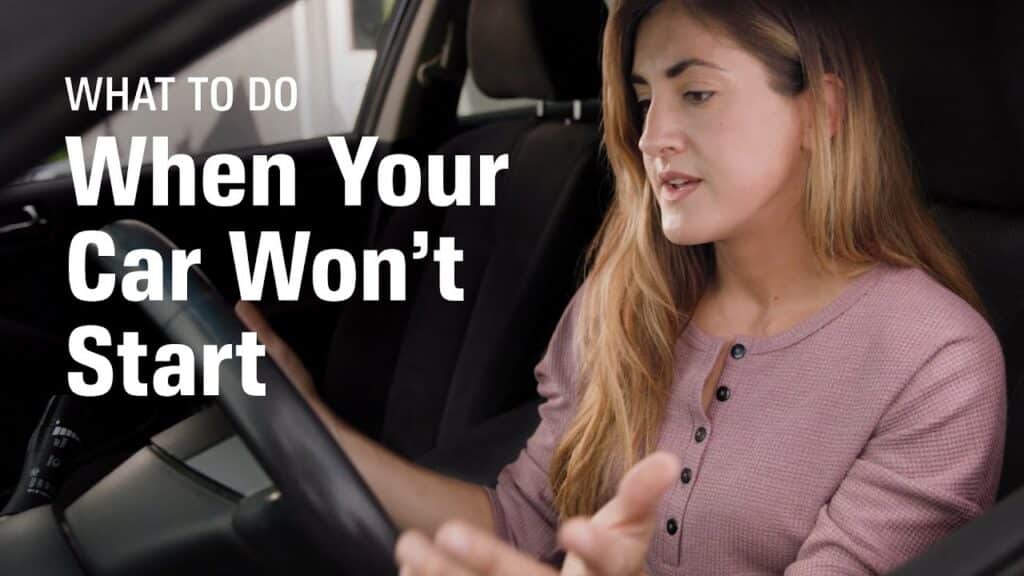
A car that won’t start is one of the most common calls any workshop in Dubai receives, and in most cases the fault is electrical rather than mechanical. The good news is that the car usually tells you where the problem is within the first few seconds of pressing the start button or turning the key. What the dashboard does, what you hear, and how the engine turns over are enough to separate a flat battery from a failed starter motor, a charging fault, or a security system that is refusing to release the engine.
This guide explains why a car loses power and won’t start, how to troubleshoot it safely, what the correct fixes are, and how to prevent the same no-start from happening again in UAE conditions.
Why a Car Won’t Start: The Electrical Chain Behind Every Start
Every start depends on a simple chain. The battery stores the energy. The main cables and ground straps carry it. The starting circuit gives permission to crank, which on a modern car means the immobiliser has recognised the key, the gear selector is in Park or Neutral, the brake pedal switch confirms your foot is down, and the starter relay closes. Finally, the starter motor draws a very high current, often 150 to 300 amps or more on a large petrol or diesel engine, to spin the engine until it fires. Once running, the alternator recharges the battery and powers the car.
If any link in that chain is weak, the car won’t start. Troubleshooting is simply a matter of finding which link has failed.
Quick Car Won’t Start Troubleshooting: What the Car Is Telling You
Car Won’t Start and No Power at All
If there are no dashboard lights, the central locking doesn’t respond and the interior stays dark, the battery is either completely flat or power is not reaching the car. Deep discharge from a parasitic drain, a battery that has reached the end of its life, or a loose or corroded main terminal are the usual causes. On some luxury cars a failed main fuse or a battery safety terminal that has triggered after an impact produces the same result. Check that the terminals are tight and clean before assuming the battery is dead.
Car Won’t Start but Lights Come On
Dashboard lights working does not prove the battery is healthy. Lights draw only a few amps, while the starter needs hundreds. A battery with a failed internal cell can show normal voltage at rest and collapse the moment the starter is engaged. If the dash lights dim sharply or go out when you try to start, the battery or its cables are the problem. If the lights stay bright and nothing happens at all, look at the starting permission side: gear selector position, brake pedal switch, starter relay, or the immobiliser.
Car Won’t Start with a Clicking Noise
A rapid clicking sound almost always means low battery voltage. The starter solenoid pulls in, the voltage drops under load, the solenoid releases, and the cycle repeats. A single loud click with no cranking points in a different direction: power is reaching the solenoid, but the starter motor itself is not turning. Worn starter contacts or brushes, a seized starter, or high resistance in the main starter cable are the common reasons.
Car Cranks Slowly but Won’t Start
A slow, laboured crank means the starter is getting less voltage than it needs. On modern engines this matters more than it used to, because the engine control unit needs a stable supply during cranking to run the fuel pump, injectors and ignition. If voltage falls below roughly 9.5 to 10 volts while cranking, the engine may turn but refuse to fire. The cause is usually a weak battery, but corroded terminals and a poor engine ground strap produce exactly the same symptom.
Car Cranks Normally but Won’t Start
If the engine turns over at normal speed, the battery and starter are doing their job and the fault lies in fuel, ignition, sensor signals or security. A failed fuel pump, a crankshaft position sensor that fails when heat-soaked, or an immobiliser that allows cranking but blocks fuel delivery are typical. A flashing security light on the dashboard is a strong clue that the key is not being recognised. These faults need proper car engine repair and diagnostics rather than a new battery.
Push Start Car Won’t Start: Key Not Detected
On keyless cars, a “key not detected” message is often caused by a weak key fob battery. Most cars have a backup reading point, usually marked on the steering column, centre console or cup holder, where holding the key allows the car to start even with a flat fob battery. A faulty brake light switch is another common cause on push-button cars, because the car will not start unless it detects the brake pedal being pressed. A gear selector that does not register Park can also block starting, which in some cases traces back to a transmission range sensor and needs a gearbox repair specialist to confirm.
Why Car Batteries Die Early in Dubai Heat
Many drivers believe cold weather kills batteries. In reality, heat does the damage and a cold morning simply exposes a battery that is already weak. High temperatures speed up the chemical reactions inside a lead-acid battery, which accelerates grid corrosion and water loss. With under-bonnet temperatures regularly passing 60°C in a Dubai summer, a battery that might last five years in Europe often lasts two to three years here. AGM and EFB batteries fitted to cars with stop-start systems typically reach the end of their life at around 24 to 36 months in UAE conditions.
Driving patterns make it worse. Short trips in slow traffic with the AC running on full give the alternator little chance to recharge the battery. The car AC system, cooling fans, heated and ventilated seats and infotainment all draw current, so the battery gradually works in a partially charged state, which shortens its life further. Cars left parked for weeks during summer travel are the other major cause of early battery failure.
Car Losing Power While Driving: Alternator and Charging System Faults
If the car loses electrical power while driving and then won’t restart, the charging system is the likely cause. The warning signs usually come first: a battery warning light, dimming headlights, the stop-start system disabling itself, or electrical features switching off one by one as the car sheds load to protect engine operation. Eventually the battery is drained completely and the engine stops.
A healthy charging system normally delivers between about 13.5 and 14.8 volts with the engine running. Modern cars use smart charging, so readings can vary with battery condition and load, which is why a simple voltmeter reading is not always conclusive. Common causes include failed alternator diodes or voltage regulators, a worn or slipping drive belt, a weak belt tensioner, and poor connections at the alternator output cable. Fitting a new battery to a car with a charging fault only means the new battery will go flat too.
Parasitic Battery Drain: Why a Car Won’t Start After Being Parked
A car that starts fine after a day but is dead after being parked for a week usually has a parasitic drain. Every modern car draws a small current when switched off to keep the alarm, keyless entry and module memories active. Once the control modules go to sleep, this draw should normally be below about 50 milliamps. Luxury cars can take 30 minutes or more to fully shut down, which is why a drain test needs patience.
Common sources of excessive drain include aftermarket dashcams wired to a permanent supply, trackers, poorly installed alarms or audio equipment, a boot or glovebox light staying on, and control modules that fail to sleep because of water ingress or a software fault. Finding the drain involves measuring current with the car asleep and isolating circuits one at a time until the draw drops.
How to Jump Start a Modern Car Safely
Jump starting is a temporary fix, not a repair. On modern cars, use the jump start points under the bonnet if the manufacturer provides them, as many luxury cars have their battery in the boot or under a seat. Connect positive to positive, then connect the negative lead to the designated ground point or a solid unpainted metal point on the engine, not directly to the battery negative terminal. Many cars have an intelligent battery sensor on the negative terminal, and bypassing it can confuse the charging system. A quality lithium jump starter pack is safer than another car because it avoids voltage spikes when the donor engine is revved.
Never jump start a battery that is swollen, cracked, leaking or smells of sulphur. If the car needs a jump start more than once, the battery, charging system or a parasitic drain needs to be tested properly.
How a No-Start Is Diagnosed and Fixed Properly
A correct diagnosis starts with testing, not guessing. A conductance or load test shows the real condition of the battery, because resting voltage alone cannot reveal a battery that collapses under load. Voltage drop tests across the positive cable, the ground straps and the starter connections locate hidden resistance. A drop of more than about 0.5 volts across a cable during cranking indicates a connection that needs cleaning or replacing. The charging system is checked under load with the AC, lights and fans running, and the starter’s current draw is measured to identify a failing motor.
On European luxury cars, battery replacement also involves registering or coding the new battery to the car. BMW, Mercedes-Benz, Audi, Porsche and Range Rover models adjust their charging strategy to the battery’s age and type, so an unregistered new battery is overcharged or undercharged as if it were the old one, and fails early. Fitting the correct battery type matters too: a car designed for AGM must not be fitted with a conventional flooded battery. This is standard practice for specialists working on Mercedes-Benz repair, BMW repair, Audi repair, Porsche repair and Range Rover repair.
Security and key recognition faults need manufacturer-level diagnostic tools to read immobiliser data and, where needed, program keys or modules. Generic code readers cannot access these systems. Electric vehicles also have a 12-volt battery that powers the control systems, and when it fails the car will not switch on even with a fully charged high-voltage pack, which is a job for an EV repair specialist.
After a battery has been fully disconnected, some cars need window, sunroof and steering angle relearn procedures, and the emissions readiness monitors reset. It is worth driving the car normally for several days before an RTA testing centre inspection so the monitors complete.
How to Prevent Car Battery and Starting Problems in Dubai
Most no-starts can be avoided with a few simple habits. Have the battery load tested every six months once it is over 18 months old, ideally at each oil change service, so a weak battery is replaced before it leaves you stranded. Keep the terminals clean and tight, and check the date code on the battery so you know its age.
If you regularly drive short trips in traffic, take a longer drive at steady speed once a week to allow a full recharge. If the car will be parked for more than two weeks, especially over summer, connect a smart battery maintainer. This is particularly important for low-mileage supercars, where a flat battery is the most common reason a Ferrari battery replacement or Lamborghini repair visit becomes necessary. Park in shade or covered parking where possible to reduce heat exposure.
Have aftermarket accessories wired through a switched supply, and never ignore a battery warning light, dimming lights or a slow crank. These are early warnings that give you time to fix the fault. A full car inspection in Dubai will also check the charging system, starter, belts and ground connections before they cause a breakdown.
Car Won’t Start Repair in Dubai at Carzilla
When a car won’t start, replacing parts until it works is expensive and often misses the real cause. At Carzilla, our technicians test the battery, charging system, starter circuit and parasitic draw with proper equipment, then use manufacturer-level diagnostics to register batteries and check security systems on luxury and exotic cars. Our auto garage in Dubai in Al Quoz handles everything from battery replacement and alternator repair to starter motor and wiring faults. You can browse our full list of car repair services, see the brands we specialise in, or contact our team to book a diagnosis.