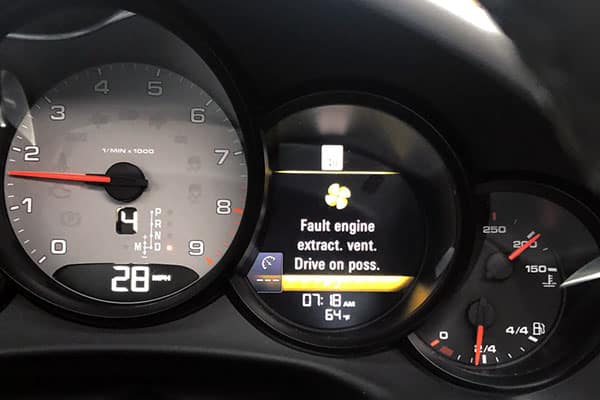
The check engine light, also called the malfunction indicator lamp, is your Porsche’s way of telling you that its onboard computer has detected a fault somewhere in the engine, emissions, or related electronic systems. On a Porsche, this light can be triggered by anything from a loose fuel cap to a failing ignition coil to a genuine mechanical problem inside the engine. Because Porsche engines rely on tightly tuned direct fuel injection, variable valve timing, and dozens of interlinked sensors, even a small fault can set off the warning light long before you notice any change in how the car drives.
This guide explains the most common reasons a Porsche check engine light comes on, why these issues happen more often in Dubai’s climate and driving conditions, how a proper diagnosis and repair works, and what you can do to prevent the same fault from coming back.
What the Check Engine Light Actually Means
The light is connected to your Porsche’s engine control unit, which constantly monitors data from sensors around the engine, fuel system, and exhaust. When a reading falls outside the expected range, the ECU stores a fault code and turns on the light. A steady light usually means the issue can wait a few days for inspection, while a flashing light means the engine is misfiring and should be checked immediately to avoid damaging the catalytic converter.
It’s worth noting that the light only tells you a fault exists, not what caused it. Two different problems can trigger the exact same code, which is why plugging a generic scanner into the car and reading one code is not the same as a proper diagnosis. At Carzilla’s Porsche repair centre in Dubai, technicians use Porsche-specific diagnostic software to read live sensor data alongside the stored codes, so the actual cause is confirmed before any part is replaced.
Common Reasons a Porsche Check Engine Light Comes On
Emissions and Sensor-Related Faults
A large share of check engine light cases trace back to the emissions system. Oxygen sensors, which measure how much unburned fuel is leaving the engine, degrade over time and start sending inaccurate readings. A failing catalytic converter, a loose or cracked fuel filler cap, or a small crack in the evaporative emissions hose can all trigger the same family of codes. In Dubai’s heat, rubber and plastic hoses in the emissions system harden and crack faster than they would in cooler climates, making this one of the most frequent causes seen locally.
Ignition and Fuel System Problems
Worn spark plugs, failing ignition coils, or a dirty mass airflow sensor can all cause the engine to run less efficiently, which the ECU picks up as a fault. Left unaddressed, a weak ignition coil often leads to a cylinder misfire, which shows up as a flashing check engine light and a noticeable stumble in acceleration. Fuel injector problems, including carbon buildup around the injector tips from short city drives and heavy traffic idling, are another common trigger. This kind of carbon buildup is especially common on Porsche’s direct-injection engines and is one of the issues covered in Carzilla’s general Porsche repair guide, since it affects nearly every current model in the range.
VarioCam and Valve Timing Faults
Porsche’s variable valve timing system, known as VarioCam or VarioCam Plus depending on the model, relies on solenoids and oil pressure to adjust valve timing as the engine runs. If the oil is old, low, or the wrong grade, the solenoids can stick or the timing chain tensioners can wear prematurely, both of which trigger a check engine light. This is one of the reasons Porsche is strict about oil change intervals and oil specification, and it’s a fault Carzilla sees more often on cars that have missed a service or been topped up with the wrong oil. Sticking to the correct interval, covered in detail on the Porsche oil change page, is one of the simplest ways to avoid this category of fault altogether.
Transmission and Drivetrain-Related Codes
Not every check engine light comes from the engine itself. Porsche’s PDK dual-clutch transmission and Tiptronic automatic gearboxes share sensor data with the engine control unit, so a transmission speed sensor fault, low fluid level, or an electrical connector issue at the gearbox can also light up the check engine warning. If the car has also started shifting harshly or hesitating between gears, the underlying issue is more likely to be inside the transmission itself. Carzilla’s Porsche transmission repair page explains how these faults are diagnosed separately from a straightforward engine code.
Electrical, Software, and Wiring Faults
Porsche vehicles run a large number of interconnected control modules, and a fault in one system can sometimes surface as a check engine light rather than a warning specific to that system. A corroded connector, a chafed wiring harness, a weak battery struggling to hold voltage, or a software module that hasn’t been updated after a repair can all generate codes that point back to the engine even when the root cause sits elsewhere. Vehicles that have had aftermarket electrical accessories fitted, or a battery replaced without being properly registered to the car’s energy management system, are particularly prone to this kind of intermittent fault.
Suspension and Steering Sensor Faults
On air suspension and active steering-equipped models, a faulty ride height sensor or steering angle sensor can occasionally cause a related fault to appear alongside, or instead of, a dedicated warning light. This is more common after an alignment, a suspension repair, or a battery disconnect that resets the sensor’s zero point without it being recalibrated afterward. If your check engine light appeared around the same time as a stiffer ride or a steering pull, it’s worth having the suspension and steering systems checked together, which Carzilla covers through its Porsche suspension repair and Porsche steering repair services.
Model-Specific Causes
Each Porsche model line has its own quirks that tend to produce recurring check engine faults. Cayenne and Macan models, with their turbocharged and supercharged engines, are more prone to boost pressure and charge-air sensor faults, covered in more depth on the Cayenne service and Macan repair pages. Panamera models, with their more complex hybrid and V8 variants, more often show faults tied to the high-voltage system or cylinder deactivation on hybrid models, discussed on the Panamera repair page. The 718 range, being naturally aspirated or turbocharged flat engines, tends to show classic ignition and oxygen sensor faults more than the larger SUVs, detailed on the 718 repair page.
Why These Faults Are More Common in Dubai
Extreme summer heat accelerates the wear of rubber hoses, seals, and plastic connectors throughout the engine bay, which is why emissions and vacuum-related codes are more frequent here than in cooler markets. Stop-start city traffic means engines spend more time idling and less time at the higher, steadier RPMs that help burn off carbon deposits around injectors and intake valves. Dust and sand exposure also shortens the life of air filters and mass airflow sensors, which if neglected can throw a fault code well before a scheduled service is due. None of this means the faults are unusual for a Porsche, but it does mean intervals and sensor checks should be treated a little more conservatively than the factory-recommended schedule.
What to Do When the Light Comes On
Start by checking for anything obvious, such as a loose fuel cap, and note whether the light is steady or flashing and whether the car feels different to drive. A flashing light paired with a rough idle or hesitation means you should stop driving hard and get the car looked at as soon as possible, since a sustained misfire can send unburned fuel into the catalytic converter and cause expensive damage. A steady light with no change in how the car drives is less urgent but should still be diagnosed within a few days rather than ignored, since small faults tend to compound into bigger ones on a Porsche’s tightly integrated systems.
A proper diagnosis reads the stored fault codes, cross-checks them against live sensor data, and only then decides which part actually needs to be repaired or replaced. Clearing the code without fixing the underlying cause will only bring the light back within days.
How to Prevent Check Engine Light Problems
Sticking to Porsche’s recommended oil and service intervals is the single biggest factor in avoiding VarioCam, timing chain, and carbon-related faults. Using only Porsche-approved parts and fluids during any repair keeps the sensors reading correctly and avoids compatibility issues that generic parts can introduce. Any battery replacement should be properly registered to the car’s energy management system to avoid electrical faults appearing weeks later. Finally, having the car scanned during routine servicing, even when no light is on, can catch a developing fault while it is still a minor and inexpensive fix rather than a major repair.
Get Your Porsche Diagnosed Properly
A check engine light on a Porsche can mean something as simple as a loose cap or as involved as a failing sensor deep in the engine, and the only way to know for certain is a proper diagnosis using the right equipment. Carzilla’s Porsche specialists in Al Quoz, Dubai, work on every model in the range and can identify the exact cause before recommending any repair. Visit the Porsche repair Dubai page to learn more about the diagnostic and repair services available for your car.