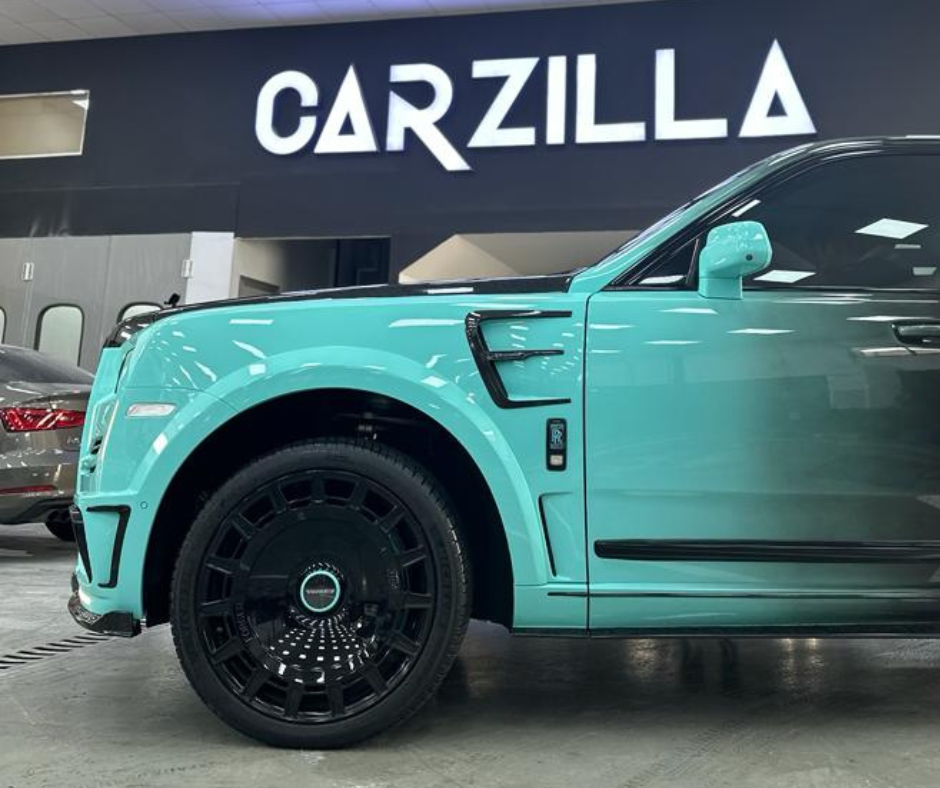
The Rolls Royce Cullinan is built to hide effort. The cabin is sealed, the 6.75-litre twin-turbo V12 holds a large reserve of torque, and the car will keep pulling normally long after its cooling system has stopped doing its job properly. That is exactly why Cullinan engine overheating in Dubai is usually discovered late — not because the owner ignored it, but because the car gave almost nothing away until the temperature gauge finally moved or a warning appeared on the dashboard.
This guide explains Rolls Royce Cullinan engine overheating repair the way it is actually carried out in the workshop: by following the heat itself. Every degree the engine makes has to be handed off — from the combustion chamber, into the coolant, through the pumps, across the radiator stack, and finally out into Dubai air that may already be 45°C. Overheating is simply a handoff that failed. Once you know where the handoffs are on this car, both the diagnosis and the fix stop being guesswork.
If you need the service side rather than the explanation, our Rolls Royce repair Dubai and Rolls Royce Cullinan service Dubai pages cover what we handle in-house at Carzilla Auto Service in Al Quoz.
Handoff One: Heat Leaving the Engine Block
The first transfer is from the aluminium block and heads into the coolant. This depends on two things — coolant that is still chemically alive, and a pump that is still moving it.
Coolant does not fail by disappearing. It fails by depletion. The corrosion inhibitors and anti-cavitation additives in the factory blue coolant deplete on a time clock, not on a mileage counter, and Dubai heat accelerates that clock. Depleted coolant still looks fine in the expansion tank while its ability to carry heat and protect aluminium has already dropped. This is the single most common cause of Cullinan engine overheating that owners never suspect, and it is the reason a low-mileage garage-kept Cullinan can overheat before a used daily driver does.
The mechanical water pump is the second point of failure here. On the N74 V12 it is belt-driven and generally reliable, but a weeping pump seal or a worn bearing reduces flow long before it leaks visibly. A pump that circulates coolant at reduced speed produces exactly the symptom owners describe most often: normal temperature at road speed, climbing temperature in traffic.
Thermostat behaviour matters just as much. A thermostat stuck partially closed traps hot coolant in the engine; one stuck open causes the engine to run cold, which is not harmless either — it degrades the oil and increases fuel dilution. Related reading on the general principle is on our blog post about radiator and coolant service preventing overheating.
Handoff Two: The Turbochargers And The After-Run Pump
The Cullinan’s two turbochargers sit in the valley of the V12, between the cylinder banks. That location is the hottest part of the engine bay and the hardest to reach, and it is why turbo-related overheating repair on this car is labour-heavy.
The turbos are cooled by coolant that continues to circulate after you switch the engine off, driven by an electric auxiliary pump. If that pump fails, nothing goes wrong while you are driving. The damage happens in the ten minutes after shutdown, when residual heat sits in the turbo bearing housings with no coolant moving through them. Over time this coke-hardens the oil in the turbo oil feed lines and shortens turbo life.
Owners rarely detect this fault, because the car behaves normally. It is picked up on diagnostics, by checking whether the after-run pump can be commanded to run and whether it actually draws current when it does. This is one of the checks we run as part of Rolls Royce engine repair Dubai work rather than something a generic scan will surface.
Handoff Three: The Charge-Air Cooling Circuit
This is the part of the Cullinan cooling system most workshops in Dubai miss completely. The car has a second, separate low-temperature circuit dedicated to cooling the compressed intake air from the turbos, and that circuit has its own electric pump and its own expansion tank.
Two expansion tanks means two coolant levels. Owners — and inexperienced technicians — check one, find it correct, and conclude the cooling system is fine. Meanwhile the low-temperature circuit can be low, airlocked, or running a failed pump. The symptom is a Cullinan that shows normal coolant temperature but loses power under sustained load, because hot intake air is triggering ignition retard to protect the engine from knock.
If you are diagnosing a power complaint alongside a heat complaint, this circuit should be checked before anything is dismantled. We describe the related fault pattern in more detail in our Rolls Royce Cullinan coolant leak repair in Dubai guide.
Handoff Four: The Radiator Stack And Airflow
Once the heat is in the coolant, it has to reach the air. On a Cullinan that means passing through a dense stack of heat exchangers — the main radiator, the low-temperature radiator, the AC condenser and the oil coolers, layered one behind the other.
In Dubai this stack is a sand trap. Fine silica dust enters through the front and packs into the fins, but crucially it packs from behind, so the face of the radiator can look completely clean while airflow through the core has dropped substantially. Washing the front of the car achieves nothing here. The stack has to be inspected properly, and in bad cases separated and cleaned from the reverse side.
The other airflow variable is the cooling fan. The fan carries almost the entire cooling load when the car is stationary or crawling — Sheikh Zayed Road at rush hour, valet queues, drive-throughs. A fan with a failing module or a degraded motor produces the classic pattern: temperature fine at 100 km/h, temperature rising at 10 km/h. Because the AC condenser sits in the same stack, poor cooling and weak air conditioning very often appear together, which is why a car AC repair complaint sometimes turns out to be an engine cooling fault.
Handoff Five: The Oil Side Of Cooling
Coolant is not the only heat carrier on this car. Engine oil carries a large share of the load, particularly around the turbos and the bearings, and it is cooled by dedicated oil-to-air coolers.
Oil in a V12 running in 45°C ambient temperature ages faster than the mileage suggests. Once the oil thins beyond specification it carries less heat, protects less, and coke-forms more readily in hot passages. This is why the correct oil interval for a Cullinan in Dubai is shorter than the European service schedule implies, and why a genuine full-synthetic to the right specification is not an area to economise. Our oil change services page covers grade and interval, and the wider point is made in our guide to what Rolls Royce owners in Dubai must know about long-term maintenance.
Warning Signs Of Cullinan Engine Overheating
Because the Cullinan masks so much, the useful signs are subtle:
- Temperature reading that is normal at speed but climbs in slow traffic
- Weak or inconsistent AC cooling at idle, improving as the car moves
- A faint sweet smell after parking, with no visible drip on the floor
- Coolant level falling in one expansion tank over weeks with no puddle
- Reduced power or hesitation under sustained load on a hot day
- Cooling fans audible at high speed long after a normal drive
- Any coolant or engine temperature message on the dashboard
The absence of a puddle proves nothing on this car. Full underbody trays catch leaking coolant and route it away, so the drip point on the floor is almost never below the failed component. Judging a leak by where it lands is one of the most common diagnostic mistakes made on a Cullinan.
How Rolls Royce Cullinan Engine Overheating Repair Is Done Properly
A correct repair follows a fixed order, and the order matters more than the parts.
Diagnostics come first — a full fault-code read across the engine and cooling modules, then live data showing coolant temperature, requested and actual fan speed, thermostat state and both electric pump commands. Guessing at parts on a V12 with this much labour access cost is expensive. The reasoning behind this is set out in our article on professional engine diagnostics for modern cars in Dubai.
Next comes a cold pressure test of the cooling system, held under pressure long enough to expose slow seepage from housings, quick-connect fittings, expansion tank seams and radiator end-tank crimps — the joints, not the metal, are where this system fails. The trays come down for that inspection rather than being worked around.
The stack is then inspected for sand packing and airflow restriction, the fans are commanded and current-checked, and the after-run and low-temperature pumps are tested individually.
Repair itself is driven by access. On a Cullinan the labour to reach a part usually exceeds the cost of the part, so any component that is old, adjacent and cheap should be renewed while the area is open — hoses, O-rings, quick-connects, thermostat housing seals. Skipping that logic is how owners end up paying the same labour twice.
The final step separates competent workshops from the rest: the system must be refilled under vacuum, not poured, and the electric pumps must be commanded to run during the purge. A Cullinan with air trapped in either circuit will overheat again within days, and the owner will believe the repair failed when in fact only the fill did. A road test to full operating temperature closes the job.
What Happens If Cullinan Overheating Is Ignored
Aluminium heads distort when they get too hot, and they do not return to shape. What starts as a AED-hundreds coolant hose or thermostat job becomes head gasket failure, warped heads, or a hydro-locked cylinder. Heat also travels — sustained high under-bonnet temperature shortens turbo life and cooks the ZF gearbox fluid, which is why an overheating complaint sometimes arrives alongside harsh shifting and needs gearbox repair attention as well. There is more on early intervention in our post on signs your car needs immediate engine service.
If the temperature gauge is in the red or a coolant warning is displayed, stop driving. Idling with the AC off does not save the engine; moving heat away from a stationary engine is exactly what a failed cooling system cannot do.
How To Prevent Rolls Royce Cullinan Engine Overheating In Dubai
- Replace coolant on time, not on mileage, and only with the correct specification — never tap water, never universal coolant
- Check both expansion tanks, not one
- Have the radiator stack inspected and cleaned from behind at every major service
- Shorten oil intervals to suit UAE conditions rather than the European schedule
- Let the engine idle briefly after a hard drive so the turbos and after-run circuit can do their work
- Drive a stored or low-use Cullinan properly at least monthly — seals and pumps fail from disuse faster than from use
- Treat any small coolant loss as a leak to be found, not a level to be topped up
- Include cooling system pressure testing in your annual car inspection and follow a proper full car service checklist for luxury cars
Cullinan Overheating Repair At Carzilla Auto Service, Al Quoz
Carzilla Auto Service works on Rolls Royce models daily at our Al Quoz workshop, including the Cullinan, Ghost, Wraith, Dawn and Drophead Coupé. Cooling work is carried out with the correct diagnostic access, vacuum filling equipment and genuine or OE-specification parts, at independent workshop rates rather than dealer rates.
Beyond engine cooling, we handle Rolls Royce transmission repair, suspension repair, engine repair and routine servicing through our Rolls Royce workshop Dubai and Rolls Royce service Dubai departments.
If your Cullinan is running warm, losing coolant, or showing weak AC at idle, contact Carzilla Auto Service and have the cooling system tested before the heat does permanent damage.