
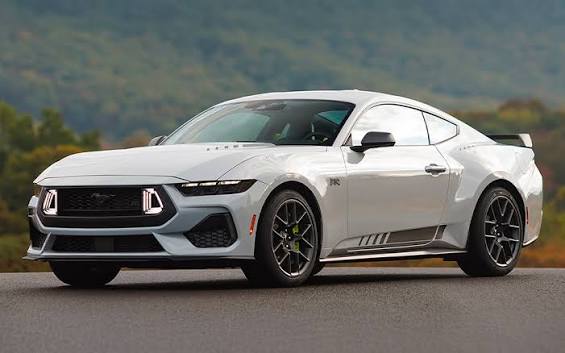
Ford is one of the most common American brands on UAE roads. The F-150, Raptor, Expedition, Explorer, Edge, Mustang, Ranger and Bronco all work hard here, often in 45°C heat, stop-start traffic on Sheikh Zayed Road, and weekend trips into the sand. The part that takes the most punishment from all of this is the automatic transmission.
The difficulty for owners is that Ford uses several very different gearboxes across its range. A harsh shift in a 10-speed F-150 does not mean the same thing as a judder in a Focus or a burning smell from an Explorer. This guide explains the common signs of Ford transmission problems, what is usually causing them, how they are fixed properly, and how to prevent them in Dubai conditions.
If your Ford is already showing symptoms, our Ford repair Dubai workshop in Al Quoz can scan and road-test it before the fault spreads.
How a Ford Automatic Transmission Works
A modern Ford automatic changes gear by applying and releasing clutch packs with hydraulic pressure. That pressure is controlled by electronic shift solenoids, which are commanded by the transmission control module (TCM). The torque converter sits between the engine and gearbox and locks up at cruising speed to cut slip and heat.
Ford automatics also use adaptive shift learning. The TCM constantly adjusts how much pressure each clutch receives based on how the last shifts felt, and stores these values in memory. This matters for diagnosis: many early Ford transmission faults show up first as a change in shift quality, long before anything breaks. It is also why a gearbox can behave badly after a battery disconnection or software update, because the learned values have been lost.
Common Signs of Ford Transmission Problems
Harsh, Late or Erratic Gear Shifts
A bang into second or third, a shift that holds too long, or a gearbox that hunts between gears are the most common complaints. On newer Fords this is often adaptive values drifting or outdated TCM software. On older units it usually points to worn clutches, a sticking valve body or failing shift solenoids.
Delayed Engagement Into Drive or Reverse
If there is a pause of a second or more after selecting D or R before the car moves, line pressure is not building quickly enough. Common causes are low or degraded fluid, a worn pump, internal seal leakage or a valve body fault. Delayed engagement that is worse when the car is hot is a classic sign of fluid that has lost its viscosity.
Transmission Slipping and High RPM Without Acceleration
When engine speed rises but the car does not pull, a clutch pack is slipping. This creates heat very quickly and is the sign owners should take most seriously. Continued driving on a slipping Ford transmission usually turns a repair into a rebuild.
Shudder or Vibration at Steady Speed
A vibration like driving over rumble strips at 50–90 km/h, often under light throttle, normally comes from the torque converter clutch. As the lock-up clutch wears or the fluid’s friction properties break down, it grabs and releases instead of locking smoothly. This is common on high-mileage F-150s and Expeditions.
Clunks When Slowing Down or Stopping
A clunk or thump as the car rolls to a stop is a frequent 10-speed complaint and can come from rough downshifts into first or second. However, worn engine and gearbox mounts, driveshaft joints and rear differential play can produce the same noise, so it must be checked before the gearbox is blamed.
Transmission Fluid Leaks and Burnt Smell
Red or brown fluid under the car, usually from the pan gasket, cooler lines, output seals or the electrical connector, means fluid is being lost. A burnt smell after driving indicates overheated fluid or, on AWD Explorers and Edges, cooked gear oil in the power transfer unit.
Warning Lights, Wrench Light and Limp Mode
Ford uses an amber wrench light for powertrain faults, and many models show “Transmission Overheating” or “Transmission Service Required” messages. If the TCM detects a serious fault it will enter limp mode, holding a single gear to protect the transmission. The car will feel sluggish, rev high on the highway and may not change gear at all.
Ford Transmission Problems by Gearbox Type
The same symptom can have a different cause depending on which gearbox your Ford uses. These are the units most common in the UAE.
Ford 10R80 and 10R60 10-Speed Transmission Problems
The 10-speed automatic is fitted to the F-150 (2017 onward), Raptor, Expedition, Mustang (2018 onward), Ranger, Bronco and the 2020-onward Explorer, as well as the Lincoln Navigator. It was co-developed with GM, so it shares much of its design with the 10-speed in many GMC models.
The most common complaints are harsh 2-3 and 3-4 upshifts, rough downshifts when coming to a stop, and occasional gear hunting at low speed. In many cases the hardware is fine and the cause is software and adaptive learning. Ford has released several TCM updates for these behaviours, and a correct update followed by an adaptive relearn drive cycle often solves the problem. Where the fault persists, solenoid body faults and internal clutch wear need to be checked. These units use Mercon ULV fluid, and filling them with the wrong ATF creates shift problems of its own.
Ford 6R80 6-Speed Transmission Problems
The 6R80 is Ford’s version of the ZF 6HP26 and was used in the F-150 (2009–2017), Expedition (2007–2017) and Mustang (2011–2017). It is a strong gearbox mechanically, but it is now old enough that wear-related faults are common in the UAE.
Typical problems include harsh or flared shifts caused by a worn valve body, failure of the internal solenoid pack and lead frame (which can cause sudden limp mode), and torque converter shudder. The 6R80 has no dipstick, so fluid level must be checked at the fill plug at the correct temperature. Many of the failures we see started with fluid that was never changed because it was sold as “lifetime”.
Ford 6F35, 6F50 and 6F55 Transmission Problems
These front-wheel-drive based 6-speeds are found in the Edge, Explorer (2011–2019), Escape, Fusion and Taurus. The larger 6F50 and 6F55 units share their design with GM’s 6T70 family, and one known weakness is the wave plate in the 3-5-reverse clutch, which can break and cause loss of third, fifth and reverse.
The bigger issue on AWD Explorers and Edges is often not the transmission at all, but the power transfer unit (PTU) bolted to it. The PTU sits close to the exhaust, runs very hot, and was filled with gear oil that Ford did not schedule for replacement. In Dubai heat, that oil cooks, the seals harden and leak, and owners notice a burning smell, a whine, or a leak that looks like transmission fluid. Changing PTU oil early and replacing leaking seals prevents expensive PTU failure.
Ford PowerShift DPS6 Dual-Clutch Problems (Focus and Fiesta)
The Focus and Fiesta of roughly 2011–2019 used the DPS6 PowerShift, a dry dual-clutch gearbox. Its signs are different from a normal automatic: judder or shudder when pulling away, hesitation at low speed, rattling, and sometimes no drive at all.
The main causes are input shaft seals leaking oil onto the dry clutches, clutch wear, and failure of the TCM mounted on the gearbox. A proper repair replaces the clutch set and seals together, updates the software, and runs a clutch adaptation (teach-in) with Ford-level diagnostic equipment. Replacing clutches without the seals usually brings the judder back within months.
Ford 4×4 Transfer Case Problems That Feel Like Gearbox Faults
F-150, Raptor, Expedition and Bronco owners who drive in the desert put heavy load on the transfer case. A worn chain, failing shift motor or contaminated fluid can cause clunks, grinding, “Service 4×4” messages or the car refusing to change between 2H, 4H and 4L.
One important point: on part-time 4WD systems, driving in 4H on dry tarmac makes the tyres scrub and the car hop on tight turns. This is normal behaviour, not a transmission fault, but doing it regularly will damage the transfer case.
Problems Often Mistaken for Ford Transmission Faults
A good diagnosis rules these out before any gearbox work is quoted:
- Engine misfire under load. An EcoBoost misfire from a weak coil or plug feels like a jerk or slip on acceleration. Our guide to engine misfire diagnosis explains why misfires and gearbox faults are so often confused.
- Worn engine and transmission mounts. These produce clunks on take-off and when shifting between D and R. See the signs your motor mounts need replacement.
- Low battery voltage. A weak battery can make the TCM behave erratically and set random transmission codes. Dubai heat shortens battery life, as covered in our article on battery drain in UAE summer heat.
- Wrong tyre size calibration. Fitting larger tyres to an F-150 or Raptor without updating the tyre size in the vehicle software changes shift points and adds heat. Larger wheels and tyres should be set up properly at a tyre service and checked against the car modification rules in Dubai.
- Driveline wear. Worn U-joints, CV joints and differential bearings cause vibration and clunks that are easily blamed on the gearbox. These are checked during suspension and driveline inspection.
Why Ford Transmission Problems Are More Common in Dubai
Automatic transmission fluid breaks down mainly through heat. As a general rule, every sustained rise of around 10°C above normal operating temperature roughly halves the fluid’s useful life. Dubai driving keeps fluid temperatures high for long periods.
- Ambient heat and stop-start traffic. Long periods of crawling in traffic with the AC on full keep the gearbox hot with little airflow.
- Towing. Boats, jet skis and horse trailers behind Expeditions and F-150s add heavy load, especially without Tow/Haul mode engaged.
- Desert driving. Soft sand in high range overheats the torque converter. Low range exists to prevent this.
- Sand-packed coolers. The transmission cooler sits in front of the radiator. Fine sand packs the fins from behind, which also hurts engine cooling and AC performance. This is explained in our radiator and coolant service article and the car radiator repair cost guide.
- “Lifetime” fluid. Fluid intervals written for mild climates do not suit UAE severe-duty conditions.
- Summer storage. Cars left standing for months while owners travel suffer from dried seals and settled varnish, and often develop leaks or harsh shifts when used again.
Our article on how Dubai heat damages car engines covers the same heat effects on the engine side.
How Ford Transmission Problems Are Diagnosed
Correct diagnosis saves owners from paying for parts that were never needed.
- Scan with Ford-level software. A generic OBD reader may only show P0700 (transmission fault present). Ford IDS or FDRS-level equipment reads the TCM directly, showing specific codes such as gear ratio errors (P0730 range), torque converter clutch faults (P0741) or speed sensor faults, plus live data.
- Check live data. Fluid temperature, torque converter slip, commanded versus actual gear and adaptive values show what the gearbox is actually doing.
- Check fluid level and condition. On most modern Fords this means checking at the fill plug at the specified temperature. Dark, burnt or metallic fluid tells a lot about internal wear.
- Road test. The fault is reproduced under the conditions the owner describes, cold and hot.
- Inspect the pan and filter. Clutch material or metal in the pan confirms internal damage.
This is the same diagnostic-first approach explained in our article on why regular car diagnostics prevents expensive repairs.
Ford Transmission Repair Options and Fixes
The right repair depends on what the diagnosis finds:
- TCM software update and adaptive relearn. Often the first step for 10-speed shift quality complaints. It costs far less than any mechanical repair.
- Fluid and filter service. Using the correct Ford specification (Mercon LV or Mercon ULV depending on the unit), filled to the correct level at the correct temperature. On high-mileage units with neglected fluid, a staged fluid exchange is safer than one aggressive flush.
- Solenoid body or valve body repair. For harsh shifts, flares and solenoid codes, particularly on the 6R80 and 10R80.
- Torque converter replacement. For persistent shudder and lock-up faults.
- PTU service and reseal. For AWD Explorers and Edges with leaks or burnt gear oil.
- DPS6 clutch, seal and TCM repair. With clutch adaptation completed afterwards.
- Transmission rebuild or replacement unit. For slipping, burnt clutches or internal mechanical failure.
After any of these repairs, adaptive values must be reset and relearned, otherwise even a perfect repair can shift badly for weeks. You can read more about the repair process in our guides to gearbox repair in Dubai and transmission repair services, or compare how other brands fail in our articles on Mercedes transmission failure, Audi transmission jerking and Range Rover gearbox problems.
How to Prevent Ford Transmission Problems in Dubai
- Change transmission fluid on a UAE schedule. For most Ford automatics driven in Dubai, a fluid service every 50,000–60,000 km is a sensible severe-duty interval, sooner for towing or regular desert use. Your general service plan should follow a UAE schedule, as explained in our luxury car maintenance schedules guide.
- Service the PTU, transfer case and differentials too. These are often forgotten until they leak or fail.
- Use Tow/Haul mode when towing and select 4L in soft sand rather than forcing the car through in 4H.
- Keep the cooling stack clean. Have the transmission cooler, AC condenser and radiator cleaned from behind during servicing. A weak car AC system and a hot gearbox often share the same blocked cooler.
- Come to a full stop before changing between D and R.
- Look after the battery, and re-run adaptations after any battery replacement.
- Fix leaks early. A small leak in summer can drop the fluid level enough to cause slipping.
- Get a pre-purchase check on used Fords. Before buying, run a VIN check and book a full car inspection that includes a transmission scan and fluid check.
Regular oil change services are a good time to have the gearbox fluid and leaks checked as well, and a full car service checklist should always include them.
Ford Transmission Repair in Dubai at Carzilla
Carzilla Auto Service repairs Ford gearboxes at our workshop in Al Quoz Industrial Area 2, alongside the full range of American car repair work on brands such as Dodge, GMC and Lincoln. Every transmission job starts with a Ford-level scan, fluid check and road test, so you only pay for the repair your car actually needs.
Whether it is a harsh-shifting F-150, a juddering Focus or an Explorer with a PTU leak, our team handles gearbox repair, engine repair and diagnostics under one roof, with free pickup and drop-off across Dubai. If the car will not move or is stuck in limp mode, read our advice on choosing roadside assistance in Dubai before driving it further. Larger repairs can also be spread out with pay later by Tabby.
To book a transmission inspection, visit our Ford repair Dubai page or contact us for a free pickup. You can also browse all of our car repair services and the brands we specialise in.