If your car keeps bouncing after a speed hump, dips its nose hard when you brake, or feels loose on the motorway, the most likely cause is worn shock absorbers. Shock absorbers wear slowly. Most drivers get used to the change and do not notice it until the car fails an inspection or the tyres wear out early.
This guide explains how shock absorbers work, the 8 most common signs of bad shock absorbers, why they fail faster in the UAE, how a correct repair is done, and how to make new ones last longer. For a wider look at every suspension component, see our guide on common signs your car needs new suspension parts.
What Shock Absorbers Do on Your Car
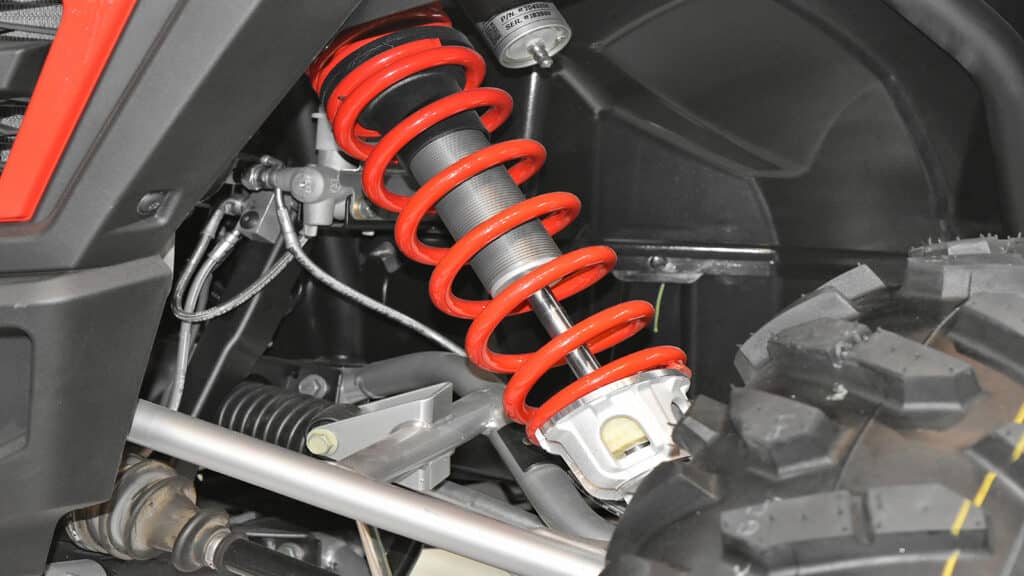
Your car’s springs carry the weight of the vehicle and absorb the impact of a bump. A spring on its own, however, does not stop moving. Once compressed, it rebounds, compresses again and keeps oscillating until the energy runs out. The shock absorber, also called a damper, controls that movement.
Inside the shock absorber, a piston moves through hydraulic oil. As the wheel moves, oil is forced through small valves and calibrated shim stacks in the piston. This resistance converts the spring’s energy into heat, which is then released through the shock absorber body. There are two stages of damping:
- Compression damping controls how quickly the wheel moves up into the wheel arch over a bump.
- Rebound damping controls how quickly the spring pushes the wheel back down and the body back up.
Most modern cars use either a twin-tube shock absorber (low-pressure gas, inner and outer tube) or a monotube shock absorber (a single tube with high-pressure nitrogen separated from the oil by a floating piston). In both types, the gas charge stops the oil from foaming. When the oil foams or leaks out, or the valves wear, the damper loses control. That is when the car starts bouncing over bumps.
8 Signs of Bad Shock Absorbers
1. Car Keeps Bouncing After Bumps and Speed Humps
This is the classic sign of a worn shock absorber. A healthy suspension goes over a bump, rebounds once and settles. With weak rebound damping, the body keeps moving up and down two or three times before it settles. You will notice it most over speed humps in residential areas, at car park ramps and on uneven road joints. Passengers in the rear seats often notice it before the driver.
2. Car Nose Dives When Braking and Squats When Accelerating
Under hard braking, weight transfers to the front axle. Good front dampers slow that transfer, so the nose dips only slightly. Worn front shock absorbers allow the nose to drop sharply. Worn rear dampers have the opposite effect, causing the rear to squat when you accelerate and the nose to lift. Excessive nose dive also unloads the rear tyres during braking, which reduces rear braking grip. If the car dives badly and the brakes also feel weak, have both checked together with a brake repair service. Our guide on how to detect and fix common brake problems covers the brake side of these symptoms.
3. Body Roll and Sway in Corners and Lane Changes
Shock absorbers also control how fast the body leans in a corner. With worn dampers, the car leans further and more suddenly, and it sways back the other way after a quick lane change. Heavy SUVs with a high centre of gravity show this most clearly. It is a common reason owners book a Range Rover suspension repair or a Mercedes suspension repair, even when they first suspect the tyres.
4. Car Feels Floaty or Unstable at Highway Speed
At 100–120 km/h, small road undulations and expansion joints should pass under the car without upsetting it. With worn dampers, the car feels like it is floating, needs constant small steering corrections, and gets pushed around by crosswinds and passing trucks. Some drivers also feel a light vibration through the steering wheel. Floating and wandering can also come from alignment or steering faults, so a proper check should include the car steering system and alignment. See how wheel alignment protects your tyres in Dubai for how these problems overlap.
5. Oil Leaking From the Shock Absorber
A shock absorber is a sealed unit. If oil escapes, damping is lost and cannot be restored by topping up. Look behind each wheel at the damper body. A light, dry film of dust near the top seal is often normal, because the piston rod carries a small amount of oil to lubricate the seal. Wet oil running down the body, dripping onto the spring seat or collecting dirt in a dark streak means the seal has failed and the shock absorber needs replacing. Also look for a dented body, a bent or rusty piston rod, or a torn dust boot. A car inspection on a lift is the easiest way to see all four corners properly.
6. Cupped or Uneven Tyre Wear
When a damper cannot hold the tyre against the road, the wheel bounces slightly as it rolls. Each time the tyre lands, it scrubs a patch of tread. Over time, this leaves a pattern of high and low spots around the tread, known as cupping or scalloping. Run your hand around the tyre and you can feel the dips. Cupped tyres also make a rhythmic humming noise that gets louder with speed. New tyres will cup again if the shock absorbers are not replaced, so check the dampers before you book tyre services. Our guide to choosing the right tyres for your car explains how tyre choice affects wear.
7. Knocking or Clunking Noise Over Bumps
A worn shock absorber can knock when the piston reaches the end of its travel with too little resistance. More often, the noise comes from the parts around the damper: a collapsed top mount, a split upper bushing, a worn lower mounting bush, or a damaged bump stop. All of these are normally replaced together with the shock absorber. A clunk can also come from anti-roll bar links or engine mounts, so the source needs to be confirmed before parts are ordered. Brand-specific examples are covered in our articles on Range Rover suspension noise and Jaguar XF suspension noise repair, and engine-side knocks are covered in signs your car’s motor mounts need replacement.
8. Longer Stopping Distances
Braking force only works when the tyre is pressed firmly onto the road. Worn shock absorbers let the tyre lose contact for short moments on uneven surfaces. During those moments, the ABS system reduces brake pressure because the wheel appears to be locking. The result is a longer stopping distance, especially on rough roads and in emergency stops. This is the main safety reason worn dampers should not be left alone, even if the brakes themselves are in good condition. For the brake side, see how to know when brake pads need replacing and why timely brake service keeps you safe on the road.
Shock Absorbers vs Struts: What Is the Difference?
The terms are often used as if they mean the same thing, but they are different parts. A shock absorber only controls movement. It does not carry the weight of the car and does not locate the wheel. A strut is a structural part of the suspension. It combines the damper with a spring seat and top mount, carries the vehicle’s weight, and on a MacPherson front suspension the steering turns on the strut’s top bearing.
This matters for the repair. Replacing a strut changes the wheel’s camber and toe settings, so a wheel alignment is always needed afterwards. Replacing a separate shock absorber normally does not affect alignment, although the alignment should still be checked if bushings or arms were disturbed.
Why Shock Absorbers Fail Early in the UAE
Shock absorbers in the UAE often wear out sooner than the same parts in cooler countries. The main reasons are:
- Heat. Damping turns movement into heat. In summer, the damper starts from a high base temperature, and dampers close to the exhaust run hotter still. Heat thins the oil and hardens the rubber seals, which leads to fade and leaks. Our guide on taking care of your luxury car in Dubai’s harsh climate covers heat damage across the whole car.
- Sand and dust. Fine sand settles on the chrome piston rod. If the dust boot is torn, every stroke drags abrasive particles across the rod seal and scratches the rod. This is one of the most common causes of leaking dampers in the region.
- Speed humps and potholes. Residential communities, car parks and construction diversions mean many sharp impacts every day. Taking speed humps quickly forces the damper piston to move at very high speed, which overloads the valves and seals. Heavy impacts can also bend rims; see how to repair a damaged wheel rim.
- Large wheels and low-profile tyres. A 22-inch wheel with a thin sidewall gives the tyre less room to absorb impacts, so more of the shock goes straight into the damper.
- Lowering springs on standard dampers. Lowering a car without matching dampers makes the shock absorber work near the end of its stroke and bottom out more often. Before any change, read about car modification rules in Dubai.
- Heavy loads. Fully loaded SUVs, family trips with roof boxes, and towing keep the dampers working harder for longer.
- Long periods of storage. Cars parked for the summer can develop dried seals, which start leaking soon after the car goes back into regular use.
Other Suspension Faults That Feel Like Bad Shocks
Not every bouncy or noisy ride is caused by the shock absorbers. Sagging or broken coil springs lower the ride height and can cause bottoming. Worn control arm bushes cause vagueness and clunks. Loose anti-roll bar links rattle over small bumps. A worn wheel bearing gives a drone that changes with steering. Incorrect tyre pressure alone can make a car feel bouncy or floaty. This is why a proper diagnosis comes before any parts are replaced. Our article on car suspension problems in Dubai and why early inspection saves you thousands explains how one worn part leads to damage in others.
Is It Safe to Drive With Bad Shock Absorbers?
You can usually drive a car with worn shock absorbers to a workshop, but you should not keep using it that way. Worn dampers increase stopping distances, reduce grip in emergency manoeuvres, make the car less stable in crosswinds, and speed up wear on tyres, bushings, ball joints and the steering system. A shock absorber that has lost all its oil, has a broken mount, or is making a loud knock should be treated as urgent. Worn or leaking dampers can also cause problems at the annual vehicle test at an RTA testing centre.
How Mechanics Test Shock Absorbers
The simple bounce test, pressing down hard on one corner of the car and letting go, is a useful first check. A good damper lets the car rebound once and settle. If the corner bounces more than once or twice, the damper is worn. However, the bounce test has limits. Modern cars with stiff suspension, and cars with air suspension, can pass the bounce test even with worn dampers. It also cannot detect fade, which only appears when the oil gets hot during driving.
A proper shock absorber check includes:
- A road test over a known route with speed humps, uneven joints and a motorway section, checking rebound, nose dive, body roll and noise.
- A visual inspection on a lift, checking each damper for leaks, body damage, rod condition, dust boots, bump stops, top mounts and mounting bushes.
- A tyre wear check for cupping or uneven patterns on each corner.
- A diagnostic scan for cars with adaptive or electronic dampers. These systems log fault codes for damper solenoids, wiring and ride height sensors, which a basic OBD reader often does not show. Regular scans help catch these faults early, as explained in why regular car diagnostics prevents expensive repairs.
How Bad Shock Absorbers Are Fixed
Replace Shock Absorbers in Axle Pairs
Shock absorbers are always replaced in pairs on the same axle, both fronts or both rears. A new damper on one side and a worn one on the other gives uneven damping, which makes the car pull under braking and unstable in corners. If one side is leaking, the other side has done the same distance in the same conditions and is close to failing too.
Shock Absorber Only or Complete Strut Assembly
On a strut suspension, the workshop can either move the original spring and top mount onto the new damper or fit a complete strut assembly. Reusing the spring requires a proper spring compressor and careful work. In either case, a worn top mount, dust boot or bump stop should be replaced at the same time, as they are cheap compared to the labour of removing the strut again. Suspension bushings must be tightened with the car at normal ride height, not with the wheels hanging. Tightening them at full droop twists the rubber and causes the bushes to tear early.
Adaptive and Electronic Dampers
Many luxury and performance cars use electronically controlled dampers, such as Mercedes ADS, BMW adaptive suspension, Porsche PASM, Maserati Skyhook, and magnetorheological systems used on some Cadillac, Audi, Ferrari and Lamborghini models. These dampers have a control valve or a magnetic coil inside them and are managed by a control module. After replacement, many of them need coding, initialisation or a ride-height calibration with brand-level diagnostic software. A shock absorber that is installed correctly but not set up in the software can still trigger a suspension warning or give a harsh ride. This is specialist work covered by our Porsche suspension repair, Maserati suspension repair, Ferrari suspension repair and Lamborghini suspension repair services, with a real example in our Lamborghini Huracán suspension repair article.
Air Suspension Struts
On cars with air suspension, such as Range Rover, Mercedes AIRMATIC models, Bentley and Rolls-Royce, the damper and the air spring are often built into one strut. A worn damper inside an air strut can cause bouncing even when the air spring holds pressure perfectly. When the damper fails, the complete strut is usually replaced. Air struts also have their own failure signs, covered in our guides on Mercedes air suspension problems, Range Rover air suspension failure, Bentley Bentayga air suspension problems, Rolls-Royce air suspension leaks, Jaguar air suspension failure and Cadillac suspension failure signs.
Choosing the Right Replacement Shock Absorbers
The replacement damper should match the car’s original specification, including the valving and the length for the car’s ride height and suspension package. Original equipment suppliers such as Bilstein, Sachs and KYB make dampers to the manufacturer’s specification. Very cheap aftermarket dampers often use simpler valving, which can feel acceptable at first but fades quickly in Dubai heat.
Wheel Alignment After Shock Absorber Replacement
After strut replacement, or any work that moves arms or bushings, a four-wheel alignment is required. On cars with driver assistance systems, the ride height and camera or radar calibration may also need to be checked. See professional wheel alignment for luxury cars in Dubai for how this is done.
How Long Do Shock Absorbers Last in Dubai?
There is no fixed replacement interval because wear depends on how and where the car is driven. As a general guide, most damper manufacturers recommend an inspection at around 80,000 km. In UAE conditions, with heat, sand and frequent speed humps, it is common to find worn shock absorbers between 60,000 and 80,000 km, and sooner on heavy SUVs or cars that are regularly loaded. The best approach is to have the dampers checked at every major service. Our guides on luxury car maintenance schedules in the UAE and major car service vs minor service explain when suspension checks should be part of your service.
How to Prevent Shock Absorber Damage
You cannot stop shock absorbers from wearing, but you can slow it down significantly:
- Slow down for speed humps. Cross them slowly and straight. Most damper damage comes from high piston speeds, not from distance driven.
- Avoid potholes and broken road edges where possible, especially in construction areas.
- Keep tyre pressures correct. Check them when the tyres are cold, using the figures on the door pillar label. Correct pressure also helps with fuel economy, as explained in how to reduce fuel consumption in cars.
- Rinse sand out of the wheel arches after desert driving or sandstorms, and have torn dust boots replaced quickly.
- Do not overload the car, and check the load rating before towing.
- Use matching dampers if you change wheel size or lower the car.
- Drive stored cars regularly, or have the suspension checked before putting the car back into daily use.
- Include a suspension check in every service. Our full car service checklist shows what a complete service should cover.
Shock Absorber Inspection and Replacement in Dubai
If your car bounces over bumps, dives under braking, or shows any of the other signs above, have the shock absorbers checked before the damage spreads to tyres, bushings and steering parts. At our Al Quoz workshop, Carzilla carries out full car suspension repair, from a road test and lift inspection to damper replacement, adaptive damper coding and wheel alignment, on everyday cars and luxury models alike. You can read more about our approach in best suspension repair in Dubai, browse the brands we specialise in, or spread the cost with Tabby pay later at Carzilla.
To book a shock absorber inspection, contact Carzilla today.