
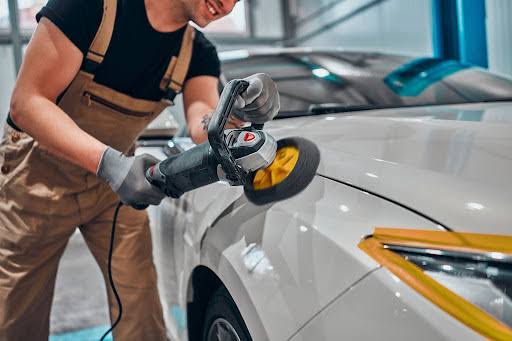
Luxury car detailing in Dubai is not a bigger car wash. It is paint, glass, wheels, trim and cabin materials being worked on with abrasives, chemicals and heat — and every one of those surfaces on a Ferrari, Rolls-Royce, Bentley or Porsche behaves differently from the same surface on a standard car. Choosing the right detailer is mostly about knowing what each surface needs and then asking whether the shop in front of you understands it.
This guide goes surface by surface: why problems appear on luxury cars in the UAE climate, what the correct fix is, and how to keep the finish stable between visits. Carzilla runs its car detailing services out of Al Quoz alongside full mechanical work, so the points below reflect what we actually see coming through the workshop.
Why Luxury Car Paint Deteriorates Faster in Dubai
Three things attack a finish here. Ultraviolet exposure depletes the UV absorbers inside the clearcoat, which is what turns a black roof or bonnet chalky before the doors show any change. Airborne silica sand sits at roughly 7 on the Mohs scale while automotive clearcoat sits around 2 to 3, so any dry cloth dragged across a dusty panel cuts it. And high-TDS wash water evaporating on a 45 °C panel leaves mineral deposits that etch into the clear rather than sitting on top of it.
Add brake dust, tar and industrial fallout from Al Quoz and Ras Al Khor traffic and you get a finish that looks dull long before the car is old. None of that is a polish problem. It is a process problem, and a detailer who cannot explain the cause will not prevent the recurrence.
Paint Correction: The Part Most Shops Get Wrong
Modern clearcoat is typically 40 to 50 microns thick. Each machine polishing stage removes roughly 2 to 5 microns. That means a car has a finite correction budget over its lifetime, and once the clear is thinned the only remedy is a respray through an auto body shop and car painting service.
A competent luxury detailer takes paint depth gauge readings across the panels before touching a machine, records them, and adjusts the compound and pad accordingly. A shop that quotes “full paint correction” without measuring anything is guessing with your clearcoat.
Clear hardness also differs by manufacturer. Italian clears on Ferrari and Lamborghini bodies are comparatively soft — they mar easily but correct quickly with fine polish and soft foam. German ceramic-hardened clears on Mercedes, Porsche and Audi resist marring but need microfibre or wool cutting pads to move at all. Using an aggressive German process on a soft Italian clear removes far more material than necessary.
Matte and satin finishes are a separate category. Frozen, magno and satin wraps cannot be polished, compounded or waxed at all — abrading them creates shiny patches that never come back. They require matte-specific shampoo and sealant only. Tri-coat pearls and Bespoke colours need blending rather than spot correction, which is why detailing and paintwork should ideally sit under one roof.
Wash Technique Is Where Swirl Marks Actually Come From
Almost all swirl marks on a luxury car are installed during washing, not during use. The correct sequence is a touchless pre-rinse to flood sand off the panel, pH-neutral foam dwell, then contact with clean microfibre mitts and separate buckets for wash and rinse. Wheels get their own bucket and brushes so brake dust never reaches the paint.
Chemical decontamination comes next: an iron remover for embedded brake dust and rail dust, a tar solvent, then a clay mitt only where the surface still feels rough. Skipping decontamination and going straight to polish grinds that contamination into the clear.
Never wash in direct midday sun. On a hot panel the water flashes off before it can be dried, and you have created water spots in the act of removing them.
Wheels, Brakes and Glass Need Their Own Chemistry
Acidic wheel cleaners strip polished lips, anodised finishes and the coatings on carbon-ceramic discs. Luxury wheels need acid-free, pH-balanced products and hand agitation. Carbon-ceramic brakes should never be hosed while hot, and wheels should be checked for kerb and sidewall damage at the same time — issues worth raising with a tyre service or brake repair team rather than ignoring.
Glass suffers the same mineral etching as paint, and once it is bonded into the surface a wash will not shift it. Cerium oxide glass polishing is the real fix, followed by a hydrophobic glass coating. If tinting is part of the job, it must comply with RTA rules — 50% visible light transmission maximum, and because film VLT multiplies with factory glass, a 50% film on already-tinted privacy glass is illegal. The consequences are covered in our guide to car modification rules in Dubai.
Interior Detailing: Match the Product to the Material
Luxury cabins are the easiest place to cause permanent damage. Semi-aniline and unfinished leathers have little or no topcoat, so alkaline cleaners pull the dye. Perforated and ventilated seats must never be soaked — liquid travels into the foam and the ventilation ducts and stays there in this humidity. Alcantara is brushed and lightly extracted, never conditioned with leather cream, which mats the fibres permanently.
Piano black trim is the most scratched surface in any modern luxury interior and needs a soft microfibre plus a dedicated plastic polish, not an all-purpose cleaner. Dashboards should be dressed with water-based, matte products; silicone-heavy dressings outgas in UAE heat and haze the inside of the windscreen. Where leather or trim is already damaged rather than dirty, it becomes a repair job for car upholstery rather than a detailing job.
Ceramic Coating and PPF: What to Verify Before Paying
A 9H rating on a ceramic coating refers to pencil hardness in a Wolff-Wilborn test. It measures scratch resistance against graphite, not impact protection — it will not stop stone chips. A properly applied coating gives three to five years of gloss retention and easier washing, provided the paint was corrected first. Coating over swirls locks them under a hard layer.
Coatings also need a controlled cure: a dust-free, climate-controlled bay for the first 12 to 24 hours and no washing for around a week. That alone rules out most open-air mobile setups in Dubai.
Paint protection film is genuine impact protection — 150 to 200 microns of self-healing TPU. Ask whether it is plotter-cut from verified patterns or bulk-cut on the car, because blade cutting on painted panels is a real risk. Ask whether edges are wrapped or relief-cut, and insist the manufacturer warranty is registered against your chassis number. If the car has been resprayed, allow 30 to 90 days of outgassing before any film or coating goes on, or solvent will be trapped under it.
How to Judge a Luxury Car Detailing Workshop in Dubai
Look at the bay before you look at the portfolio. You want an enclosed, dust-controlled space with proper inspection lighting, not a car park with an extension lead. Ask what paint depth readings they take, which pad and polish combination they would use on your specific clearcoat, and how long the job realistically takes — full correction on a large SUV is a multi-day process, and anyone promising it in four hours is doing a one-step gloss enhancement and calling it correction.
Ask for before-and-after images shot under the same lighting, get the coating or film brand and warranty terms in writing, and check the shop can also handle the mechanical and bodywork side of the car. A detailer who spots a suspension leak, a rubbing arch liner or kerbed wheels and tells you, rather than polishing over it, is worth more than one who does not. The difference between a wash and a genuine detail is explained further in our comparison of detailing versus car washing and in why owners choose Carzilla for detailing.
How to Protect the Finish Between Details
Wash every seven to ten days rather than letting sand bond onto the paint. After a desert or sandstorm drive, rinse first and never wipe a dry panel. Remove bird droppings and tree sap within hours, because at UAE surface temperatures they etch clear coat quickly. Park in shade or covered parking wherever possible, and avoid shared-rag hand washes, which is where most swirl damage on high-end cars originates.
If the car is coated, use a pH-neutral shampoo and a compatible maintenance topper — normal wax and polish clog the coating. Track-used or heavily modified cars carrying a body kit or carbon fibre parts need extra attention at panel edges and gaps, and owners who change colour seasonally should look at peelable paint instead of repeated resprays.
Booking detailing alongside routine mechanical work is the efficient route. Carzilla handles both from the same Al Quoz facility, covering Mercedes, Porsche, Ferrari, Lamborghini, Range Rover, Audi and Maserati among others. You can see the full range under services and specialisations, arrange a car inspection at the same time, or contact the workshop to discuss what your car’s paint and interior actually need.