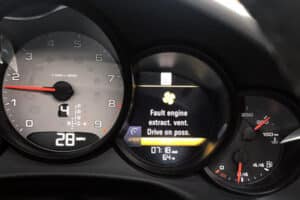
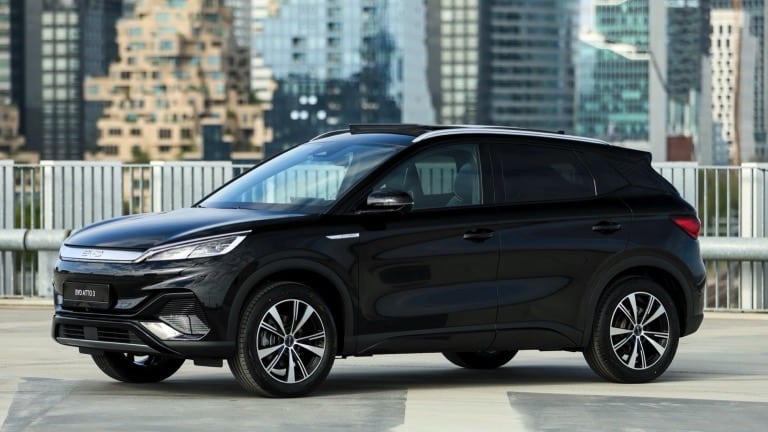
Dubai’s summer heat pushes every EV component to its limit, and the battery cooling system on the BYD Atto 3 is one of the first areas to show strain. Owners searching for BYD Atto 3 battery cooling problems in Dubai or BYD EV overheating repair UAE are usually dealing with reduced charging speed, a warm battery warning, or unusual range loss during peak summer months. This guide, from a workshop that runs a dedicated BYD and EV repair service in Al Quoz, explains why these issues happen, how to fix them, and how to stop them from coming back.
How the Atto 3 Battery Cooling System Works
The Atto 3 uses BYD’s Blade Battery, a lithium iron phosphate (LFP) pack built on the e-Platform 3.0 architecture. Unlike air-cooled hybrid batteries, this pack relies on a liquid cooling loop, where coolant runs through channels beneath the cells to pull heat away. That coolant is, in turn, cooled by a battery chiller that shares the same refrigerant circuit as the cabin air conditioning system. This shared design means that a weak or under-serviced car AC system doesn’t just affect cabin comfort — it directly reduces the battery’s ability to cool itself, which is why battery complaints on this platform so often trace back to the AC side rather than the battery pack itself.
Why Battery Cooling Problems Happen in UAE Conditions
Ambient heat load. With outside temperatures regularly above 45°C in summer, the battery starts every drive from a higher baseline temperature than it would in a temperate climate, leaving less thermal headroom before the system has to work harder.
Sand and dust restricting airflow. The condenser and radiator stack at the front of the car pull in outside air to reject heat. In Dubai and Al Quoz industrial areas, fine sand packs into these fins over time, cutting airflow and reducing the whole cooling system’s efficiency — including the AC circuit the battery chiller depends on. This is one of the most common findings during a routine car inspection in Dubai on any EV that’s spent a summer on UAE roads.
Refrigerant and coolant degradation. Low refrigerant charge, a failing electronic expansion valve, or old, low-conductivity coolant all reduce the chiller’s ability to pull heat from the battery loop. Because the coolant used in EV battery systems must meet a low-conductivity specification for high-voltage safety, using the wrong coolant during a top-up is a real risk, not just a performance issue — another reason this work should stay with a garage running EV-specific repair procedures rather than a generic top-up shop.
Fast-charging heat buildup. DC fast charging generates significant heat inside the cells. If the cooling loop is already working near its limit due to ambient heat or reduced airflow, repeated fast charging in summer accelerates wear and can trigger charge-speed throttling.
Parking and storage heat soak. Cars parked on asphalt in direct sun absorb radiant heat into the underbody, where the battery pack sits. Combined with high state-of-charge storage, this accelerates long-term battery ageing.
Warning Signs to Watch For
- DC fast-charging speed dropping noticeably in summer compared to winter
- A battery temperature or “high temperature” warning on the dashboard
- Reduced range that recovers somewhat once the car cools down overnight
- Weaker cabin AC performance alongside reduced EV performance
- Charging that pauses or slows shortly after starting a fast-charge session
Diagnosing the Real Cause
A proper diagnosis isn’t guesswork — it follows the cooling path from the pack outward. Technicians at a workshop equipped for BYD diagnostics in Dubai check the cell temperature spread across the battery (a wide delta between the hottest and coolest cells points to restricted coolant flow), then measure the temperature drop across the chiller itself. From there, refrigerant pressure, expansion valve operation, and coolant condition are tested individually. This step-by-step approach is essential because a battery warning symptom can trace back to something as simple as a dirty condenser or as involved as a failing chiller unit, and treating the wrong part wastes time and money.
Fixing Battery Cooling Issues
Condenser and radiator cleaning. Professional cleaning of the front cooling stack restores airflow and is often the first and cheapest fix for reduced cooling performance. This is typically flagged during a general vehicle inspection before it becomes a battery warning.
AC system service. Because the battery chiller shares refrigerant with the cabin AC, a full AC repair and refrigerant service — checking refrigerant charge, compressor operation, and the expansion valve — often resolves battery cooling complaints that look unrelated to the AC at first glance.
Coolant flush and refill. Using the correct low-conductivity, EV-specification coolant is critical. This work should only be carried out by technicians trained on high-voltage EV systems, since incorrect coolant or improper handling near the battery pack carries an electrical isolation risk — exactly the kind of job a specialised EV repair garage in Dubai is set up to handle safely.
Battery and chiller diagnostics. If cell temperature spread remains high after the above fixes, deeper diagnostics on the electric coolant valve or chiller unit itself are needed, using BYD-specific diagnostic tools available at a proper BYD workshop.
Preventing Battery Cooling Problems
- Book a seasonal AC and cooling system check before peak summer, not after a warning appears
- Have the condenser and radiator cleaned periodically as part of a routine car inspection if the car is parked or driven in dusty areas
- Avoid parking directly under sun on asphalt for extended periods where shaded or covered parking is available
- Avoid charging to 100% and letting the car sit at high charge for long periods in summer heat
- Space out back-to-back DC fast-charging sessions where possible to give the battery time to cool
- Have tyre pressure and rolling resistance checked alongside cooling maintenance, since correct tyre pressure and load reduce the extra strain that adds to overall thermal load on hot drives
- Keep up with RTA-compliant vehicle testing so cooling-related faults are caught during official inspection cycles, not just when a warning light appears
When to Book a Professional Inspection
If fast-charging speed drops noticeably, a battery warning light appears, or cabin AC performance weakens alongside reduced EV range, it’s worth booking a proper inspection rather than waiting. A workshop with genuine BYD and EV repair experience in Dubai can diagnose the cooling loop correctly, rather than treating symptoms individually. Carzilla’s auto garage in Al Quoz, Dubai runs full diagnostics across AC and cooling, brakes, and suspension, alongside RTA testing services, so the whole vehicle is checked, not just the reported fault.
For the full range of services offered across all vehicle brands, see carzillauae.com/services or the brand-specific workshop pages under carzillauae.com/specialize. To book an Atto 3 battery cooling inspection before the next heatwave, contact Carzilla directly.