A Lamborghini Huracán is meant to be loud. That is the problem. The 5.2-litre naturally aspirated V10 is mechanically busy by design — dry sump pumps, timing chains at the rear of the block, hydraulic valve lash adjusters, dual injection, and an exhaust with active valves — so owners in Dubai often dismiss a new tick, rattle or knock as “just the V10”. Some of it is normal. Some of it is an early bearing or timing chain warning that gets far more expensive if it is left alone through a Dubai summer.
This guide explains what each type of Lamborghini Huracán engine noise usually means, why these faults happen in UAE conditions, how they are correctly diagnosed, what the repair involves, and how to stop the noise coming back. It applies to the LP 610-4, LP 580-2, Performante, EVO, STO, Tecnica and Sterrato, and to the Spyder models serviced through Lamborghini Huracán Spyder service.
What the Huracán V10 Engine Is Doing When It Makes Noise
The Huracán runs a mid-mounted 5.2 V10 with a dry sump oil system, high-pressure direct injection combined with port injection, and a redline around 8,500 rpm. Two things matter for noise diagnosis. First, the dry sump means oil is scavenged out of the engine and stored in a separate tank, so oil pressure at start-up depends on the pump priming correctly — a car that sits for weeks starts drier than a daily driver. Second, the timing chains sit at the back of the engine, so any chain or tensioner repair is an engine-out job, not a quick fix. That is why an early rattle should be investigated before it becomes a chain, guide and tensioner replacement.
Full engine work on this platform is handled through our Lamborghini engine repair Dubai department.
Lamborghini Huracán Cold Start Rattle: Causes and Repair
A short rattle for one or two seconds on a cold start is the most common Huracán engine noise complaint in Dubai, and it is nearly always oil-related. Hydraulic valve lash adjusters bleed down when a car sits, so the valvetrain runs with clearance for the first few revolutions until oil pressure fills them again. The same delay affects the hydraulic timing chain tensioners — with no oil pressure behind them, the chain has slack and slaps against the guides.
If the rattle lasts under two seconds and disappears completely, it is usually acceptable on a car that is only driven occasionally. If it lasts longer than three or four seconds, gets worse month by month, or returns after the engine is warm, it points to a worn chain tensioner, stretched chain, worn guides, or oil that is too thin or too old to hold pressure. The first repair step is always a correct oil and filter service with the right specification and a warm-engine level check, because a low or degraded dry sump oil charge produces exactly this symptom. Our Lamborghini oil change and servicing work starts there before anything is dismantled.
Ticking Noise That Rises and Falls With Engine RPM
A sharp, metallic tick that speeds up exactly with engine speed and is loudest at the back of the car is normally an exhaust leak, not a valvetrain fault. On the Huracán the exhaust manifold studs and gaskets sit in an extremely hot area, and heat cycling in UAE traffic eventually lets a stud back off or a gasket blow. Gases escaping under pressure produce a tick that many owners mistake for a lifter.
Genuine valvetrain ticking is duller, present at idle, and does not change character when the engine is loaded. It usually means a hydraulic lash adjuster is collapsed or an oil feed passage is restricted by varnish from long service intervals. Both are checked on the lift as part of Lamborghini repair in Dubai diagnostics rather than guessed at from a video clip.
Rattle Under the Car at Idle or Light Throttle
Not every rattle is internal. On a Huracán, the two cheapest causes are a cracked heat shield and an internally broken catalytic converter. A heat shield rattle is usually a light buzzing that comes and goes with vibration at specific rpm and can often be reproduced by tapping the underbody. A failed catalyst sounds like loose gravel and is confirmed by shaking the exhaust section by hand once the car is on the lift.
The active exhaust valve actuator is a third possibility. When the valve linkage wears or the actuator fails, it can chatter at idle and cause an uneven note when it opens. These are all inexpensive repairs, which is exactly why they should be ruled out before anyone quotes internal engine work. Chassis-side noise that feels like a rattle but travels through the cabin is checked separately under Lamborghini vibration repair.
Whining or Squealing Noise From the Engine Bay
A whine that changes pitch with engine speed and is present even in neutral usually comes from the accessory drive, not the engine internals. Alternator bearings, the AC compressor, idler and tensioner pulleys and the water pump bearing all sit on the same belt, and Dubai heat plus fine airborne sand shortens the life of every one of them. Sand contamination in particular attacks pulley bearing seals.
A squeal on start-up or under electrical load is normally a glazed or stretched accessory belt. The correct diagnostic step is to isolate the belt and spin each component by hand, which separates a failing bearing from a belt problem in minutes. If the whine only appears when the air conditioning is switched on, the compressor is the first suspect and the check moves to Lamborghini AC repair.
Knocking Noise Under Acceleration
A deep knock that appears only under load and mid-range acceleration is the noise that must never be ignored. There are two main causes on a Huracán in the UAE.
The first is detonation. The V10 has a high compression ratio and is designed for 98 RON fuel. Running Special 95 in 45°C ambient heat pushes the engine into knock retard, and in poor conditions it produces an audible pinging under throttle. This is correctable — the right fuel, a check of live knock retard values on the diagnostic system, and an inspection of the ignition and injection side.
The second is bearing wear. Rod or main bearing noise is a rhythmic, heavier knock that rises with rpm and load, and it is caused by oil starvation, long service intervals, repeated cold high-rpm starts, or track and drag use. Confirmation comes from a real oil pressure gauge reading, an oil analysis, and cutting open the oil filter to look for bearing material. If a Huracán is knocking under load, it should be trailered rather than driven — continuing costs an engine rebuild instead of a bearing job. Bring it in through our Lamborghini workshop in Dubai.
Engine Noise That Is Actually the Gearbox or Driveline
The Huracán’s 7-speed dual-clutch transaxle sits directly behind the engine, so its noises are easily blamed on the V10. A metallic rattle at idle in neutral that disappears when the clutch engages is a normal dual-clutch characteristic. A clunk when selecting drive, shudder at low speed, or a whine that follows road speed rather than engine speed is transmission or driveline, and it is diagnosed under Lamborghini transmission repair rather than as an engine fault. Separating engine-speed noise from road-speed noise is the single most useful test an owner can do before booking the car in.
Why Dubai Conditions Cause Huracán Engine Noise
Huracáns in Dubai fail differently from Huracáns in Europe. Ambient heat above 45°C raises oil temperature and thins the oil film that keeps the valvetrain and bearings quiet. Fine silica sand packs the radiator and oil cooler stack from behind, which raises oil temperature further without ever showing a warning light. Many cars are stored for months, so the oil drains down and the engine takes several starts before pressure is fully restored — every dry start is measurable bearing and chain wear.
Short trips make it worse, because the engine never reaches full operating temperature long enough to boil off moisture and fuel dilution from the oil. Add 95 RON fuel, valet parking cold revs and long idling in traffic, and you have the exact conditions that turn a mild cold-start rattle into a chain and bearing repair.
How Lamborghini Huracán Engine Noise Is Diagnosed
The diagnosis has to be physical, not just a scan. Generic OBD-II readers see emissions codes only; Huracán-level access through Lamborghini brand diagnostic tooling shows misfire counters per cylinder, live knock retard, oil temperature and pressure sensor data, and stored fault history that a basic reader hides.
Beyond the scan, the noise is located with an engine stethoscope and electronic chassis ears, then confirmed by mechanical tests: cylinder-by-cylinder injector cut-out to see whether the noise changes, a real oil pressure gauge reading against specification at temperature, a borescope through the spark plug holes to check bore and piston crown condition, a cold-start recording to time the rattle, and a full underbody inspection on the lift for exhaust and shield faults. Only after that should anyone recommend opening the engine. Any Huracán coming in for a noise complaint is also given a general car inspection so unrelated faults are not missed.
Common Repairs After the Noise Is Identified
Typical outcomes range from a heat shield bracket or exhaust manifold gasket and studs, an accessory belt with tensioner and idler pulleys, an alternator or AC compressor bearing, or a catalytic converter, through to a corrective oil service with the right specification when varnish and lash adjuster noise are the cause. Heavier outcomes are timing chain tensioners, chains and guides, or bearing replacement — both engine-out operations on this platform, and both far cheaper if caught while the noise is still intermittent. Related mechanical work is covered by our general car engine repair services.
How to Prevent Engine Noise in a Lamborghini Huracán
Prevention on this engine is mostly about oil, heat and use. Change the oil and filter annually or every 8,000–10,000 km in Dubai, whichever comes first, and use the correct specification rather than a generic grade. Check the dry sump oil level the correct way — engine warm and running, following the on-board procedure — because a cold static reading is meaningless and leads to under-filling.
Run 98 RON fuel. Let oil temperature come up before using high rpm, especially after storage. Have the radiator and oil cooler stack cleaned from behind at least once a year so sand packing does not push oil temperatures up. Keep a stored car on a battery maintainer and start and drive it properly rather than idling it in the garage. And treat any change in noise as a diagnostic event, not a personality trait — this engine is loud, but it is not supposed to change.
Lamborghini Huracán Engine Noise Repair at Carzilla Auto Service, Al Quoz
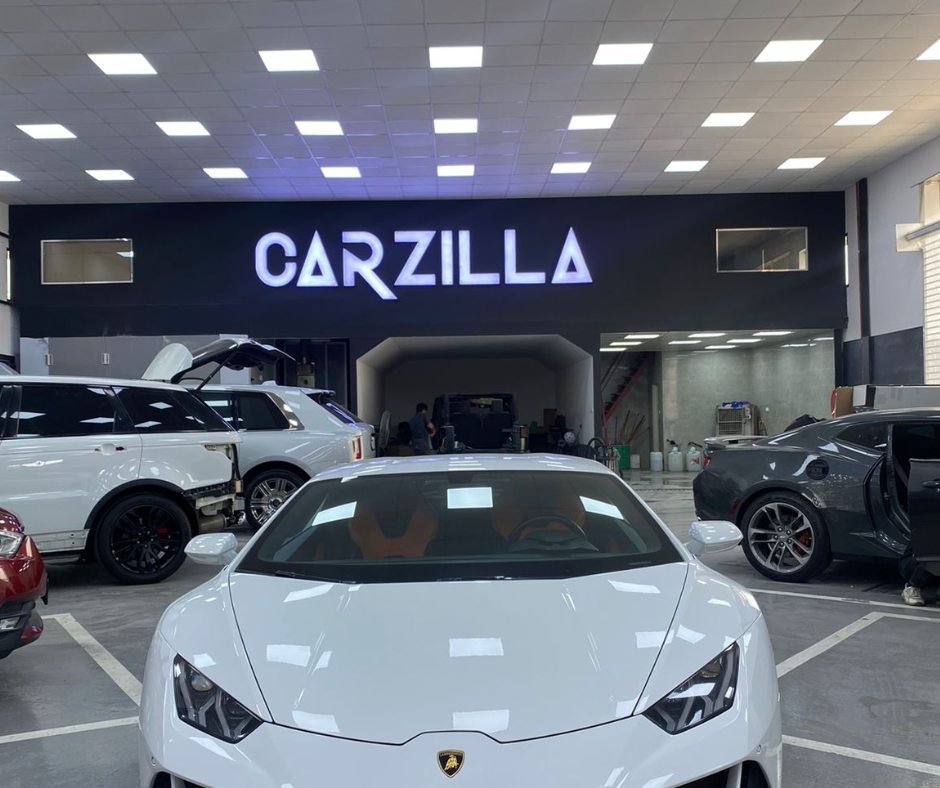
Carzilla Auto Service is a specialist luxury and exotic car workshop in Al Quoz Industrial Area 2, Dubai, with dedicated Lamborghini Huracán repair in Dubai capability, brand-level diagnostic access and independent pricing well below dealer rates. Alongside engine work we handle Lamborghini suspension repair, transmission and full Lamborghini servicing, including Urus, Aventador and Gallardo models.
If your Huracán has developed a tick, rattle, whine or knock, contact Carzilla Auto Service for an engine noise diagnosis before the next long drive.