
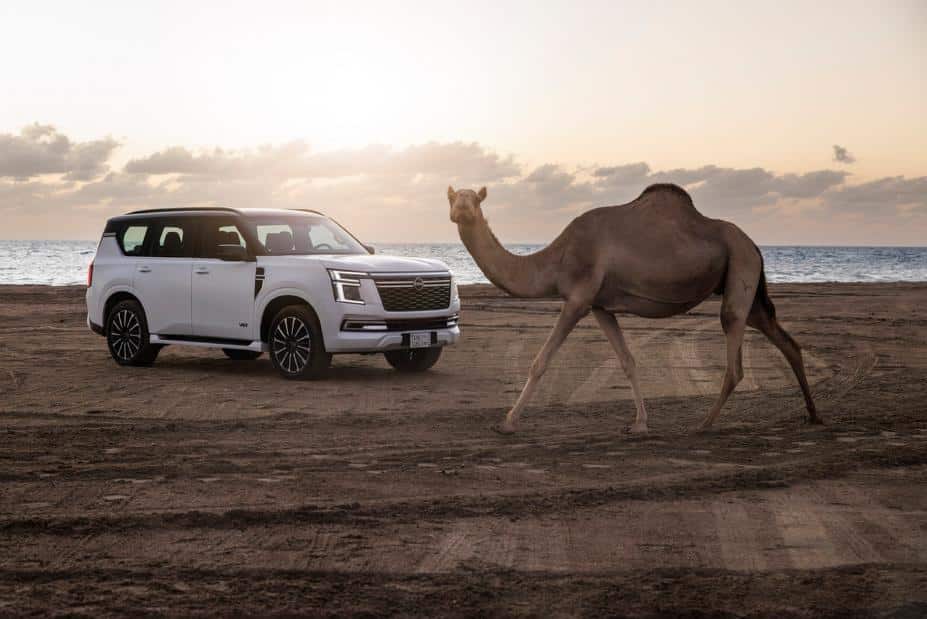
The Nissan Patrol is built for the desert, yet Nissan Patrol overheating is one of the most common complaints UAE workshops see every summer. The reason is simple. In Dubai, the cooling system works close to its limit almost every day. Ambient temperatures above 45°C, an AC condenser dumping extra heat in front of the radiator, slow traffic on Sheikh Zayed Road, sand driving and towing all eat into the safety margin the engineers built in. A small weakness that would never show in a cooler country shows up here as a climbing temperature gauge. Our guide on how Dubai heat damages car engines explains why this climate is so hard on every engine.
This guide explains why a Nissan Patrol overheats, how to tell the causes apart by when the overheating happens, what the correct fixes are, and how to prevent it. It applies to the Y61 (TB48DE 4.8 petrol and TD42 diesel), the Y62 (VK56DE and VK56VD 5.6 V8, plus the VQ40DE V6), and the newer Y63 with its V6 engines.
How the Nissan Patrol Cooling System Works
The engine-driven water pump pushes coolant through the block and cylinder heads, where it picks up heat. The thermostat stays closed until the engine is warm, then opens to send coolant to the radiator. On the Y61 and Y62, a large viscous-clutch fan pulls air through the radiator at low speed, helped by electric fans for the AC condenser. The automatic transmission fluid is also cooled through a cooler built into the radiator end tank, so gearbox heat adds to the load. A pressure cap on the expansion tank keeps the system pressurised, which raises the boiling point of the coolant well above 100°C.
Every one of these parts has to work together, which is why a radiator and coolant service checks the whole system rather than just topping up the reservoir.
One detail matters for every owner: like most modern vehicles, the Patrol’s temperature gauge is damped. It sits in the middle across a wide range of real coolant temperatures, so by the time the needle moves visibly, the engine is already much hotter than normal. A rising needle is never a “small” warning on this car, and it is one reason regular car diagnostics prevent expensive repairs — live data shows the real temperature long before the gauge does.
Nissan Patrol Overheating in Traffic or at Idle With the AC On
If the gauge climbs in slow traffic or while idling with the AC running, then drops again once you are moving at speed, the problem is almost always airflow, not coolant.
- Weak viscous fan clutch. The silicone fluid inside the fan clutch degrades with heat and age. The fan freewheels instead of locking up, so it moves very little air when the car is stationary. This is the classic Y61 and Y62 overheating cause in summer. Our article on why cooling fans can’t keep up with Dubai heat explains the same airflow problem on another brand.
- Electric fan faults. A failed fan motor, relay, fuse or heat-damaged connector on the condenser fans leaves the AC condenser hot, which preheats the air before it reaches the radiator. These are wiring faults as much as mechanical ones, and a qualified car electrician in Dubai should trace them.
- Sand packed between the condenser and radiator. Dust and fine sand collect in the gap between the two cores, where a normal wash never reaches. The radiator looks clean from the front but is blocked in the middle.
- AC system overcharged or condenser blocked. High AC pressure means more heat in front of the radiator. A proper car AC repair check is part of the diagnosis. Our guides on car AC maintenance and the best time to check your car AC in Dubai explain why the two systems affect each other.
Nissan Patrol Overheating on the Highway, When Towing or Climbing
When the temperature rises at sustained speed, under load or on long climbs such as Jebel Jais, the system has enough airflow but cannot reject enough heat. Typical causes are:
- Internally restricted radiator. Scale, old coolant and mixed coolant types block the small tubes inside the core. Our article on Nissan Patrol radiator replacement covers when a blocked radiator can no longer be saved, and the top car radiator repair reasons explains why delaying the job costs more.
- Thermostat partly stuck. A thermostat that only opens halfway allows normal temperatures in light driving but not under load.
- Worn water pump. A corroded or eroded impeller still turns but moves less coolant, especially at higher RPM. The warning signs are similar across makes, as covered in our guide to water pump failure symptoms.
- Soft lower radiator hose. An aged hose can collapse under suction at high RPM and choke the flow.
- Transmission heat. Towing a boat or caravan raises ATF temperature, and that heat goes straight into the radiator tank. Overheated ATF also damages the gearbox, which is why gearbox repair checks often go together with cooling repairs. Read everything you need to know about gearbox repair in Dubai for the warning signs.
Nissan Patrol Overheating in the Desert and on Dunes
Dune driving is the hardest work a Patrol does. The engine runs at high RPM in low gear, under heavy load, at very low road speed, so there is little natural airflow through the radiator. Soft sand and deflated tyres add even more load, and tyres run at low pressure also need checking afterwards at a proper auto tyre service. Sand is also pulled into the radiator fins and fan shroud, which steadily reduces cooling capacity across a season. Our guide on taking care of your car in Dubai’s harsh climate covers sand and heat protection in more detail.
Modified Patrols overheat more easily. Supercharger kits, tuned ECU maps and aggressive exhaust setups produce more heat than the standard cooling system was designed for. If the engine has been modified, the cooling system needs to be upgraded to match through a proper car modification workshop, and the changes must stay within the car engine and exhaust modification rules in Dubai.
Nissan Patrol Losing Coolant and Overheating
If the coolant level keeps dropping, the overheating is a result of the loss, and the leak must be found first. Common leak points on the Patrol are:
- The water pump weep hole, often showing as dried coolant crust on the front of the engine
- The crimped plastic end tanks of the radiator
- Upper and lower radiator hoses, and heater hoses near the firewall
- A cracked expansion tank or a worn pressure cap seal
When there is no visible leak, the coolant may be going into the engine. Bubbles in the expansion tank, white exhaust smoke, a hard upper hose on a cold engine or milky oil point to a head gasket failure or a cracked cylinder head, often after a previous overheat. We explain this in detail in why a car loses coolant but is not leaking. These are also among the signs your car needs immediate engine service before a breakdown.
Overheating After a Repair or Coolant Change
A Patrol that starts overheating right after cooling system work usually has one of three problems:
- Air lock. The V8 in particular traps air if the system is not bled correctly. An air pocket around the thermostat stops it from opening on time.
- Wrong coolant. Nissan specifies its blue long-life coolant. Mixing it with green or universal coolant, or topping up with plain water, causes deposits and lowers the boiling point.
- Wrong parts. An incorrect thermostat rating or a low-pressure radiator cap changes how the whole system behaves.
All three come down to workmanship, so it pays to know how to find the best car mechanic in Dubai and to check what is included using a full car service checklist before booking.
What to Do When Your Nissan Patrol Temperature Gauge Rises
- Switch off the AC immediately to remove the condenser heat load.
- Turn the heater to full hot with the fan on maximum. It pulls heat out of the engine through the heater core.
- Pull over safely as soon as you can. If the gauge is near red or a warning appears, switch the engine off.
- Never open the radiator cap or expansion tank on a hot engine. The coolant is under pressure and can cause serious burns.
- Never pour cold water over a hot engine. It can crack the cylinder head.
- If the gauge rose quickly or steam appeared, do not drive on. Call recovery instead. Our guide on choosing a roadside assistance service in Dubai is worth reading before you need it.
Driving on with an overheating engine can warp the cylinder heads, blow the head gasket and, in the worst case, seize the engine. See what causes an engine to seize for how quickly this damage happens.
How Nissan Patrol Overheating Is Diagnosed and Fixed
A correct overheating repair starts with diagnosis, not with replacing parts at random. Our article on professional engine diagnostics for modern cars explains why. At a proper workshop, the process includes:
- Reading live coolant temperature with a diagnostic tool, because the dashboard gauge hides the real number.
- Pressure testing the cooling system and the cap to find leaks that only appear under pressure.
- Combustion leak (block) test to check for exhaust gas in the coolant before any head gasket decision.
- Infrared temperature scan across the radiator to find cold, blocked areas of the core.
- Fan clutch and electric fan checks with the engine hot.
- Thermostat and water pump inspection for opening temperature, flow and bearing play.
Our comprehensive engine diagnostics guide walks through this step-by-step approach in more depth.
The fix depends on the cause: a fan clutch, thermostat, water pump, hoses, or a radiator replacement. When the radiator is replaced, the thermostat and cap should be renewed at the same time. Our car radiator repair cost guide explains what drives the price, and larger jobs can be spread out with Tabby pay-later car repair.
If the engine has already been badly overheated, a compression test and head inspection are needed, and our car engine repair team handles head gasket and cylinder head work. After any serious overheat, the engine oil should also be changed, because heat breaks the oil down quickly. Book this through our oil change service and make sure the grade is correct, as explained in how to pick the right engine oil for your car.
Overheating can also affect ignition parts in a hot engine bay. A Patrol that ran hot may later show rough running, so read our Nissan Patrol engine misfire guide if the engine no longer feels smooth.
How to Prevent Nissan Patrol Overheating in UAE Heat
- Renew coolant every 3 to 4 years in UAE conditions, earlier for cars used in the desert, and always use the correct Nissan specification. Our general guide on how to prevent engine overheating in hot weather covers the basic habits every driver should follow.
- Clean the radiator and condenser from the engine side before every summer and after each dune season.
- Check the fan clutch, hoses and water pump at every service. Follow a heat-adjusted schedule like the one in our UAE maintenance schedules guide, and learn the signs your car needs a service that drivers often miss.
- Book a pre-summer inspection. A full car inspection in Dubai catches weak cooling parts before the hottest months. Our engine inspection checklist lists what should be checked.
- Watch live temperature on desert trips with a plug-in OBD gauge, carry spare coolant, and stop with the nose into the wind to let the engine cool.
- Upgrade cooling when you modify the engine, with a higher-capacity radiator and correct fan setup.
- Check the history when buying a used Patrol. A car that has been overheated before often comes back with head gasket problems. Use our free VIN check UAE tool before you buy.
Nissan Patrol Overheating Repair in Dubai at Carzilla
Overheating is rarely caused by one failed part on its own. In most Patrols, it is a combination of heat-aged parts, blocked cooling cores and hard UAE driving. Finding the real cause first is what stops the problem from coming back next summer.
Carzilla’s auto garage in Al Quoz, Dubai diagnoses and repairs Nissan Patrol cooling problems, from fan clutches and water pumps to radiators and head gaskets. We handle the same cooling work on other large 4x4s, including Toyota Land Cruiser repair and maintenance and GMC repair in Dubai. See our full range of car repair services and specialist brand repairs, or contact Carzilla to book a Nissan Patrol overheating inspection.