An engine misfire is one of the most common engine faults on cars in Dubai, and one of the most often misdiagnosed. The cause can be a coil that takes ten minutes to replace, or it can be a stretched timing chain. From the driver’s seat, both feel much the same.
This guide explains what an engine misfire is, why UAE conditions cause so many of them, how a precise misfire diagnosis separates the real cause from guesswork, and what the correct repair looks like for each fault.
What Is an Engine Misfire?
Every cylinder needs three things at the right moment: a strong spark, the correct amount of fuel, and enough air and compression. If any one of these is missing, that cylinder fails to burn its charge properly and the crankshaft slows down for a moment.
The engine control unit (ECU) monitors crankshaft speed through the crankshaft position sensor and counts these slowdowns for each cylinder. When the count passes a set limit, it stores a fault code. P0300 means a random or multiple-cylinder misfire. P0301 to P0312 point to one specific cylinder, so P0301 is cylinder 1, P0304 is cylinder 4, and so on.
A steady check engine light means the misfire is affecting emissions. A flashing check engine light means the misfire is severe enough to damage the catalytic converter while you drive.
Common Engine Misfire Symptoms
- Rough or shaking idle, often worse with the AC switched on
- Hesitation, jerking or stumbling when accelerating
- Loss of power when overtaking or climbing parking ramps
- Check engine light on or flashing
- Smell of unburnt fuel from the exhaust
- Higher fuel consumption than normal
Brand-specific symptoms vary. Our guide to Mercedes engine misfire symptoms and what they mean covers how this fault shows up on Mercedes-Benz engines in more detail.
One point worth knowing: a failed engine mount can make a healthy engine feel like it is misfiring at idle. The difference is that a mount problem shows zero misfire counts on a diagnostic scan. If the shaking is worst when shifting into Drive or Reverse, read our guide on the signs your car’s motor mounts need replacement or the Mercedes engine mount failure symptoms before booking misfire repairs.
Why Car Engines Misfire So Often in Dubai
Heat breaks down ignition coils. On modern engines, each spark plug has its own coil sitting on top of the cylinder head. In summer traffic, underhood temperatures climb well above 100°C. Every heat cycle expands and contracts the epoxy insulation inside the coil until it cracks, and the high voltage then leaks to ground instead of reaching the plug. This is why many coils work perfectly when cold and only start misfiring when the engine is hot and under load. We explain the wider effect in how Dubai heat damages car engines.
Worn spark plugs kill new coils. As a spark plug wears, its gap widens and the coil has to produce more voltage to jump it. A very common pattern is an owner replacing one failed coil while leaving the old plugs in, and then another coil failing a few months later.
Stop-start traffic and short trips cause carbon build-up. On direct injection engines, fuel is sprayed straight into the cylinder, so it never washes over the intake valves. Oil vapour from the crankcase ventilation system bakes onto the valves instead, and short, slow city driving speeds this up. Heavy carbon disturbs airflow and causes misfires, usually worst on a cold start.
Sand and dust affect air metering. A clogged air filter, a split intake boot or a dirty mass airflow sensor upsets the air-fuel ratio, which can cause a lean misfire across several cylinders.
Batteries struggle in UAE heat. Low system voltage weakens both coil output and injector response. See why your car battery drains faster in the UAE summer.
Stored cars develop their own faults. Cars parked for the summer suffer from aged fuel, flat batteries and dried-out seals, and often misfire for the first few kilometres after they are started again.
How a Precise Engine Misfire Diagnosis Is Done
Guessing parts is the most expensive way to fix a misfire. A correct diagnosis starts with a full scan using brand-level diagnostic software, not only a generic code reader. A generic OBD reader may show nothing more than P0300. Manufacturer-level software shows live misfire counters for every cylinder and the freeze-frame data, meaning the engine speed, load and temperature at the moment the fault was stored. You can read more about this in the importance of professional engine diagnostics for modern cars.
The pattern of the misfire tells the technician where to look. A misfire in one cylinder points to something belonging to that cylinder: its coil, plug, injector or valves. A random misfire across several cylinders points to something they all share, such as fuel pressure, a vacuum leak, air metering, cam timing or low voltage.
For a single-cylinder misfire, the quickest test is a swap test. The coil from the misfiring cylinder is moved to another cylinder. If the misfire moves with it, the coil is faulty. The same logic works for injectors where the engine design allows it.
For random misfires, the technician checks fuel trims and fuel pressure. High positive long-term fuel trims mean the engine is running lean, usually from an air leak or weak fuel delivery. A smoke test then finds the exact source of a vacuum leak.
If the coil, plug and injector all test good, the problem is mechanical. A compression test and a leak-down test show whether the cylinder can hold pressure, a borescope inspects valves and pistons without stripping the engine, and cam-to-crank correlation data shows whether the timing chain has stretched. The same step-by-step approach applies when reading a Mercedes engine warning light or a Porsche check engine light.
Engine Misfire Repair: The Common Fixes Explained
Ignition Coil Replacement
A faulty coil is the most common cause of a single-cylinder misfire. Before fitting a new coil, the plug well should be checked for oil. A leaking valve cover gasket or spark plug tube seal lets oil collect around the coil boot and causes arcing, which will destroy a new coil too. The leak has to be fixed in the same visit.
Spark Plug Replacement
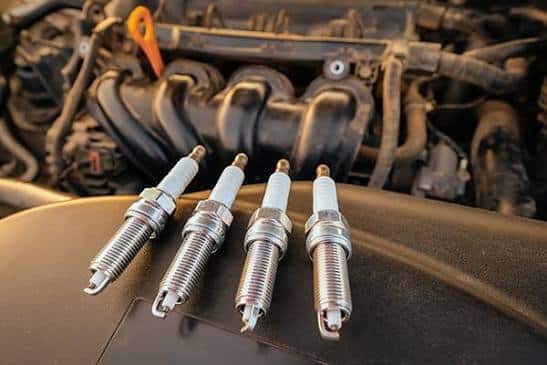
Plugs should be replaced with the exact type and heat range the manufacturer specifies, gapped correctly and tightened to the correct torque. Most engines have aluminium cylinder heads, so overtightening can damage the threads. If a coil has failed on a high-mileage engine, the plugs should be replaced at the same time.
Fuel Injector Cleaning or Replacement
A leaking or clogged injector causes a misfire on one cylinder, often with a fuel smell or rough cold starts. Mildly dirty injectors can be cleaned, but direct injection injectors that are leaking or coked at the tip normally need replacement. On some engines, new injectors must be coded to the ECU with their correction values. Our article on the most common Mercedes fuel injector problems explains this in more depth.
Intake Carbon Cleaning on Direct Injection Engines
When a borescope shows heavy carbon on the intake valves, the fix is walnut blasting. The intake manifold is removed and crushed walnut shell is blasted through each port to clean the valves without harming the metal. Fuel additives cannot reach this carbon on a direct injection engine.
Vacuum Leak and PCV Valve Repair
Split intake hoses, cracked boots and failed PCV valves or oil separators are common sources of lean misfire on European engines. A failed PCV diaphragm often comes with a whistling sound at idle and high oil consumption. Once the smoke test confirms the leak, the faulty part is replaced and the fuel trims are reset.
Fuel Pump and Fuel Pressure Repair
If fuel pressure drops under load, the engine misfires on several cylinders when accelerating hard. This can come from a weak low-pressure pump in the tank, a blocked fuel filter on older cars, or a worn high-pressure fuel pump on direct injection engines. Live data comparing requested and actual rail pressure confirms which part has failed.
Mechanical Engine Repair for Compression Loss
Low compression in one cylinder can come from a burnt valve, broken piston rings or a head gasket leak. Coolant entering a cylinder usually causes a misfire right after a cold start, along with white exhaust smoke and coolant loss. See why your car may be losing coolant without any visible leak. Timing chain stretch also causes misfires and cam correlation codes, and it must be repaired before it leads to engine damage. Our guides on Audi timing chain tensioner failure signs and Jaguar timing chain stretch explain this repair in detail. Larger mechanical repairs are carried out through our car engine repair service.
Wiring, Sensor and Battery Faults
Heat-hardened wiring, corroded connectors and loose earth points can cut power to coils and injectors intermittently. These faults need voltage testing under load, not just a code reading. Our car electrician guide for modern luxury cars covers this type of electrical diagnosis.
Is It Safe to Drive With an Engine Misfire?
With a steady check engine light and mild symptoms, a short, gentle drive to the workshop is usually acceptable. With a flashing check engine light, you should stop driving. Unburnt fuel from the misfiring cylinder enters the catalytic converter and burns inside it, which can overheat and melt the internal structure. On luxury and turbocharged cars, catalytic converters are expensive, and a cheap coil repair can become a far larger bill.
A misfiring cylinder also washes fuel past the piston rings into the engine oil, which thins the oil. A car with an active misfire and a lit engine light will also fail its RTA vehicle test. Clearing the code just before the test does not help, because the readiness monitors reset and need several drive cycles to complete.
How to Prevent Engine Misfires in UAE Conditions
Replace spark plugs at the manufacturer’s interval, and towards the shorter end of it if the car spends most of its time in city traffic. Many turbocharged direct injection engines specify plugs every 40,000 to 60,000 km, well short of the interval older engines used.
Keep oil changes on time with the correct oil specification. Old, degraded oil produces more vapour through the crankcase ventilation system, which speeds up intake carbon. Our oil change service and our guide on how to pick the right engine oil for your car cover this.
Replace the air filter more often than the European schedule suggests, fix valve cover oil leaks before oil reaches the plug wells, test the battery before every summer, and use the fuel grade your manufacturer specifies. If the car is parked for long periods, start it and drive it regularly or keep it on a battery maintainer.
Finally, ask for a diagnostic scan at every service. Misfire counters often start rising weeks before the warning light appears. Read more in why regular car diagnostics prevent expensive repairs, our engine inspection checklist and our guide to luxury car maintenance schedules in the UAE.
Engine Misfire Repair at Carzilla Auto Service, Al Quoz
Carzilla Auto Service diagnoses and repairs engine misfires on luxury, performance and everyday cars from our workshop in Al Quoz, Dubai. Every misfire job starts with a brand-level diagnostic scan and a confirmed cause before any parts are replaced.
We regularly handle misfire repairs on Mercedes-Benz, BMW, Porsche, Audi, Range Rover, Ferrari, Lamborghini and Maserati engines. For model-specific cases, see our guides on Ferrari 488 misfire and Nissan Patrol engine misfire diagnosis.
If you are buying a used car, a pre-purchase car inspection and a free VIN check can reveal misfire history before you pay. You can also spread repair costs with Tabby pay later at Carzilla.
Browse all our car repair services and brand specialisations, or contact Carzilla to book an engine misfire diagnosis in Dubai.