
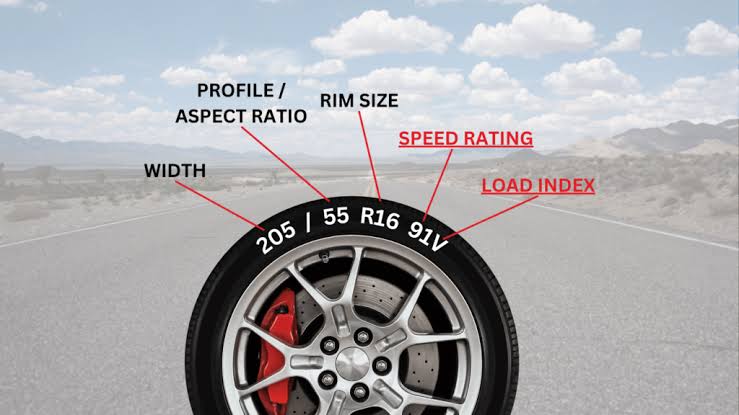
Most SUV owners in the UAE can tell you their tyre size. Very few can tell you the two or three digits that sit right after it on the sidewall, and those digits decide whether the tyre can actually carry the car once seven people, a week of luggage and a full tank are on board. That number is the tyre load index, and on a heavy luxury SUV it is the difference between a tyre that runs cool at 120 km/h on the Abu Dhabi highway and one that overheats, separates or blows out.
This guide explains what the tyre load index means, how to work out the correct load rating for your SUV, why tyres fail when a vehicle is fully loaded, what the warning signs look like, how the problem is fixed and how to prevent it. It is written from the workshop side, based on what we see on tyres, wheels and suspension that come into our tyre service centre in Al Quoz.
What Is a Tyre Load Index?
The tyre load index is a code that tells you the maximum weight one tyre can carry when it is inflated to its reference pressure and driven within its speed rating. It is not a weight in itself. It is a number on a standard chart, and each number points to a mass in kilograms. A load index of 100 means 800 kg per tyre. A load index of 110 means 1,060 kg per tyre.
The figure applies to a single tyre, not the car. To get the capacity of an axle you multiply by two, and to get the capacity of the whole vehicle on paper you multiply by four. In practice the axle figure matters more, because SUVs never load the front and rear equally.
How to Read the Load Index on a Tyre Sidewall
Take a common luxury SUV size: 285/40 R22 110Y XL.
- 285 is the section width in millimetres.
- 40 is the aspect ratio, so the sidewall height is 40% of the width.
- R22 means radial construction on a 22-inch wheel.
- 110 is the load index, which equals 1,060 kg per tyre.
- Y is the speed symbol, rated to 300 km/h.
- XL means Extra Load construction, which changes how the load index relates to pressure (explained below).
The load index and speed symbol together are called the service description. They are always read as a pair, because the load figure is only valid up to a certain speed.
SUV Tyre Load Index Chart
Passenger car tyres run from very low load indices for small city cars up to around the mid-120s for the heaviest SUVs. This is the range that covers almost every SUV on UAE roads:
| Load Index | Max Load per Tyre | Load Index | Max Load per Tyre |
|---|---|---|---|
| 98 | 750 kg | 111 | 1,090 kg |
| 99 | 775 kg | 112 | 1,120 kg |
| 100 | 800 kg | 113 | 1,150 kg |
| 101 | 825 kg | 114 | 1,180 kg |
| 102 | 850 kg | 115 | 1,215 kg |
| 103 | 875 kg | 116 | 1,250 kg |
| 104 | 900 kg | 117 | 1,285 kg |
| 105 | 925 kg | 118 | 1,320 kg |
| 106 | 950 kg | 119 | 1,360 kg |
| 107 | 975 kg | 120 | 1,400 kg |
| 108 | 1,000 kg | 121 | 1,450 kg |
| 109 | 1,030 kg | 122 | 1,500 kg |
| 110 | 1,060 kg | 123 | 1,550 kg |
Notice that the steps are not even. Each step up the scale adds roughly 2.5% to 3% more capacity, which is why dropping just two or three load index points on a replacement tyre removes a meaningful amount of headroom.
Load Index and Speed Rating Work Together
A tyre is only rated to carry its full load index up to a certain speed. For most ratings, the full load applies up to 210 km/h. Above that, for V, W and Y rated tyres, the allowed load reduces as the vehicle’s top speed rises. A V-rated tyre drops to 91% of its load at 240 km/h. A W-rated tyre drops to 85% at 270 km/h, and a Y-rated tyre drops to 85% at 300 km/h, with the figures in between worked out on a straight line.
This matters on performance SUVs. A Porsche Cayenne Turbo, Lamborghini Urus, Bentley Bentayga or Range Rover SV has a top speed well past 250 km/h, so the manufacturer has to fit a tyre with a higher load index than the static weight alone would suggest. When someone replaces those tyres with a cheaper size-match carrying a lower load index, they remove the margin that was built in for speed.
SL, XL, HL and LT Tyres: Load Markings Explained for SUVs
The same tyre size can be built to different load standards. This is where most wrong replacements happen, because two tyres that look identical and share a size can have very different load capacities.
Standard Load (SL) Tyres
A standard load tyre reaches its full rated load at a reference pressure of 2.5 bar (about 36 psi). There is usually no marking for SL; if the sidewall shows no XL, HL, LT or C marking, it is a standard load tyre. SL tyres are common on lighter crossovers and compact SUVs.
Extra Load (XL) Tyres
Extra load tyres (also marked RF or Reinforced on older stock) have a stronger carcass and bead that can run at higher pressure. They reach their full rated load at 2.9 bar (about 42 psi), roughly 0.4 bar more than a standard tyre.
The important detail is this: an XL tyre does not carry more weight at the same pressure as an SL tyre. Its higher load index only exists when it is inflated to the higher pressure. Run an XL tyre at standard-load pressure and it carries about what the SL tyre carries. This is why the pressure on your door placard and the load index on your tyre must be read together, never separately. Most large luxury SUVs are fitted with XL tyres from the factory.
High Load (HL) Tyres for Heavy SUVs and Electric SUVs
HL is a newer load class built for the heaviest passenger vehicles: large electric SUVs, plug-in hybrids with big batteries and full-size luxury SUVs. On the sidewall, HL appears in front of the size, for example HL 275/35 R23 108Y XL.
An HL tyre carries more load than an XL tyre of the same size at the same pressure. In one example size, 245/40 R19, a standard load tyre is rated at 670 kg, the XL version at 750 kg and the HL version at 825 kg. In a larger size such as 275/35 R23, the XL tyre is rated at 900 kg and the HL tyre at 1,000 kg.
If your vehicle came on HL tyres, the replacement must be HL. An XL tyre in the same size will fit the wheel and look identical, but it cannot carry the same weight. This is increasingly relevant in the UAE as more heavy EVs and hybrid SUVs reach their first tyre replacement. Owners of electric vehicles can read more on how weight and heat affect EV components in our BYD Atto 3 battery cooling guide and on our BYD repair page.
Light Truck (LT) Tyres and Load Range
LT tyres are built for body-on-frame SUVs and pickups that carry heavy loads or tow, such as the Nissan Patrol pickup versions, Toyota Land Cruiser 70 Series, GMC Sierra and heavier off-road builds of the Mercedes G-Class and Land Rover Defender. They are marked with LT before the size, for example LT285/70 R17 121/118S.
LT tyres often show two load indices. The first (121) is the load for a single-wheel fitment, which is what applies to an SUV. The second (118) applies to dual rear wheels. LT tyres also carry a load range letter, C, D or E, which tells you how much pressure the casing is built for. Load range E tyres run up to about 80 psi when fully loaded, far above any passenger tyre.
P-Metric Tyres on SUVs: The Hidden 10% Reduction
American-market tyres sometimes carry a P in front of the size, such as P275/55 R20. These are passenger-metric tyres built to the US standard. When a P-metric tyre is fitted to an SUV, pickup or van, its rated load must be divided by 1.10, which removes roughly 9% of its capacity. That rule exists because SUVs and trucks load their tyres harder than saloon cars.
This catches out owners of American SUVs and imported cars in the UAE, including GMC, Cadillac, Lincoln and Dodge models. A replacement P-metric tyre that matches the old size and load index on paper may still fall short once the 1.10 reduction is applied. If you drive an American SUV, our GMC repair team checks this on every tyre replacement.
How to Work Out the Correct Load Index for Your SUV
Where to Find Your SUV’s Tyre Specification
There are four places to check, and on a luxury SUV it is worth checking all of them:
- The tyre placard on the driver’s door pillar or fuel flap. This shows the original tyre size, often the load index and speed rating, and the cold inflation pressures. On most European SUVs it shows two sets of pressures: one for normal or partial load, and a higher one for full load.
- The vehicle identification plate (VIN plate). Usually on the B-pillar or under the bonnet, it lists the gross vehicle weight and the maximum permissible axle loads, front and rear. This is the most important figure for working out tyre load.
- The owner’s manual. It lists approved tyre sizes, load ratings and any tyre approval markings for your exact model and engine.
- The original tyres themselves. Factory-approved tyres often carry a manufacturer marking: MO for Mercedes-Benz, a star symbol for BMW, N0, N1 and so on for Porsche, AO for Audi, and LR or J for Jaguar Land Rover. These tyres are built to that manufacturer’s load, noise and handling targets.
If you are buying a used SUV, the tyre specification is something to check before purchase, because a previous owner may have fitted cheaper, lower-rated tyres. A pre-purchase car inspection should record the load index, speed rating and DOT date on all four tyres, as covered in our BMW pre-purchase inspection checklist. A UAE VIN check also helps confirm the exact model and specification the car left the factory with.
Worked Example: Calculating the Minimum Load Index
Take a large luxury SUV with a permissible rear axle load of 1,700 kg printed on its VIN plate.
Step 1 – Divide the axle load by two. 1,700 kg ÷ 2 = 850 kg per rear tyre. On the load index chart, 850 kg is load index 102. That is the absolute floor at normal speeds.
Step 2 – Allow for speed. This SUV has a top speed of 250 km/h and runs W-rated tyres. Between 240 and 270 km/h, a W tyre’s allowed load falls from 100% to 85%, so at 250 km/h only about 95% of its rated load is usable. The tyre therefore needs to be rated for 850 ÷ 0.95 = about 895 kg. That is load index 104.
Step 3 – Confirm the pressure. If the tyre is XL, that 104 rating is only valid at the full-load pressure printed on the placard. Run it at the lighter partial-load pressure with the car fully loaded and you are back below the requirement.
This is why the factory fitted a tyre with load index 104 or higher, and why a “same size, cheaper” replacement at load index 101 is not a like-for-like fit, even though it fits the wheel perfectly.
“The Tyre Fits” Is Not the Test
Any tyre with the right width, profile and rim diameter will mount and inflate on the wheel. Fitment only tells you the size is correct. The load index, load class (SL, XL, HL or LT) and speed rating tell you whether the tyre is correct. On an SUV, all three must equal or exceed the original specification. Going higher is acceptable. Going lower never is.
What Reduces a Tyre’s Real Load Capacity
The number moulded on the sidewall assumes correct pressure, sensible temperature and a sound tyre. In the UAE, several things quietly cut the capacity you actually have.
Low Tyre Pressure
Load capacity comes from the air inside the tyre, not the rubber. Every drop in pressure reduces the weight the tyre can carry. A tyre that is 0.3 to 0.5 bar under its full-load pressure may be carrying the car but flexing far more than it was designed to. Slow leaks from a nail, a corroded valve or a damaged rim bead are common causes, and a cracked alloy rim can lose pressure slowly enough that the driver never notices until the tyre is already damaged.
Heat and UAE Road Temperatures
Summer road surfaces in the UAE regularly pass 60°C. A loaded tyre already generates heat internally from flexing; a hot road adds to that heat from below. Tyre pressure rises about 0.1 bar for every 10°C, which is normal and expected. The danger is the opposite situation: a tyre set to the correct cold pressure at night, then loaded and driven hard in the afternoon sun at low pressure because nobody re-checked it, runs hotter than its design and loses strength in the rubber-to-cord bond.
Sustained High Speed
As covered above, V, W and Y rated tyres lose load capacity as speed rises past 210 km/h. Even below that, heat build-up rises sharply with speed. A fully loaded SUV at a steady 140 km/h for two hours on the E11 or E311 is a much harsher test for a tyre than the same car in city traffic.
Tyre Age
Rubber stiffens and the bond between rubber and steel belt weakens with age, especially under UAE heat and UV. A tyre close to five years old cannot handle overload the way a new one can, even with deep tread. UAE rules do not allow tyres older than five years from the manufacturing date, which you read from the last four digits of the DOT code (for example, 1223 means week 12 of 2023).
The Wheel’s Own Load Rating
Alloy wheels also have a maximum load rating, usually stamped or cast on the inside of the wheel. Factory wheels are rated for the vehicle. Some aftermarket and replica wheels sold in larger diameters are rated for lighter cars, which means the wheel, not the tyre, becomes the weak point when the SUV is fully loaded. Cracks on the inner barrel and bent lips are common results. Our guides on rim repair cost in Dubai and whether a cracked rim can be repaired or must be replaced cover this in detail.
What Happens Inside an Overloaded SUV Tyre
Understanding the failure helps explain why load index matters even when nothing seems wrong.
A tyre carries weight by flexing. As each part of the tyre rolls into the contact patch, the sidewall bends and the tread flattens, then it springs back as it rolls out. This happens hundreds of times a minute at highway speed. When the tyre is carrying more than its rating, or running at too low a pressure for the weight, each flex is deeper.
Deeper flex creates more internal friction, and friction creates heat. Heat collects in the shoulder area, where the tread meets the sidewall and where the steel belt edges sit. Over time that heat weakens the bond between the rubber and the steel belts. The belt edges begin to separate from the surrounding rubber. Once separation starts, it spreads with every revolution.
In the early stages there is nothing visible from outside. Later, a bulge or uneven lump may appear on the tread or shoulder. In the final stage the tread section can peel away from the casing, or the sidewall can fail along the flex zone. This is the typical highway “blowout” on a loaded SUV, and it usually happens on the rear axle, which carries the luggage and passengers.
Overload also affects the rest of the car. Stopping distances increase because the brakes are slowing more mass, which is covered in our guide to brake pads that need replacing. The suspension runs closer to its bump stops, dampers work harder and overheat, and air suspension compressors run for longer to hold ride height. These are the same wear patterns described in our signs of bad shock absorbers guide.
Warning Signs Your SUV Tyres Are Overloaded or Under-Rated
- Wear on both outer edges of the tread with the centre still deep. This is the classic sign of a tyre running under-inflated for its load.
- Rear tyres wearing much faster than the fronts on a vehicle that regularly carries a full rear row or heavy cargo.
- Bulges or lumps on the sidewall or tread shoulder, which can mean internal separation has already started.
- Fine cracking around the lower sidewall, in the area that flexes the most.
- A vibration or wobble that appears at speed after a long loaded trip and was not there before. This can be a belt that has shifted.
- Tyre pressure warnings after the car has been loaded, or a TPMS display showing one tyre noticeably hotter than the others on the same axle.
- A soft, wallowing feel or vague steering when the car is loaded, which can come from sidewalls flexing too much. Vague steering can also come from worn steering components, so if the feeling remains with the car empty, have the steering system checked; our article on steering box repair explains the difference.
- The SUV sitting low at the rear when loaded, or air suspension warning messages, which point to the vehicle being near or over its axle limits. Our guide on Range Rover air suspension failure shows how load and heat stress air springs.
Any bulge, deep crack or tread separation means the tyre must be replaced, not repaired.
When Do SUVs in the UAE Run Fully Loaded?
Most SUVs spend the week lightly loaded and are then pushed to their limits on a few specific trips. These are the situations where load index and pressure matter most.
Family Road Trips and Holiday Travel
A seven-seat SUV with seven adults is carrying roughly 500 to 550 kg of people before luggage is added. Add a full boot, a full tank and a roof box, and many large SUVs are at or near their gross vehicle weight. Long drives to Oman, Hatta, Ras Al Khaimah or Abu Dhabi in summer combine full load, sustained speed and high road temperature, which is the hardest combination for any tyre. Models that often run this way include the Nissan Patrol, Toyota Land Cruiser, Mercedes-Benz GLS, BMW X7, Cadillac Escalade, GMC Yukon and long-wheelbase Range Rover. Owners of these vehicles can see model-specific service details on our Mercedes GLS repair page and Range Rover repair page.
Roof Boxes and Roof Racks
Weight on the roof counts towards the total vehicle load and also raises the centre of gravity, which increases the load transfer onto the outer tyres in every bend and roundabout. Roof load limits are usually low, often in the range of 75 to 100 kg including the rack itself, and they are listed in the owner’s manual.
Towing Boats, Jet Skis and Caravans
When you tow, part of the trailer’s weight presses down on the tow ball. Because the tow ball sits behind the rear axle, that weight acts like a lever: it adds more than its own weight onto the rear tyres and lifts some weight off the front. A 2,500 kg boat trailer with a typical 10% nose weight puts 250 kg on the tow ball, and the rear tyres feel more than that. Towing is the most common reason for rear tyre overload we see. Towing also stresses the gearbox and cooling system; see our guides on Mercedes GLS transmission problems and Nissan Patrol overheating.
Desert Driving and Airing Down
Lowering tyre pressure for sand driving is normal practice, and it gives a larger footprint for flotation. But a tyre at desert pressure has lost a large share of its load capacity. Driving back onto the tarmac and up to highway speed without re-inflating, especially with a loaded car, is one of the fastest ways to overheat and damage a tyre. Always carry a compressor and re-inflate to the full-load cold pressure before leaving the sand. Off-road SUVs such as the Defender and G-Class are covered on our Land Rover Defender repair page and Mercedes G-Class service page.
Larger Wheels and Lower-Profile Tyres
Fitting bigger wheels means fitting lower-profile tyres to keep the same rolling diameter. A lower-profile tyre holds less air, and less air carries less weight at the same pressure. To keep the original load capacity, the new size must have an equal or higher load index, which usually means XL or HL construction and a higher pressure. Upsizing for appearance without checking the load index is a common mistake, and modified wheel and tyre setups also need to stay within UAE modification rules, which we explain in our guide to car modification rules in Dubai and on our car modification service page.
Cheaper Replacement Tyres
The most common way an SUV ends up under-rated is a budget replacement chosen on size and price alone. The new tyre fits, the car drives normally around town, and the problem only shows itself when the car is fully loaded on a long hot trip.
How to Fix an Incorrect Tyre Load Index or Overloading Problem
1. Confirm the Required Specification
The first step is to establish what the vehicle actually needs: axle loads from the VIN plate, approved tyre sizes and load ratings from the manual, any manufacturer approval marking, and the placard pressures for normal and full load. On a luxury SUV, this should be checked against the exact model, engine and wheel size, because the same model can have different tyre specifications depending on wheel diameter and top speed.
2. Inspect the Existing Tyres Properly
A correct inspection removes each wheel and checks both the outer and inner sidewalls, measures tread depth across the full width to read the wear pattern, looks for bulges and cracks, reads the DOT date code and checks for slow leaks at the valve and rim bead. A tyre that has been run overloaded may still look acceptable from the outside but show heat damage on the inner shoulder.
3. Replace Under-Rated or Damaged Tyres as an Axle Set
If the tyres are below the required load index, wrong load class (for example XL where HL is required) or showing heat damage, they must be replaced. Tyres should be replaced at least in axle pairs so both sides have identical construction, size and load rating. On all-wheel-drive SUVs, many manufacturers also limit how much tread depth difference is allowed between axles, because uneven rolling diameters stress the transfer case and differentials. Our article on Mercedes rear differential noise explains how drivetrain components react to mismatched tyres.
4. Set Pressures for the Load and Reset the TPMS
After fitting, pressures should be set cold to the correct value for the way the vehicle is used. Many European SUVs let you choose a full-load or comfort setting in the tyre pressure menu, which changes the warning threshold. If the system is left on the partial-load setting while the tyres are set for full load, or the other way round, the warnings will not match the real situation.
5. Balance, Align and Check the Suspension
Wheel balancing and a four-wheel alignment should follow any tyre replacement. If the old tyres showed overload wear, the suspension also needs checking, because sagging springs, leaking dampers or weak air springs reduce ride height and change camber when loaded. See our car suspension repair service, and model-specific work on Range Rover suspension and Mercedes suspension. If you are unsure whether your suspension is worn, our guide to common signs your car needs new suspension parts walks through each component.
6. Check the Wheels
Wheels that have run on under-inflated or overloaded tyres can be bent or cracked. Each wheel should be checked for run-out on the balancing machine and inspected inside the barrel. If the wheels are aftermarket, confirm their stamped load rating is high enough for the SUV.
How to Prevent Tyre Overloading on a Fully Loaded SUV
- Buy tyres by specification, not just size. Match or exceed the original load index, load class (SL, XL, HL, LT) and speed rating. For premium SUVs, choose tyres with the manufacturer approval marking where possible.
- Check pressures cold, before you load and leave. Set full-load pressures at home in the morning, not at a petrol station after 40 minutes of driving, when the tyres are already hot and reading high.
- Never let air out of hot tyres. Pressure rises as tyres warm up. That rise is built into the design. Bleeding a hot tyre down to the cold figure leaves it under-inflated once it cools.
- Know your axle limits. Find the permissible front and rear axle loads on the VIN plate and keep heavy items low and forward in the cargo area, ahead of the rear axle where possible.
- Respect roof and towing limits. Stay within the roof load rating and the tow ball nose weight listed in the handbook.
- Re-inflate after desert driving before returning to the road, every time.
- Watch the tyre age. Replace tyres before they reach five years from manufacture, and avoid buying “new” tyres that have already sat in storage for a long time.
- Rotate tyres and check alignment regularly. On SUVs that often run loaded, the rear tyres take more punishment. Rotation, where the tyre type allows it, spreads wear and gives a chance to inspect each tyre off the car.
- Include tyres in routine servicing. A proper service should record pressure, tread depth, wear pattern and DOT date on every tyre. Our guide on major car service vs minor service explains which checks belong in each.
- Take a full inspection before long summer trips. Tyres, brakes, suspension, coolant and AC all work hardest on a loaded summer drive.
Tyre Load Index, Tyre Age and UAE Traffic Rules
UAE rules focus on tyre condition and age. Tyres older than five years from their manufacturing date are not permitted, regardless of tread depth or appearance. Driving with expired, worn or damaged tyres carries a fine of AED 500, four black points and a seven-day vehicle impound under the Federal Traffic Law.
Load index is not printed on any fine, but it matters in two ways. A tyre that is under-rated and overloaded fails sooner and wears unevenly, which pushes it towards the “damaged” category long before its age limit. And when a vehicle is presented for testing at an RTA vehicle inspection centre, or when an insurer reviews a tyre-related accident, the tyre fitted is compared with what the vehicle is approved to run. Fitting the correct specification protects both your safety and your position if something goes wrong.
Tyre Load Checks and SUV Tyre Replacement at Carzilla, Al Quoz
At Carzilla, tyre work on SUVs starts with the specification, not the stock on the shelf. We read the VIN plate axle loads, the placard pressures and the approval markings for your exact model, then fit tyres with the correct load index, load class and speed rating. Every replacement includes balancing, a pressure set for how you actually use the car, TPMS checks and an inspection of the wheels and suspension. Full details of fitting, rotation, alignment and balancing are on our auto tyre services page.
We work on luxury and performance SUVs every day, including Range Rover, Mercedes-Benz, BMW, Porsche Cayenne, Bentley Bentayga, Rolls-Royce Cullinan and Lamborghini Urus. For heavier vehicles that see regular loaded driving, a combined tyre, brake and suspension check before summer travel is the most useful single visit you can book. Our Rolls-Royce Cullinan brake and suspension inspection guide shows what that inspection covers on a heavy luxury SUV.
Carzilla offers transparent estimates, Free Pickup and Delivery* and Warranty on Repair. Visit us at Al Quoz Industrial Area 2, browse our full list of car repair services, or contact our team to book a tyre load and safety check for your SUV.