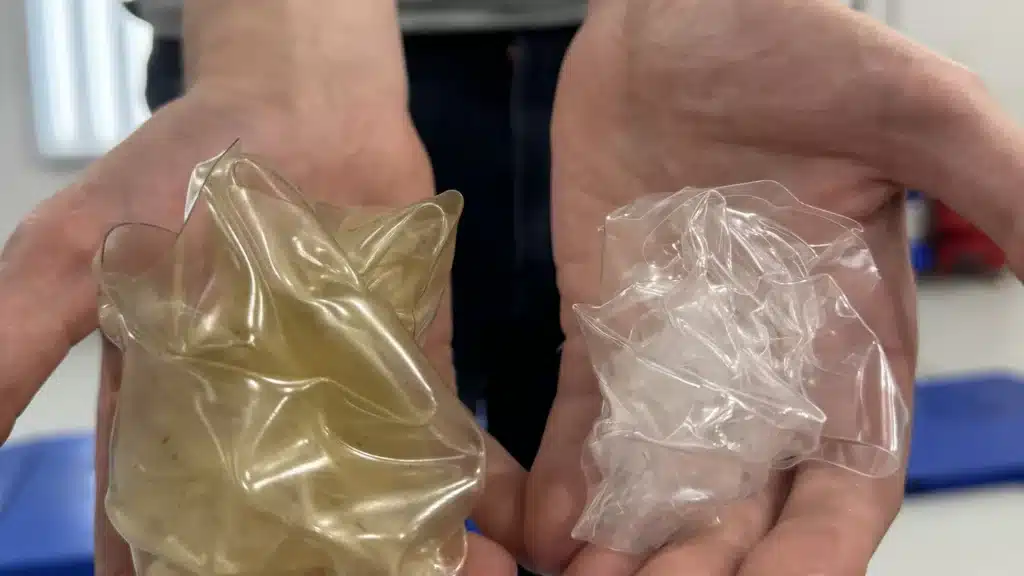
Paint protection film (PPF) is meant to be invisible. When a clear film starts to look yellow, amber or brownish, most owners assume the film has failed and has to come off. Sometimes that is true, but often it is not. “Yellow PPF” describes what you see, not what is wrong. The same yellow tint can come from the film material, from the adhesive under it, from dirt sitting on top of it, or even from the paint underneath it.
That difference decides the fix. A surface stain can be cleaned off in an hour. True yellowing inside the film cannot be cleaned or polished, and the film has to be replaced. Paint that has changed colour under the film needs paint work, not new film. This guide explains how PPF yellowing happens, why the UAE climate speeds it up, how to tell which type you are dealing with, how each one is fixed, and how to stop it happening on your car.
What Is PPF Yellowing?
PPF yellowing is a change in the colour of a clear paint protection film, usually toward yellow, amber or light brown. It is easiest to see on white, silver and pearl cars, where the paint should look clean and bright, and at the edges of the film, where covered paint sits right next to uncovered paint.
In the workshop, yellow PPF falls into two groups. The first is true yellowing, where the chemistry of the film or its adhesive has changed. The colour is spread evenly through the film, it looks the same after a thorough clean, and it is permanent. The second is surface discolouration, often called false yellowing, where contamination sits on or in the top coat of the film. It is usually patchy, worse in certain areas of the car, and most of it can be removed. A car can have both at the same time, which is why any inspection of yellow film should start with a properly washed car.
How Paint Protection Film Is Built and Where Yellowing Starts
A clear paint protection film is a layered product, and each layer can discolour in a different way.
The outer layer is the top coat. It is only a few microns thick, and it gives the film its gloss, its stain resistance and its self-healing ability. The top coat is slightly soft and elastic by design, because that softness is what lets light scratches flow back level in the heat. The same softness means some contaminants can soak into it instead of sitting on the surface.
Below the top coat is the body of the film, made of thermoplastic polyurethane (TPU), usually around 150 to 200 microns thick. How well this layer resists UV depends on the raw materials used to make it, mainly the type of isocyanate and polyol in the polyurethane, and on the UV absorbers and light stabilisers blended into it.
Under the TPU is a pressure-sensitive acrylic adhesive. It is clear when new and sits directly on your clear coat. If the adhesive discolours, you see the change through the film, and it looks exactly like the film itself has yellowed.
Under all of this is the paint itself: clear coat, base coat and primer. The paint is not part of the film, but it is part of what you see through the film. If the paint changes colour, the film usually gets the blame. Our guide to why car paint peels and how to fix it explains how these paint layers are built and how they fail.
How to Tell True PPF Yellowing From Surface Stains
Start with a proper hand wash using a pH-neutral shampoo, and let the car dry in the shade. Then look at the pattern of the colour. True yellowing of the film is even across the whole panel. It looks the same in the middle of the bonnet as it does near the edges, it usually shows on every panel that was fitted at the same time, and it is strongest on the panels that get the most sun. Surface staining is uneven. It is heavier on the leading edge of the bumper, along the lower doors and sills, around the exhaust outlets, near the fuel filler, in a thin line along the film edges, or in individual spots.
Next, clean a small, hidden patch with a film-safe PPF cleaner or a diluted isopropyl alcohol mix of roughly 15 to 25 percent in water, using a soft microfibre towel. If that patch comes back clearer than the area around it, at least part of the problem is on the surface.
The most reliable check is to look at the film away from the paint. Many installers keep a spare offcut from the original job. If there is no offcut, a workshop can lift a small corner of film on a hidden edge with gentle heat. Held against a sheet of white paper, yellowed film still looks yellow. Clear film that was sitting over discoloured paint looks clear on the paper, which tells you the problem is underneath it.
Finally, compare the paint next to the film. If the uncovered paint and the covered paint are the same tone but the film area looks warmer, the film or its adhesive is the source. If the paint around the film is also yellow, or the panel has been repainted, the paint itself may be the cause. Always judge colour in daylight or open shade. Warm LED lights and the orange street lighting on many Dubai roads make clear film look more yellow than it is.
What Causes PPF to Turn Yellow
Aromatic TPU Film Yellows Under UV Light
All TPU is made by reacting an isocyanate with a polyol. Isocyanates come in two families. Aromatic isocyanates such as MDI and TDI contain benzene rings in their structure. Aliphatic isocyanates such as HDI, IPDI and H12MDI do not. Aromatic types cost less, which is why they appear in cheaper films.
When aromatic polyurethane is exposed to UV light and oxygen, parts of the polymer chain photo-oxidise and form coloured structures known as quinone-imides. These structures absorb blue light, and any material that absorbs blue light looks yellow to the eye. Because the reaction happens in the backbone of the polymer itself, the colour cannot be washed out, extracted or polished away.
Aliphatic TPU does not have the ring structure that forms these colour bodies, which is why every premium paint protection film is built on aliphatic TPU. Some aromatic films carry extra UV absorbers to delay the problem, but once those absorbers are used up, yellowing starts and speeds up. In strong sun, a budget aromatic film can show visible yellowing within one to two years.
PVC and TPH Film Sold as PPF
Some low-priced “PPF” is not polyurethane at all. It is PVC, or TPH, which is a hybrid of PVC with some polyurethane. On the day it is fitted it can look almost the same as real TPU film.
PVC is a rigid plastic that is made flexible by adding plasticisers. Under heat and UV, two things happen. First, the PVC chains lose hydrogen chloride, a process called dehydrochlorination, which leaves behind chains of linked double bonds that turn the film yellow and then brown. Second, the plasticisers slowly migrate out, so the film hardens, shrinks at the edges and cracks. In UAE conditions this can happen within one or two summers. These films also do not self-heal properly.
The heaviest, darkest yellowing seen on cars in Dubai is very often PVC or TPH film. It is also the hardest to remove, because brittle film breaks into small pieces and leaves most of its adhesive behind. Our guide to whether PPF damages paint when removed explains why this kind of film carries the highest removal risk.
UV Stabilisers Running Out in UAE Heat
Even a good aliphatic film depends on an additive package to stay clear. UV absorbers, often of the benzotriazole type, convert UV energy into a small amount of harmless heat. Hindered amine light stabilisers (HALS) trap the free radicals that UV creates before they can break down the polymer. Both are slowly used up over the life of the film, and small-molecule UV absorbers can also migrate out of the film at high temperatures.
The UAE pushes this process hard. The UV index sits in the very high to extreme range for much of the year, a bonnet in direct summer sun can pass 70°C, and engine heat adds to it from underneath. Chemical ageing speeds up as temperature rises, so the stabiliser reserve in a film is spent faster on a car parked outdoors in Dubai than on the same car in a cooler country. Once that reserve is gone, the film and its adhesive start to yellow and the top coat loses gloss. This is also why every film, however good, has a service life. Age on its own is a cause of yellowing.
Hydrolysis of Polyester-Based TPU in Humid Weather
The polyol side of TPU matters as much as the isocyanate. Films are made with polyester, polyether or polycaprolactone polyols. Standard polyester polyols are prone to hydrolysis, which means water and heat break the ester bonds in the polymer. The acids released by that reaction then speed up further breakdown.
Hydrolysis shows as haze, loss of clarity, a dull yellow-grey cast and a film that becomes stiff and brittle. Dubai’s coastal humidity in summer, heavy dew on cars overnight and garden sprinklers in villa communities all feed it. Premium films are usually made from polycaprolactone-based aliphatic TPU, which resists hydrolysis far better. The base resin is normally listed on the film’s technical data sheet.
Low-Grade PPF Adhesive Turning Yellow
The adhesive has to stay clear through years of heat cycles while still releasing cleanly from the paint at the end. Premium films use clear acrylic adhesives formulated not to yellow. Some lower-cost films use lower-grade acrylics or add tackifying resins to boost grip, and these can darken with heat and UV.
Because the adhesive sits directly on the paint, its colour change shows as an even, warm cast across the whole panel. On a white car it can make the paint look cream. A clue that the adhesive is the cause is residue left on the paint after removal that has an amber colour. Aged adhesive also hardens and grips the clear coat more tightly over time, which makes late removal riskier.
Chemicals That Stain or Yellow PPF
The top coat of a PPF resists chemicals well, but it is not immune to them. Strong solvents such as toluene and xylene, found in some tar, glue and bug removers, can soften the top coat and leave a yellow mark if they are left on the film and not rinsed off straight away. Strong alkaline traffic film removers and degreasers used at some roadside and quick-wash stations attack the top coat, especially when they are left to dry on a hot panel. Acidic wheel cleaners sprayed onto the lower edges of the film can do the same.
Petrol and diesel dripped around the fuel filler stain the film if left to bake in the sun. Some waxes and polishes contain dyes or heavy natural waxes that leave a yellowish layer and build up along film edges. Cutting compounds and abrasive pads dull the top coat so it holds dirt more easily. Even hand cream and sunscreen transferred from fingers can slowly stain the film inside door handle cups.
Exhaust Soot, Iron Fallout and Desert Dust
The film on the rear bumper next to the exhaust outlets collects soot and oily exhaust residue, which bakes into the top coat and leaves a yellow-brown cast. Exhaust heat also ages the film in that area faster than the rest of the bumper.
Iron fallout is made up of tiny iron particles from brake dust, construction sites and industrial areas. On contact with moisture these particles rust, leaving small orange-yellow dots that are most obvious on white and silver cars. The fine red-orange desert dust left behind after a sandstorm gets its colour from iron oxide on the sand grains. Mixed with sprinkler water or morning humidity and left to dry, it can tint the film and the edges around it.
Bird droppings and tree sap are acidic. Baked onto film in the sun, they etch the top coat and leave yellowish marks. The film takes this damage in place of the paint, which is its job, but the marks still need to be dealt with quickly.
Dirt Build-Up Along PPF Edges
Every film edge is a small step on the paint. Where edges are cut flat on the face of a panel rather than wrapped around it, dirt, sand and old wax pack into that step and turn into a thin yellow-brown line. If an edge has started to lift, a pressure washer drives grime underneath it, where it cannot be cleaned. This edge line is one of the most common things owners describe as PPF yellowing. A soft detailing brush and a film-safe cleaner remove it when it sits on top. When the dirt is under the edge, that piece of film has to be re-laid or replaced.
PPF Installation Mistakes That Cause Discolouration
Some discolouration starts on the day the film is fitted. Fresh paint keeps releasing solvents for around 30 to 90 days after a respray. Film fitted before that time is up traps those solvents against the paint, which can lead to haze, bubbles and a softened clear coat under the film. Moisture trapped between the film and the paint can, in some cases, turn the clear coat cloudy or milky, a fault that car makers’ own service bulletins describe and correct with heat once the film is removed.
Heavy soap or contaminated slip and tack solutions can leave a residue under the film that dulls its clarity. If the paint was not fully decontaminated before fitting, iron particles and tar get sealed under the film, where iron can rust into small spots that no amount of washing will reach. Fitting film in an open or dusty bay leaves specks under the film that collect light and look like dirty patches.
When the Yellow Colour Is Not Coming From the PPF
A good share of “yellow PPF” turns out to be the paint. A panel repainted with a low-grade clear coat that has weak UV protection can yellow on its own, especially on white cars, and the film over it simply shows that change. A paint depth gauge reading quickly shows which panels have been refinished. On a used car, a pre-purchase car inspection and a UAE VIN check help reveal repair history before you blame the film. Discoloured refinish paint is a job for a proper car painting service, and our guide on how to choose the best car repaint service in Dubai explains what a correct refinish involves.
The opposite effect is also common. Paint under the film stays protected while the uncovered paint around it slowly fades or yellows in the sun. After a few years there is a visible two-tone line at the film edge, and owners sometimes think the covered area is the part that has changed.
Headlights are another source of confusion. Yellow headlights are usually caused by the factory UV hard coat on the polycarbonate lens breaking down, not by the film on top. Our articles on luxury car headlight restoration and headlight restoration and paint protection in Dubai explain how to tell which one has failed.
Finally, some thicker clear films can look very slightly warmer than bare white paint when you look at a seam, even when brand new. That is the optical depth of the film, not yellowing. Comparing against photos taken at installation, or against a fresh offcut, settles the question.
Which Parts of the Car Show PPF Yellowing First
Where the colour appears tells you a lot about why it appeared. True material yellowing usually shows first on the bonnet and roof, because they are flat, face the sun at the strongest angle, and the bonnet also takes engine heat from below. The front bumper and mirror caps collect bug residue, tar and road film. The lower doors and sills pick up tar, road grime and sprinkler water. The rear bumper takes exhaust soot and heat around the tailpipes. The fuel filler area takes fuel drips, and door handle cups take skin oils and sunscreen.
As a simple rule, yellowing spread evenly over the bonnet and roof points to the film material, its stabilisers or its adhesive. Yellowing concentrated low down, at the rear, around edges or in spots points to contamination, which is far easier and cheaper to fix.
Can Yellow PPF Be Cleaned or Restored?
Cleaning Surface Stains From PPF
Surface discolouration can usually be removed or greatly reduced. The work always starts with a thorough pH-neutral wash. An iron fallout remover that the film maker approves for PPF, used in the shade with a short dwell time and a full rinse, dissolves orange iron spots. Oily soot, exhaust film and road grime respond to a dedicated PPF stain cleaner or a diluted isopropyl alcohol mix. Tar is removed with a tar remover approved for use on PPF, rinsed off immediately afterwards.
Once the surface is clean, warm water or a few hours in the sun lets a heat-activated self-healing top coat relax and level out, which often removes faint marks. Some film manufacturers allow a very fine finishing polish applied by hand or with a soft pad at low speed to lift stubborn staining from the top coat. Others do not. Always check the care guide for the exact film line on your car before any polish touches it. When the film is clean, a PPF-specific sealant or coating helps keep new contamination from bonding.
What Not to Use on Yellowed PPF
Several common “fixes” make yellow film worse. Cutting compounds and heavy polishes wear through the top coat and leave the film dull and more absorbent. Melamine sponges, often sold as magic erasers, are abrasive and haze the top coat. Acetone, paint thinners and brake cleaner can soften or craze the film and damage the trim around it. Household bleach and whitening products attack polyurethane. A heat gun aimed at the film to “burn off” the colour can blister the top coat and the clear coat underneath. None of these remove true yellowing, and all of them can turn a film that was worth cleaning into one that has to be replaced.
When Yellowed PPF Must Be Replaced
If the colour is inside the TPU or in the adhesive, no product can bring the film back to clear. Sprays sold as PPF restorers may add some gloss, but they do not reverse the chemical change in the film. Film should also be replaced when it is cracked, crazed, cloudy, lifting with dirt underneath, or showing bubbles long after installation.
How Yellowed PPF Is Removed and Replaced
Removing yellowed PPF is slow, careful work, because the film is usually old and the adhesive has hardened. A proper job starts with a paint depth reading on each panel to find repainted areas, so the risk of paint lifting is known before any film comes off. The film is then softened with steam or gentle, controlled heat and pulled back slowly at a shallow angle. Good aliphatic film normally comes off in large sheets. Aromatic, PVC and TPH film that has turned yellow is often brittle and breaks into small pieces, leaving heavy adhesive behind, which makes the job longer.
Any adhesive left on the paint is dissolved with a paint-safe remover rather than scraped. The paint is then washed, decontaminated and inspected under strong light for edge lines, cut marks and haze, and a light machine polish restores full gloss where needed. If any panel needs paint repair, it is carried out by an auto body shop team and left to cure fully before new film goes on. The new film should be a genuine aliphatic TPU, plotter-cut, fitted in a clean, closed bay with edges wrapped wherever the panel allows, and registered with the manufacturer.
Does Yellow PPF Damage the Car Paint Underneath?
In most cases, no. Even yellowed film is still shielding the paint from UV, sand and stone chips, and the paint under a film is often the best-preserved paint on the car. The risk comes from leaving failed film in place for too long. As the film keeps ageing, the adhesive hardens and the film becomes brittle, so removal takes more force and the chance of lifting weak or repainted clear coat goes up. Lifted yellow edges trap sand and moisture against the paint, and the difference in UV exposure between covered and uncovered paint becomes more visible over time.
The practical rule is to replace film once it is clearly yellow, not years later. If paint has already been marked during an earlier removal or along old edges, our guides on how car scratch repair works and how common car damage is fixed at an expert auto body shop explain the repair options.
Is PPF Yellowing Covered by Warranty?
Genuine premium films carry manufacturer warranties that usually name yellowing, discolouration, cracking and bubbling as covered defects. That cover depends on conditions. The film must be genuine, it normally has to be fitted by an installer certified by the brand, and the warranty usually has to be registered with the manufacturer, often against the car’s VIN. Warranty terms are also set by region, so the cover in the UAE can differ from what the brand advertises in other countries.
Warranties generally exclude damage caused by harsh chemicals, accidents, poor care, and in some cases film fitted over repainted panels. Keep the original invoice showing the exact film line, the registration confirmation and photos from installation day. A warranty promised by a shop but never registered with the manufacturer is only a shop promise. Our guide to the best PPF in Dubai explains how to check that a film and its warranty are genuine.
How Long Does PPF Last Before It Turns Yellow in the UAE?
A premium aliphatic TPU film on a car that is garaged or parked in shade will usually stay clear for most or all of its rated service life. The same film on a car parked outdoors every day in Dubai will age faster, and loss of top coat gloss is often the first sign before any colour change. Aromatic TPU films can show yellowing within a year or two of strong sun, and PVC or TPH films often yellow and crack within one or two summers.
The number of years matters less than the hours of direct sun and heat the film has absorbed. Two cars fitted with the same film on the same day can look very different after five years if one sleeps in a basement car park and the other sits in an open car park at work all day.
How to Prevent PPF Yellowing
Choose a Non-Yellowing PPF Film
Prevention starts before the film is fitted. Ask the installer to confirm that the film is aliphatic TPU, what its base resin is, with polycaprolactone-based films being the most resistant to hydrolysis, and whether the adhesive is a non-yellowing type. A genuine film has a technical data sheet, and the better ones publish accelerated weathering results, such as hours of xenon-arc or QUV exposure along with the measured change in yellowness index (ASTM E313) or colour (Delta E). A small change after a long test is what you want to see.
The quote and invoice should name the exact film line, not just the brand. A full-body price far below the normal market rate almost always means a different film. Our 3M PPF in Dubai guide covers what to look for with one of the most widely fitted brands.
Make Sure the Paint and Installation Are Right
The paint has to be ready for film. That means a paint depth check on every panel, repair of any failing or poorly refinished paint first, and a full cure of 30 to 90 days after any respray before film goes on. The paint should be fully decontaminated with an iron remover, tar remover and clay, then corrected so no defects or contaminants are sealed in.
The film should be fitted in a clean, closed bay using the correct slip and tack solutions, with plotter-cut patterns so no blade touches the paint, and edges wrapped wherever the panel allows. Heavy edge sealers should only be used where the film maker specifies them, because some sealers discolour faster than the film itself. Choosing the right workshop matters here, and our guide to car detailing in Dubai and what to consider when choosing a workshop explains what to check.
Wash and Maintain PPF the Right Way
In UAE dust, PPF should be washed every one to two weeks. Rinse the sand off first, then wash by hand with a pH-neutral shampoo, a soft mitt and two buckets, and dry with a clean microfibre towel in the shade. Avoid brush car washes and roadside washes that use strong alkaline cleaners. Keep the pressure washer nozzle at least 30 cm from film edges so water and grit are not forced underneath. Remove bird droppings, tree sap and fuel drips the same day, and wipe the area around the exhaust outlets at every wash. Our article on car detailing vs car washing explains why washing method has such a big effect on film and paint.
Limit Heat and UV Exposure
Since UV and heat drive most true yellowing, shade is the cheapest protection there is. Covered parking at home and at work, a basement car park or a garage all slow down stabiliser loss in the film and ageing of the adhesive. If you use a car cover, use a breathable cover and only on a clean car, because sand trapped under a cover acts like sandpaper as the cover moves in the wind. Our guide on how to take care of your luxury car in Dubai’s harsh climate covers more ways to reduce heat damage.
Add a Ceramic Coating Made for PPF
A ceramic coating formulated for PPF bonds to the film’s top coat and adds a hard, slick, hydrophobic layer on top. Soot, iron fallout, bird droppings and fuel then sit on the coating instead of soaking into the film, and some coatings add extra UV protection. The coating is sacrificial, so it wears instead of the film. Use a coating designed for film rather than one designed only for paint, and check with the film maker first if the film already has a built-in hydrophobic top coat. Our guides to ceramic coating vs PPF and how long ceramic coating lasts in the UAE explain how the two work together.
Have the Film Inspected Regularly
A yearly film check, ideally done alongside routine servicing, catches lifting edges, early staining and the first loss of gloss while they can still be fixed easily. Our guide to luxury car maintenance schedules in the UAE shows how to fit paint and film checks into a normal service plan.
PPF Yellowing on White Cars, Matte Film and Colour PPF
White, pearl and silver cars show yellowing first and most clearly. White tri-coat and pearl finishes, common on Rolls-Royce, Range Rover, Mercedes G-Class and Bentley models, are also among the hardest colours to match if a panel ever needs repainting after film removal. On these cars, choosing a proven non-yellowing film and replacing it on time is especially important.
Matte and satin PPF has a textured top coat that holds dirt more readily than gloss film, and it can never be polished, because polishing would make it shiny in patches. Staining on matte film has to be removed with gentle chemical cleaning only, so regular washing and a matte-safe film coating matter even more. Matte factory paint on Porsche, Mercedes-Benz and Lamborghini models should only ever be protected with matte film. Our Lamborghini paint and repaint guide explains why soft and matte finishes need extra care.
Colour PPF and gloss-black film tend to fade or lose depth rather than turn yellow, and the change is more noticeable because the film covers the whole panel. Vinyl wraps and peelable paint age differently again. Our comparisons of car wrap or paint and PPF vs wrap for G-Wagon protection explain the trade-offs, and a change of body colour has registration rules covered in our guide to the car modification rules in Dubai.
Exposed carbon fibre parts add one more case. The clear lacquer and resin on carbon fibre kits and body kits can yellow under UV on their own, so yellow-looking film on a carbon mirror cap or splitter may be lacquer ageing underneath. Clear PPF fitted early slows this down.
PPF Inspection and Replacement at Carzilla in Dubai
At Carzilla, PPF inspection, removal, paint correction, body repair and new film installation are handled by one team at our Al Quoz workshop. Every car is washed and checked under daylight-balanced lighting, paint depth is measured panel by panel, and we confirm whether the colour is surface staining, film or adhesive yellowing, or a paint problem before recommending any work. Surface stains are cleaned with film-safe products. Yellowed film is removed with controlled steam, the paint is decontaminated and corrected, and new genuine aliphatic TPU film is plotter-cut, fitted in a closed bay and registered with the manufacturer.
PPF front kits start from AED 4,999, and full packages are listed on our car detailing services page. You can also read how to choose the best luxury car detailing in Dubai, see our full list of car services, or spread the cost with our pay-later option through Tabby. Every job includes Warranty on Repair, and we offer Free Pickup and Delivery* across Dubai.
Contact Carzilla to book a PPF and paint inspection if your film is starting to look yellow.