Air conditioning on a Lamborghini is not a comfort accessory. It is a refrigerant system that shares cooling airflow, electrical load and, on hybrid cars, part of the thermal management circuit with the powertrain. In Dubai it also works harder than almost anywhere else in the world. This guide explains how the system is built, why it fails, what the correct fixes are, and what regular Lamborghini AC repair and maintenance should actually involve.
Why Lamborghini AC Systems Need More Maintenance in Dubai
Three UAE conditions shorten AC life. The first is duty cycle: the compressor runs near-continuously for eight months of the year, so seals, the shaft seal and the control valve accumulate hours far faster than in Europe. The second is airborne silica. Fine desert sand packs the condenser and radiator stack from the inside face, where it is invisible during a visual check. The third is storage. Many Lamborghinis in Dubai are low-mileage cars that sit for weeks, and a refrigerant system that is not run loses oil film on the compressor shaft seal, which is how slow leaks start.
Coastal humidity adds a fourth factor. Salt-laden air attacks aluminium condenser fins and accelerates pinhole corrosion, which is why condensers on Dubai cars often fail on age rather than mileage.
How the Lamborghini AC System Is Laid Out
Layout decides labour cost, so it matters before any quote is discussed.
The Urus is front-engined and uses a belt-driven, externally controlled variable-displacement compressor with condensers stacked in front of the radiators and charge-air coolers. Access is reasonable, but the stack is dense and traps dust badly, which is why AC and cooling faults often appear together on the Lamborghini Urus.
The Huracán and Aventador are mid-engined. The compressor sits at the rear with the engine, the condensers sit in the front side ducts alongside the radiators, and the HVAC box with the evaporator sits in the front bulkhead behind the dashboard. That means condenser work requires front bumper and undertray removal, and evaporator replacement requires the dashboard out. Owners of the Huracán, Huracán Spyder and Aventador should treat evaporator problems as a job to prevent, not one to fix cheaply. The same applies to older mid-engine cars such as the Gallardo, Murciélago and Diablo.
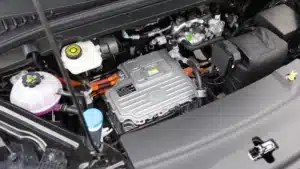
Hybrid models use a high-voltage electric compressor instead of a belt-driven one, and the refrigerant circuit also chills the battery. Two consequences follow: the compressor requires POE oil rather than PAG, because PAG contaminates the winding insulation and destroys the unit, and an AC fault can restrict hybrid performance. This work requires high-voltage isolation qualification.
Cabin Air Filter Replacement
The most common cause of weak airflow is not the refrigerant circuit at all. It is a cabin filter loaded with dust. Restricted airflow across the evaporator lowers cabin cooling, raises evaporator icing risk and forces the blower to work harder.
Standard replacement intervals assume European air. In Dubai, filters should be inspected every service and replaced roughly twice as often as the handbook states. Fitting the correct filter matters as well: undersized aftermarket elements allow unfiltered air to bypass the frame and deposit dust directly on the evaporator fins.
Condenser Cleaning and Sand Blockage
A blocked condenser cannot reject heat, so head pressure climbs, cooling falls off in traffic, and the compressor runs at high load continuously. On Lamborghinis this also affects engine cooling, because the condenser shares the stack with the radiators and charge-air coolers, a point covered further in Lamborghini engine repair work.
Correct cleaning means separating the coolers where the design allows and washing from the engine side outward at low pressure. High-pressure washing from the front pushes debris deeper and folds the fins, which permanently reduces surface area. Bent fins can be combed straight; corroded fins cannot be recovered. The same principle applies to any radiator and cooling stack service.
Refrigerant Charge and Why Topping Up Is Not Maintenance
A sealed system does not consume refrigerant. If a Lamborghini needs gas, it has a leak, and adding gas without finding that leak is the single most common mistake made on these cars.
Two further points are specific to modern Lamborghinis. The compressor is variable displacement with no clutch, so a technician who reports that “the clutch is not engaging” has misread the system; weak cooling with normal pressures usually points to the electronic control valve. And overcharging causes warm air at idle, because excess refrigerant raises head pressure and reduces the evaporator’s effective capacity. Many cars arriving with poor cooling are overcharged rather than low.
Refrigerant type also varies. Older cars use R134a, newer ones use R1234yf, and grey-import cars cannot be assumed by model year. The underhood label is the authority.
Compressor Care and Stored Cars
Compressors fail from lubrication loss more often than from mechanical wear. Oil circulates with the refrigerant, so a car that never runs its AC leaves the shaft seal dry, the seal hardens, refrigerant escapes and oil escapes with it. The compressor then runs low on lubricant the next time it is used.
The prevention is simple: run the air conditioning for ten to fifteen minutes at least once a week, including in winter, even on a stored car. This applies to every low-mileage Lamborghini in the UAE and is as important as the oil change and battery routine.
If a compressor does seize, replacement alone is not a repair. Metal debris travels through the system, and modern parallel-flow condensers cannot be flushed effectively, so the condenser, expansion valve and receiver-drier normally have to be replaced with it. Skipping decontamination is why replacement compressors fail again within months.
Evaporator Drain and Cabin Smells
The evaporator condenses litres of water in Dubai humidity, and that water leaves through a drain tube. When the drain blocks with dust, water backs up into the HVAC box and then into the cabin, soaking carpet and underlay and sometimes reaching control modules. A damp carpet on the passenger side is a drain problem until proven otherwise, not a leaking windscreen.
Standing moisture on the evaporator also grows microbial films, which is the source of the musty smell when the fan first starts. The fix is a proper evaporator clean and drain clearance, not cabin fragrance. Wet interiors that have already been damaged usually need upholstery treatment alongside the mechanical repair.
Blend Flaps, Sensors and Electrical Faults
Not every AC complaint is refrigerant related. Blend flap actuators fail and give one side of the cabin cold air and the other side warm. In-car temperature sensors with aspirator fans block with dust and cause the system to regulate to the wrong target. Sun-load sensors alter output on one side of the car. Low battery voltage produces climate control behaviour that looks like a mechanical fault, and AGM batteries in this climate commonly last only two to three years.
These faults need module-level diagnostic access with Lamborghini data, not a generic OBD reader. A generic tool reads engine emissions codes; it does not command the blend flaps through their travel or display live actuator positions, which is what actually confirms the fault.
Cooling Fans and Weak AC at Idle
If a Lamborghini cools well while moving and poorly in traffic, the usual causes are airflow related: a failed or reduced-speed cooling fan, a fan control module fault, or a packed condenser. Ram air masks the problem above 60 km/h. This symptom pattern should always be checked before any refrigerant work is done.
What a Proper Lamborghini AC Service Includes
A correct service is a defined procedure, not a gas top-up. It should cover a full performance test with vent temperatures and live pressures, electronic leak detection or UV dye tracing, condenser and stack inspection, cabin filter and drain check, recovery of the existing charge, evacuation to a deep vacuum with a timed hold test to confirm the system is dry and sealed, replacement of the receiver-drier or accumulator whenever the system has been opened, correct oil type and quantity, and recharge by weight to the manufacturer’s figure rather than by pressure gauge.
The vacuum hold test is the step most often skipped, and it is the step that determines whether the repair lasts a season or a week.
Lamborghini AC Maintenance Schedule for UAE Conditions
Inspect and clean the condenser stack annually before summer. Replace the cabin filter twice as often as the handbook interval. Have system pressures and vent temperatures measured once a year rather than waiting for a complaint. Clear the evaporator drain at every service. Run the AC weekly on stored cars. Check battery condition annually, since voltage affects climate control behaviour. Cars kept outdoors should have paint and glass protected as well, which is where detailing and regular vehicle inspection fit into the same routine.
Lamborghini AC Maintenance in Dubai
Carzilla is a specialist Lamborghini workshop in Dubai based in Al Quoz, handling AC diagnosis, condenser and compressor work, evaporator replacement, and full system evacuation and recharge on Urus, Huracán, Aventador and earlier models, alongside Lamborghini repair, transmission and suspension services. General car AC repair is available for other makes, and the full service list and brand pages cover the wider range. To book an AC inspection before summer, contact the workshop.