
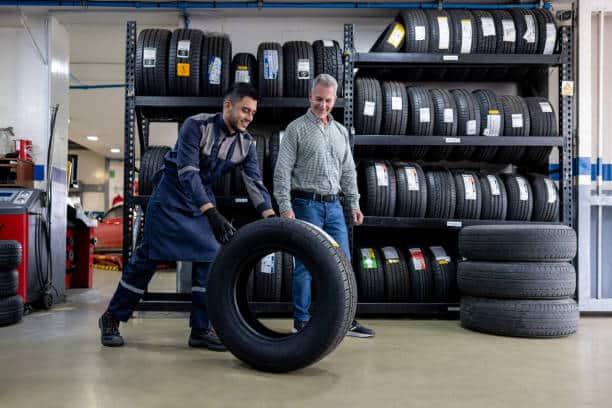
Finding the best tyre shop in Dubai for luxury cars is not about the lowest price per tyre. A Lamborghini Urus runs 23-inch wheels with a 325/30 rear tyre that costs close to AED 5,000 fitted. A Porsche 911 needs tyres approved by Porsche for that exact model. A Mercedes S-Class may run tyres with noise-cancelling foam inside, and a BMW X5 may run run-flat tyres. A tyre shop that treats these cars like an everyday sedan can damage a wheel, break a pressure sensor or fit the wrong specification in a few minutes.
This guide explains what a proper luxury and performance car tyre shop in Dubai does at each stage of the job, why tyres fail early in UAE conditions, what tyre problems cost to fix, and how to make an expensive set of tyres last longer.
For Carzilla’s own tyre fitting, balancing and alignment, see our car tyre shop in Dubai page.
Why Luxury and Performance Cars Need a Specialist Tyre Shop in Dubai
Most tyre shops in Dubai are set up for fast, high-volume work on 16 to 18-inch wheels with tall, flexible sidewalls. Luxury and performance cars change almost every part of the job:
- Low-profile tyres with 30 and 35-series sidewalls are stiff and hard to fit without damaging the rim edge or the tyre bead.
- Large alloy wheels of 21 to 23 inches are often forged, diamond-cut or painted in special finishes that scratch easily.
- Staggered tyre sizes, with wider tyres at the rear, cannot be rotated front to back.
- OE-marked tyres are tuned for one car maker’s suspension, weight and top speed.
- Run-flat, noise-cancelling and self-sealing tyres each have their own fitting and repair rules.
- TPMS sensors, air suspension and all-wheel-drive systems all react to the wrong tyre or a careless fitting.
A specialist tyre shop for luxury cars has the equipment and training to handle all of this. Just as important, it will say no when a tyre cannot be repaired, a size is wrong or a wheel is damaged.
Why Car Tyres Fail Early in Dubai
Before choosing a tyre shop, it helps to understand what UAE conditions do to tyres. Tyre failure is a real road safety issue here. Ministry of Interior figures show 65 accidents caused by tyre blowouts on UAE roads between 2023 and 2025, and Dubai Police have named burst tyres as one of the top causes of summer accidents.
Road Heat and Low Tyre Pressure
In summer, asphalt in Dubai can reach around 70°C. A tyre running on that surface is hot before it builds its own heat from flexing. When a tyre is under-inflated, the sidewall flexes more and the tyre gets hotter still. That heat weakens the bond between the rubber and the steel belts inside, which leads to tread separation and blowouts.
On a heavy luxury SUV at highway speed, a slow puncture or a missed pressure check is the most common starting point for a tyre burst.
Expired and Worn Tyres
In the UAE, a tyre’s legal life is five years from the date it was made, even if it has never been used. Dubai Police recorded 826 violations for expired tyres in the first five months of 2026 alone. Driving on expired, worn or damaged tyres carries a fine of AED 500, four black points and seven-day vehicle impoundment.
Low-mileage luxury and exotic cars are especially at risk. A weekend car can reach the five-year limit with most of its tread still left.
Speed Bumps, Potholes and Kerb Damage
Low-profile tyres have very little sidewall to absorb impacts. When a car hits a speed bump, a sharp drain channel or a kerb, the force goes straight into the wheel. This causes sidewall bulges, bent rims and cracked alloys. Our guides on whether a cracked rim should be repaired or replaced and on rim repair cost in Dubai explain the wheel side of this damage.
Suspension and Alignment Faults
Worn shock absorbers, tired bushes and wheels out of alignment wear tyres unevenly long before the tread reaches its limit. A tyre shop that only swaps tyres, without asking why the old ones wore out, will see the same car back early. Our article on the signs of bad shock absorbers shows how damper wear shows up on the tyre tread.
Long Periods of Parking in Summer
Many luxury cars sit for weeks in summer. Tyres lose pressure, develop flat spots where they rest on the ground, and dry out in the heat and sun. Sidewall cracking is common on cars parked outdoors.
Check the Tyre Age, DOT Code and ESMA Approval
The first sign of a good tyre shop is that it shows the tyre’s age before fitting it.
How to Read the Tyre Manufacturing Date
The manufacturing date is part of the DOT code on the sidewall. The last four digits show the week and year. A tyre marked 2425 was made in the 24th week of 2025. Under the UAE five-year rule, that tyre can stay on the road until the 24th week of 2030.
A tyre that sat in a warehouse for three years has only two years of legal life left once it is fitted. There is no law that sets how fresh a new tyre must be at the time of sale, but for a luxury or performance car it makes sense to fit tyres made within the last 12 months. A reliable tyre shop writes the DOT code of each tyre on the invoice.
ESMA Approval, Grey Imports and Used Tyres
Tyres sold in the UAE must meet UAE standards and carry the approval sticker or RFID tag. Uncommon performance sizes are sometimes brought in through unofficial channels. These tyres may be genuine, but they may also be old stock, tyres built for another market, or counterfeit.
The sale of used tyres is banned in the UAE, and retreaded tyres have a much shorter legal life. Neither belongs on a luxury or performance car.
How Tyres Are Stored
UAE rules say tyre storage areas should be kept below 25°C. Tyres kept in a hot container or under a metal roof in August age faster than their DOT code suggests. Good tyre shops store stock indoors, out of sunlight and away from welding machines and electric motors, which produce ozone that cracks rubber.
Ask for the Correct OE-Marked Tyres for Your Car
Most premium car makers develop tyres with the tyre makers for several years before a car is launched. The approved tyre gets a code moulded into the sidewall. Two tyres with the same brand, pattern and size can drive very differently if only one carries the approval mark.
A good tyre shop checks the current tyres, the tyre placard on the door frame and, for imported cars, the original specification through a UAE VIN check.
OE Tyre Markings by Car Brand
| Car brand | OE marking on the tyre sidewall |
|---|---|
| Porsche | N0 to N6 on older tyres; newer two-letter codes such as NA (911), NB (718), NC (Cayenne), ND (Panamera), NE (Macan), NF (Taycan) |
| BMW and MINI | ★ (star) |
| Mercedes-Benz | MO, MO1 (AMG), MOE (run-flat), MO-S (noise-cancelling foam) |
| Audi | AO, AO1, RO1 (RS and high-performance models) |
| Ferrari | F, F01, F02 and later |
| Lamborghini | L, L1 |
| McLaren | MC, MC1, MC2 |
| Bentley | B, B1, BC (comfort), BL (low rolling resistance) |
| Aston Martin | AM with a number, such as AM8 or AM9 |
| Maserati | MGT |
| Land Rover and Range Rover | LR |
| Jaguar | J |
| Tesla | T0 |
On Porsche tyres, the number after the letters is the generation of the approval. Porsche advises fitting matching tyres, and tyres from different approval generations should not be mixed on the same axle. Lamborghini has issued a service bulletin telling its dealers to check for the L marking before fitting new tyres to the Urus.
Fitting non-approved tyres is legal, but it can change handling balance, braking stability, noise and wear. This matters most on Porsche, Ferrari, Lamborghini and McLaren models, where the chassis is set up around a specific tyre.
Load Index, Speed Rating and XL Tyres for Luxury SUVs
Every tyre has a load index (the weight it can carry) and a speed rating (the maximum speed it is built for). Large luxury SUVs such as the Range Rover, Bentley Bentayga, Mercedes GLS and Rolls-Royce Cullinan weigh well over two tonnes and usually need XL (extra load) tyres. Supercars need Y-rated tyres built for 300 km/h, or (Y)-rated tyres for higher speeds.
A tyre with a lower load index or speed rating than the car’s specification is unsafe, and it can also cause problems with an insurance claim after an accident. A trustworthy tyre shop never downgrades either rating to sell a cheaper tyre. Our SUV tyre load index guide for UAE roads explains how to read these numbers.
Run-Flat, Noise-Cancelling and Self-Sealing Tyres
Three tyre types need trained fitters and the right machines.
Run-Flat Tyres
Run-flat tyres have reinforced sidewalls that let the car keep moving for a limited distance after a puncture. They are standard on many BMW and MINI models and some Mercedes-Benz models. The stiff sidewalls make them hard to fit without tearing the bead. Run-flat and standard tyres must never be mixed on the same car.
Noise-Cancelling Foam Tyres
These tyres have a polyurethane foam layer bonded inside the tread to reduce cabin noise. They are common on the Mercedes-Benz S-Class, Bentley, Rolls-Royce, Porsche Taycan and many electric cars, including newer BYD models. Puncture repair on these tyres means cutting away a small area of foam first.
Self-Sealing Tyres
Self-sealing tyres have a sticky layer inside the tread that closes small punctures on its own. They need a specific cleaning and repair method.
Replacing Two Tyres or Four on All-Wheel-Drive Luxury Cars
All-wheel-drive systems such as Audi quattro, BMW xDrive, Mercedes 4MATIC and Porsche Traction Management sense small differences in wheel speed. A new tyre is larger in rolling circumference than a worn tyre. If the difference between axles is too big, the system acts as if a wheel is slipping and works all the time. This heats and wears the transfer case or centre coupling.
Porsche advises replacing the other tyre on an axle if it has worn more than about 30 percent from new. On many all-wheel-drive Audi, Range Rover and Porsche models, four new tyres is the safe choice. A tyre shop that fits two new tyres without measuring the tread on the other axle puts the gearbox and transfer case at risk.
WDK-Certified Tyre Changers for Low-Profile Tyres and Large Alloy Wheels
The tyre changing machine is the easiest way to judge a luxury car tyre shop. Standard machines use a metal head and a tyre lever to push the bead over the rim. On a 22-inch wheel with a 30-series tyre, that method can scratch the rim edge, mark a diamond-cut face and tear the bead.
What WDK Certification Means
WDK is the German rubber industry association. It tests and certifies tyre changers for fitting run-flat and UHP (ultra-high-performance) tyres without damaging the tyre or rim. WDK-certified machines use bead-pressing arms, protected mounting heads and centre clamping, and some are fully leverless so no tool touches the rim face. A tyre shop that regularly handles performance cars should be able to show this certification on its machines.
Clean Bead Seats and Proper Lubricant
Before a new tyre goes on, the bead seat on the rim should be cleaned of old rubber, corrosion and sand. Fine sand in the bead seat is one of the most common causes of slow leaks on cars in Dubai. The bead must be lubricated with proper tyre fitting paste, not soapy water.
Match Mounting
Many new tyres carry coloured dots on the sidewall that mark the tyre’s light spot or high point. A skilled fitter lines these marks up with the valve or the marked point on the rim. This reduces the balancing weight needed and gives a smoother ride, which is easy to feel on low-profile tyres.
Safe Lifting for Air Suspension Cars and Low Supercars
Damage often happens before the tyre is touched. Every car has set lifting points. Lifting on the wrong point can dent a sill, crush an underbody panel or damage a battery case on a hybrid or electric car.
Cars with air suspension, including most Range Rovers, the Mercedes S-Class and GLS, the Bentley Bentayga, Rolls-Royce models and many Audi and Porsche SUVs, must be switched into jack or lift mode before they are raised. Otherwise, the system tries to level the car as the wheels drop and can over-extend the air springs. Repairs to these systems are expensive, as our guides on Range Rover air suspension failure and Rolls-Royce Ghost air suspension repair show.
Supercars with low front splitters need low-entry lifts or ramps, and the front-axle lift system should be raised before the car drives onto the lift.
Wheel Bolts, Locking Keys and Centre-Lock Wheel Torque
Wheel bolts on luxury cars are often coated or made of titanium. Removing them with a high-powered impact gun can strip coatings, damage threads and crack the locking bolt key. A careful technician loosens and runs in bolts with a low-torque setting or by hand.
Some Porsche GT and Turbo models, and some Ferrari, Lamborghini and McLaren versions, use centre-lock wheels held on by one large nut. On Porsche centre-lock wheels, the nut is tightened to around 600 Nm with a special socket, the threads and contact faces must be lubricated with the specified paste, and the safety catch inside the hub must lock correctly. A centre-lock wheel that is fitted wrongly can come off at speed. Only a tyre shop with the correct socket, torque multiplier and procedure should work on these wheels.
All other wheels should be tightened by hand with a calibrated torque wrench, in a star pattern, to the figure set for that model. Many car makers advise re-checking alloy wheel torque after the first 50 to 100 km.
TPMS Sensor Service, Programming and Warning Light Reset
Almost every modern luxury car has a tyre pressure monitoring system with a sensor inside each wheel. Most TPMS problems after a tyre change come from one of four causes.
A broken sensor. If the bead breaker or mounting head starts too close to the valve, it crushes the sensor. Trained fitters always start the bead about 180 degrees away from the valve.
Old valve parts. Clamp-in sensors use a rubber seal, a nut and a valve core. These should be renewed at every tyre change, because the rubber hardens in Dubai heat and causes slow leaks.
Flat sensor batteries. TPMS sensor batteries usually last five to ten years and cannot be replaced on their own. When one sensor dies, the others of the same age usually follow, so replacing all four during a tyre change saves removing the tyres again later. In Dubai, programmable aftermarket sensors start at around AED 100 each plus programming, while genuine sensors for luxury brands can cost several hundred dirhams each.
The wrong frequency or no relearn. Cars from North America usually use 315 MHz sensors, while GCC and European cars use 433 MHz. A sensor on the wrong frequency will never talk to the car. Some cars learn new sensors on a short drive, while others need a programming tool. On many BMW and Mercedes-Benz models, the new tyre pressures must also be stored through the car’s menu. A TPMS warning light that stays on after a tyre change usually means this step was missed.
Wheel Balancing and Road Force Balancing for High-Speed Driving
A wheel that is out of balance by a few grams vibrates at speed. On a car driven at 120 km/h or more, that vibration comes through the steering wheel and seat. Over time it wears steering joints, wheel bearings and suspension bushes, which leads to steering repair or suspension repair that should not have been needed.
Dynamic Balancing on Two Planes
Wide wheels must be balanced on both the inner and outer planes. Stick-on weights should be placed on the inner barrel, behind the spokes, not hammered onto the rim edge of an expensive alloy wheel.
Correct Centring on the Balancer
The wheel must be centred on the balancing machine with the correct cone or a flange plate that matches the bolt pattern. A wheel that is slightly off-centre on the machine can show as balanced and still vibrate on the car.
Road Force Balancing
Some vibration comes from stiffness changes in the tyre or a rim that is slightly out of round, not from weight. A road force balancer presses a roller against the tyre to find this. It is the right tool when a car still vibrates after normal balancing, and it is especially useful with low-profile tyres.
Clean Hub Faces
Corrosion and sand on the hub face stop the wheel from sitting flat. The wheel then runs slightly out of true and causes shaking under braking that feels like warped brake discs. A good technician cleans the hub face before refitting the wheel. Our article on Porsche brake noise and our car brake repair service explain how wheel problems can be mistaken for brake faults.
Wheel Alignment After New Tyres on Performance Cars
New tyres do not always need an alignment, but an alignment check protects a costly set of tyres. It is essential when the old tyres show uneven wear, the car pulls to one side, the steering wheel is off-centre, or the car has hit a pothole or kerb. In Dubai, a computerised alignment usually costs between AED 130 and AED 300, depending on the car.
Performance cars often run negative camber, with the top of each wheel tilted inward, for better grip in corners. When camber or toe drifts outside the factory range, the inner edge of the tyre wears out fast while the rest of the tread still looks fine. Many owners only notice when the tyre fails.
On cars with air suspension, the car must be at its normal ride height before alignment is measured. After the alignment, the steering angle sensor often needs a reset, and cars with lane-keeping cameras may need their driver assistance systems calibrated.
Correct Tyre Pressure for Dubai Heat
The correct tyre pressures are on the placard in the door frame or fuel flap and in the owner’s manual. The number on the tyre sidewall is the maximum the tyre can hold, not the pressure the car needs. Many luxury and performance cars list separate pressures for normal driving, full load and high speed.
Tyre pressure rises by roughly 0.1 bar for every 10°C rise in tyre temperature. A tyre set correctly early in the morning reads higher by midday. Letting air out of hot tyres to match the placard leaves them under-inflated once they cool, and under-inflation is the main cause of heat build-up and tyre bursts. Pressures should be checked cold, in the morning or after the car has been parked in the shade.
Nitrogen holds pressure slightly better as tyres heat up, but the benefit is small. It does not replace regular pressure checks, and topping up nitrogen-filled tyres with normal air is safe.
Puncture Repair Standards for Luxury Car Tyres
The way a tyre shop handles a puncture shows how seriously it takes safety.
Location of the damage. Only punctures in the central part of the tread can be repaired. Damage in the shoulder or sidewall cannot be repaired safely.
Size of the hole. For car tyres, the usual limit is around 6 mm. Anything larger means a new tyre.
Repair method. The correct repair is to remove the tyre from the rim, check the inside for hidden damage, and fit a combined plug and patch from the inside. A string plug pushed in from outside is a roadside emergency fix only and should never be left as the permanent repair on a high-speed tyre. Some tyre makers reduce or remove the speed rating after any repair.
Run-flat tyres. Repair policies differ by tyre brand. Some allow one repair under strict conditions and others allow none. Many car makers advise replacing a run-flat tyre that has been driven while flat, because the sidewall may be damaged inside.
Tyres driven flat. Any tyre driven while badly under-inflated must be removed and checked inside. Rubber dust, creases or marks on the inner sidewall mean the tyre must be replaced.
Luxury Car Tyre Prices in Dubai
Luxury and performance tyre prices in Dubai depend on size, brand and OE marking. The table below shows indicative fitted prices per tyre from UAE tyre retailers in 2026, including VAT, fitting and balancing.
| Tyre and size | Typical cars | Fitted price per tyre |
|---|---|---|
| Michelin Pilot Sport 4S, 19 to 23 inch | Sports saloons, coupes, supercars | AED 1,170 to 3,360 |
| Pirelli P Zero, 19 to 23 inch | Many OE fitments | AED 600 to 3,040 |
| Pirelli P Zero PZ4 ★ MO, 275/35 R20 | BMW and Mercedes-Benz | AED 1,300 to 1,450 |
| Pirelli P Zero N0, 315/35 R21 | Porsche SUVs | AED 1,820 to 2,000 |
| Pirelli P Zero PZ4 B, 275/35 R22 | Bentley | Around AED 1,400 |
| Pirelli P Zero PZ4 L, 285/35 R23 | Lamborghini Urus (front) | AED 2,780 to 3,600 |
| Pirelli P Zero PZ4 L, 325/30 R23 | Lamborghini Urus (rear) | Around AED 4,725 |
A full set of premium performance tyres for a supercar usually costs between AED 6,000 and AED 12,000 or more. Soft performance tyres on high-powered cars can wear out in 8,000 to 15,000 km, so the quality of the fitting, balancing and alignment has a direct effect on running costs.
Tyre Wear Patterns That Show a Problem
Uneven tyre wear tells a good technician what went wrong. Reading the old tyres before fitting new ones stops the same fault from ruining the next set.
| Wear pattern | Likely cause | Fix |
|---|---|---|
| Centre of the tread worn | Pressure too high | Set pressures cold to the placard figure |
| Both edges worn | Pressure too low | Regular cold pressure checks, check for slow punctures |
| One edge worn, usually the inner | Camber or toe out of range | Four-wheel alignment, check bushes and ride height |
| Cupped or scalloped patches | Worn shock absorbers | Replace dampers in axle pairs |
| Feathered tread blocks | Toe misalignment | Wheel alignment, check tie rods |
| Flat spot in one area | Long parking or locked brake | Inspect tyre, replace if vibration remains |
| Vibration at 100 to 130 km/h | Poor balancing or bent rim | Rebalance, road force check, rim inspection |
How to Make Luxury Car Tyres Last Longer in Dubai
Most tyre failures in the UAE can be prevented with a few simple habits.
Check tyre pressure every two weeks in summer. Check it cold and use the placard figures. TPMS warns of large pressure drops but often not small ones, and small ones are what cause heat damage.
Track tyre age as well as tread depth. Note the DOT codes when new tyres go on. Low-mileage cars often reach the five-year limit before the tread is worn.
Look at the tyres every time the car is washed. Check for bulges, cuts, sidewall cracks and nails in the tread. A bulge means the inside of the tyre is broken and it must be replaced straight away.
Rotate tyres where the car allows it. On cars with the same size tyres front and rear, rotating every 8,000 to 10,000 km evens out wear. Staggered setups cannot be rotated front to back, so pressure and alignment matter even more.
Have the alignment checked once a year and after any hard pothole or kerb impact.
Fix suspension faults early. Worn dampers, bushes and ball joints destroy tyres. Model-specific advice is on our Porsche suspension repair, Mercedes suspension repair and Range Rover suspension repair pages, and in our guide to the Rolls-Royce Cullinan brake and suspension inspection.
Store the car properly over summer. Inflate the tyres to the top of the placard range, park in shade or under cover, and move the car every couple of weeks.
Stay within approved wheel and tyre sizes. Bigger wheels and lower-profile tyres are popular in Dubai, as covered in our look at luxury car customization trends in Dubai. Before changing sizes, read the car modification rules in Dubai and make sure the new tyres keep the correct load index, speed rating and rolling circumference. Our car modification service can confirm what fits safely.
Have tyres checked before the annual RTA test. Expired or damaged tyres fail the RTA vehicle inspection. A pre-test car inspection finds tyre, brake and suspension faults before the test.
Frequently Asked Questions About Luxury Car Tyres in Dubai
What is the best tyre shop in Dubai for luxury cars?
The best tyre shop for a luxury or performance car is one that fits fresh, ESMA-approved tyres with the correct OE marking, uses WDK-certified tyre changers, programs TPMS sensors correctly, balances and torques wheels properly, and checks alignment and suspension instead of only swapping tyres. Price per tyre matters less than the quality of the fitting.
How much do luxury car tyres cost in Dubai?
Premium performance tyres usually cost between AED 1,200 and AED 3,500 per tyre fitted. Large 23-inch tyres for cars such as the Lamborghini Urus can cost close to AED 5,000 each. A full set for a supercar typically costs AED 6,000 to AED 12,000 or more.
How long do tyres last in Dubai heat?
The legal limit in the UAE is five years from the manufacturing date. In terms of distance, soft performance tyres on powerful cars can wear out in 8,000 to 15,000 km, while touring tyres on luxury saloons and SUVs last much longer with correct pressures and alignment.
Can I fit non-OE tyres on a Porsche, BMW or Mercedes?
It is legal, but it is not recommended on cars with an approved tyre fitment. Non-approved tyres can change handling, braking stability and noise. On Porsche, the same OE marking should be used on both tyres of an axle.
Can run-flat tyres be repaired in Dubai?
Some tyre makers allow one repair to a run-flat tyre if the damage is small and in the centre of the tread, and others do not allow any repair. A run-flat tyre that has been driven while flat should normally be replaced.
What is the fine for expired tyres in Dubai?
Driving with expired, worn or damaged tyres carries a fine of AED 500, four black points and seven-day vehicle impoundment.
Is nitrogen tyre filling worth it in Dubai?
Nitrogen holds pressure slightly more steadily in heat, but the benefit is small. Regular cold pressure checks matter far more than the gas inside the tyre.
Luxury Car Tyre Shop in Al Quoz, Dubai: Carzilla
Carzilla is a luxury and exotic car workshop in Al Quoz Industrial Area 2, Dubai. Our tyre services include tyre replacement and fitting, wheel balancing, wheel alignment, tyre rotation, pressure checks and nitrogen filling. Because tyre work is done alongside our full mechanical services, tyre wear, suspension, brakes, steering and drivetrain faults are checked together.
We work on BMW, Mercedes-Benz, Audi, Porsche, Range Rover, Bentley, Rolls-Royce, Maserati, Aston Martin, Jaguar, McLaren, Lamborghini and Ferrari, including Ferrari tyre change, Lamborghini Urus repair and Porsche Cayenne service. See all luxury car brands we specialise in and our full list of car services in Dubai.
Every job comes with transparent pricing, Warranty on Repair and Free Pickup and Delivery* across Dubai. To book tyre fitting, a puncture inspection or a wheel alignment, contact Carzilla or call 056 684 9665.
*Terms and conditions apply.