
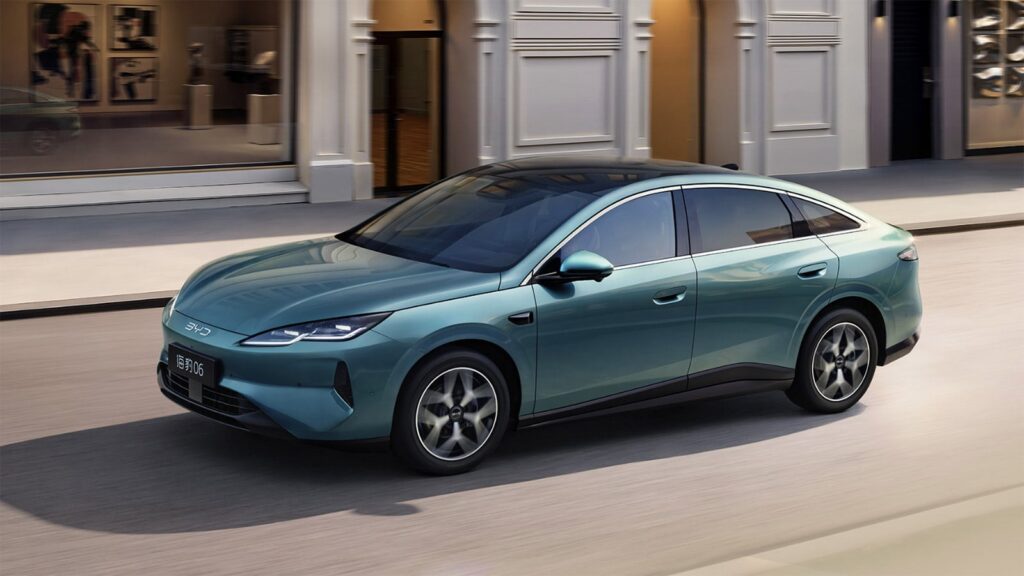
If your BYD Seal steering wheel shakes when braking, the cause is almost always in one of three areas: the brake discs and pads, the front suspension and steering joints, or the wheels and tyres. On an electric car like the Seal, the most common cause is uneven or corroded brake discs. Regenerative braking does most of the everyday slowing down, so the friction brakes sit unused for long periods and the disc surface stops wearing evenly.
This guide explains what BYD Seal brake vibration means, the eight most common causes, the vibrations that are not brake related, how a workshop diagnoses and fixes brake judder, what the repair costs in Dubai, and how to prevent it from coming back.
What BYD Seal Brake Vibration Feels Like
Mechanics call this problem brake judder or brake shudder. It shows up in three main ways, and each one points to a different part of the car:
- Steering wheel shaking when braking: the problem is usually on the front axle, because the steering rack is connected to the front wheels through the suspension and tie rods.
- Brake pedal pulsating under your foot: the brake disc surface is uneven. This can come from the front or rear brakes.
- Shudder through the seat or floor with a steady steering wheel: often points to the rear brakes.
When the vibration happens is just as useful:
- Only when braking from high speed (for example 100–120 km/h on Sheikh Zayed Road): usually uneven disc thickness or heat damage.
- Mostly in the first few stops of the day, then it fades: usually surface rust on the discs.
- Present while driving and worse when braking: usually wheels, tyres, wheel bearings or suspension.
BYD Seal Brake and Suspension Setup
Knowing how the Seal is built explains why some causes are more likely than others.
| Part | BYD Seal setup | Why it matters for vibration |
|---|---|---|
| UAE versions | Design and Premium (rear-wheel drive), Performance (all-wheel drive) | The Performance adds a front motor, so both axles use regenerative braking |
| Wheels and tyres | 19-inch alloy wheels with 235/45 R19 tyres | Low-profile tyres give the rim less protection from potholes and kerbs |
| Front brakes | Ventilated discs (drilled on higher versions), with a fixed multi-piston or floating caliper depending on version | Drilled discs can crack around the holes; fixed calipers can have sticking pistons |
| Rear brakes | Ventilated discs, calipers with an integrated electric parking brake | Rear pad work needs the parking brake put into service mode |
| Brake control | Intelligent Power Braking system with hydraulic boost, regen blending, auto hold and comfort braking | Brake bleeding and fault finding need a diagnostic tool |
| Regenerative braking | Two levels, Standard and High; it does not bring the car to a full stop | Light stops use the motor, so the friction brakes are used less |
| Front suspension | Double wishbone | Worn bushings and ball joints show up most under braking |
| Rear suspension | Multi-link (Performance has frequency selective dampers) | Rear bush wear can cause body shudder |
| Kerb weight | Up to about 2,185 kg on the AWD version | A heavy car puts a lot of heat into the brakes in a hard stop |
| Brake fluid | BYD recommends replacement every 2 years or about 40,000 km | Old fluid affects pedal feel and caliper operation |
Why Electric Cars Like the BYD Seal Get Brake Judder
On a petrol car, every stop rubs the brake pads across the discs and keeps the disc surface clean. On an EV, regenerative braking handles most light slowing down. The motor acts as a generator, and the hydraulic brakes only do real work in firmer stops, emergency stops and the last part of a stop at low speed.
That causes three problems:
- Brake discs rust more easily. Brake discs are made of cast iron, which rusts quickly. Research on EV brakes shows that rusted areas grip the pad differently from clean metal. That difference in grip causes stick-slip, which you feel as judder.
- Pad material builds up unevenly. Long gaps without friction braking, followed by a sudden hard stop, is the pattern most likely to leave uneven deposits on the disc.
- Owners don’t notice early. Because the brakes are used gently, the problem only appears when you brake hard from speed.
This is a known EV issue. Some EV makers, such as Polestar, tell owners in the manual to brake hard with the friction brakes from time to time to stop disc problems caused by inactivity. Independent reliability reports on the BYD Seal also list premature brake disc corrosion from regenerative braking as one of the car’s main ownership concerns.
8 Common Causes of BYD Seal Steering Wheel Shake When Braking
1. Uneven Pad Deposits and Disc Thickness Variation (“Warped Brake Discs”)
Most “warped brake discs” are not actually bent. The real problem is disc thickness variation (DTV): one area of the disc is slightly thicker than another, often by only a few hundredths of a millimetre.
Every time the thicker area passes between the pads, clamping force rises and falls. That pulse travels up through the caliper, suspension and steering rack into the steering wheel. DTV usually builds up in two ways:
- Uneven pad transfer: brake pads leave a thin layer of friction material on the disc. If this layer goes on in patches, those patches grip harder.
- Slow wear from runout: if the disc wobbles slightly (see cause 3), the pads brush the high spot on every turn and wear it differently. Over a few thousand kilometres the wobble becomes a thickness variation.
This is the number one cause of BYD Seal steering wheel vibration when braking at high speed.
2. Rusted or Pitted Brake Discs From Low Use
When a Seal is parked for days, or driven mostly on regen, a rust layer forms on the discs. It is often worse on the inner face, which you cannot see without removing the wheel. The area of disc that sits under the pads while the car is parked can corrode differently from the rest and leave a visible band.
Workshop bulletins from major manufacturers note that these rust bands can cause brake judder even after the surface rust has worn off, because the disc now has areas with different friction. Light rust often clears after a few firm stops. Deep pitting means the disc has to be machined or replaced.
The rear discs are most at risk, because the rear brakes do less work than the fronts.
3. Brake Disc Runout From Hub Rust or Over-Tightened Wheel Nuts
Runout means the disc wobbles slightly from side to side as it turns. Three things commonly cause it:
- Rust or dirt on the hub face. If the hub is not cleaned when discs or wheels are fitted, the disc sits slightly crooked.
- Wheel nuts tightened with an impact gun. Many tyre shops in Dubai tighten wheel nuts with an air gun, unevenly and well above the correct torque. This can distort the hub and disc. The nuts should be tightened with a torque wrench, in a cross pattern, to BYD’s specification.
- Kerb or pothole impact damaging the hub or wheel bearing.
Runout often does not cause vibration straight away. It usually turns into disc thickness variation over the following weeks, so the shake appears long after the real cause happened.
4. Sticking Brake Calipers and Rear Parking Brake Problems
A caliper that does not release fully keeps a pad lightly dragging on the disc. That disc runs hotter and wears unevenly.
- Floating calipers slide on guide pins. Fine sand gets past torn rubber boots and dries out the grease, so the pins stick.
- Fixed multi-piston calipers have no slide pins, but a piston can stick in its bore, or the pads can stick in the caliper slots because of rust and dust.
- Rear calipers also work the electric parking brake. If the parking brake mechanism does not release fully, one rear pad keeps dragging.
Signs of a sticking caliper include the car pulling to one side when braking, one wheel much dirtier with brake dust, one wheel much hotter than the others after a drive, or a burning smell.
5. Heat Damage and Cracked Drilled Brake Discs
A heavy EV braking hard from high speed puts a lot of heat into the front discs. Long downhill roads such as Jebel Jais or the Hatta road make this worse. Two problems follow:
- Pad imprint: if you stop hard and then hold the car on the brakes while the discs are very hot, the pad leaves a patch of friction material on the disc. That patch causes judder from then on.
- Cracks around drilled holes: drilled discs, fitted on higher Seal versions, are known to develop small heat cracks starting at the holes. Tiny surface cracks are common. A disc should be replaced if the cracks join two holes, reach the edge of the disc, or come with vibration.
6. Worn Front Suspension Bushings and Ball Joints
The Seal’s double wishbone front suspension uses upper and lower control arms mounted on rubber bushings, with ball joints at the wheel end. Under braking, the wheel tries to rotate backwards, and the bushings take that load.
When the bushings crack or soften, the wheel moves slightly back and forth under braking. This makes the steering shake, and it makes even a small disc problem feel much worse. Worn ball joints add looseness and clunks. Heat, UV and repeated speed bumps age rubber bushings faster in the UAE. For a full list of symptoms, see our guide to common signs your car needs new suspension parts.
7. Worn Tie Rod Ends and Wheel Bearings
- Tie rod ends connect the steering rack to the wheels. Play in a tie rod end lets the wheel shimmy under braking and makes the steering feel loose on centre. A proper car steering repair check covers the tie rods and rack.
- Wheel bearings that are worn let the hub and disc move slightly. You often hear a humming noise that changes when you swerve gently left and right. A worn bearing also increases disc runout, so new discs fitted to a car with a worn bearing will start vibrating again.
8. Bent Rims, Tyre Damage and Wheel Balance
Some vibration is there all the time but becomes obvious when you brake, because the car’s weight shifts onto the front wheels.
- Bent rims: the Seal’s 19-inch wheels with 45-profile tyres are easy to bend on potholes and kerbs, often on the inner lip where you cannot see it. Read should a cracked rim be repaired or replaced and when you need professional rim repair.
- Tyre faults: a separated belt, flat spots from long parking in the heat, or uneven wear. A road force balance finds these much better than a standard balance.
- Lost wheel weights: usually cause shaking at a certain speed, often between 90 and 120 km/h.
BYD Seal Vibration That Is Not Caused by the Brakes
Not every Seal vibration is a brake problem. Before replacing brake parts, rule these out:
- Shudder under hard acceleration. Some owners of 2023–2025 Seal Premium and Performance models have reported a shudder or wobble when accelerating hard. The usual advice is a road force balance first, then a driveshaft inspection if the shudder continues. This is a driveline problem, not a brake problem. See BYD Seal EV motor diagnostics.
- Buzzing through the steering column at around 50–60 km/h. Seal owners on forums have reported a vibration or buzz felt at the top of the steering wheel, mostly on concrete or uneven road surfaces and not linked to braking. Dealers have looked at tyres and dashboard parts such as the head-up display.
- Regen and comfort braking feel. The brake system blends regen and friction braking and eases pressure just before the car stops. A small change in pedal feel is normal. A shudder at the same speed on every stop is not.
- ABS pulsing on sand or painted lines. This is normal on slippery surfaces. ABS working on a clean, dry road during gentle braking points to a wheel speed sensor problem.
- Motor mounts on the AWD Seal. Worn mounts can clunk or shudder when the motor switches between driving and regenerating. You usually feel it through the floor. See signs your car’s motor mounts need replacement.
How to Tell Where the Vibration Is Coming From
| What you feel | Most likely cause |
|---|---|
| Steering wheel shakes and pedal pulses when braking from speed | Front disc thickness variation or pad deposits |
| Pedal pulses, steering wheel steady, shudder in the seat | Rear brake discs |
| Judder in the first few stops, then it fades | Rust on the disc surface |
| Car pulls to one side and one wheel is very hot | Sticking caliper or rear parking brake not releasing |
| Shake with clunks over bumps, loose steering | Worn bushings, ball joints or tie rod ends |
| Humming noise that changes when swerving | Worn wheel bearing |
| Vibration at a set speed, worse when braking | Wheel balance, bent rim or tyre fault |
| Shudder under hard acceleration, not braking | Tyres or rear driveshafts |
| Brake, ABS or ESP warning light with vibration | Brake control system or wheel speed sensor fault; check the 12V battery too |
Is It Safe to Drive a BYD Seal That Shakes When Braking?
A light vibration from uneven disc deposits is not usually an immediate danger. It still needs fixing soon, because:
- The pads are not gripping the disc evenly, so stopping distance can increase in an emergency.
- The vibration hammers the bushings, ball joints, tie rods and wheel bearings every time you brake, so a disc problem can turn into a suspension repair.
- Disc problems get worse over time, and a disc that could have been machined ends up needing replacement.
Stop driving and get the car checked straight away if:
- The steering wheel shakes hard or the car pulls strongly to one side.
- You hear grinding, scraping or knocking from a wheel.
- The brake pedal feels soft or travels further than usual.
- A brake, ABS or stability control warning light comes on.
- One wheel smells burnt or is far hotter than the others.
In these cases, have the car collected rather than driving it. Our guide to choosing a roadside assistance service in Dubai explains what to look for.
How Mechanics Diagnose BYD Seal Brake Judder
A good workshop measures before it replaces anything. Fitting new discs without finding the real cause is the main reason brake judder comes back. A proper BYD Seal brake vibration check includes:
- Road test to confirm the vibration, the speed it starts at, and whether it changes with regen level or steering input.
- Diagnostic scan of the brake control unit, ABS and ESP, plus a check of live wheel speed sensor data.
- Runout check with a dial indicator on each disc, with the wheel nuts torqued in place.
- Disc thickness check with a micrometer at several points, to find thickness variation and confirm the disc is above BYD’s minimum thickness.
- Visual check of both disc faces, including the inner face, for rust bands, pitting, pad imprints and heat cracks.
- Caliper check: piston movement, slide pins on floating calipers, pad movement in the caliper, and rear parking brake release.
- Hub face check for rust and dirt.
- Suspension and steering check on a lift: control arm bushings, ball joints, tie rod ends and wheel bearing play.
- Wheel and tyre check: rim runout, tyre condition, and a road force balance where needed.
- Brake fluid test for moisture content.
This is part of a full car inspection in Dubai. Our article on why regular car diagnostics prevent expensive repairs explains why measuring first saves money.
How to Fix BYD Seal Brake Vibration
Brake Disc Skimming or Brake Disc Replacement
- Skimming (machining) removes a thin layer of metal to make the disc flat and true again. It works when the disc is well above its minimum thickness and the problem is pad deposits, light rust or light runout. An on-car brake lathe, which machines the disc while it is fitted to the car’s own hub, gives the most accurate result because it also corrects for hub runout.
- Replacement is needed when the disc is at or near minimum thickness, deeply pitted, heat damaged, or cracked between drilled holes. Discs are always replaced in pairs on the same axle.
Before a new disc is fitted, the hub face is cleaned back to bare metal. Runout is then checked, and if needed the disc is turned to a different position on the hub to get the lowest runout reading. Our article on brake disc wear explains how disc wear is measured.
New Brake Pads and Bedding-In on an EV
New or machined discs always get new brake pads. Old pads have worn to the shape of the old disc and carry the old deposits. Pads with a coated or galvanised backing plate resist rust better, which matters on an EV because the pads stay on the car for a long time. See our guide to brake pad replacement and the warning signs that brake pads need replacing.
The new pads and discs must then be bedded in to lay down an even layer of pad material. On a BYD Seal:
- Set regenerative braking to Standard, so the friction brakes do more of the work.
- Make about 8–10 moderate stops from around 50–60 km/h, each taking 3–5 seconds.
- Drive for about a minute between stops to let the brakes cool.
- After the last stop, do not sit with the brakes held hard while they are hot. Let the car cool with a short gentle drive.
Caliper Service and Electric Parking Brake Service Mode
- Floating caliper slide pins are cleaned and greased with high-temperature brake grease, and torn boots are replaced.
- Fixed caliper pistons are checked for free movement, and pad slots are cleaned of rust and dust.
- Sticking calipers are rebuilt with new seals or replaced.
- On the rear axle, the electric parking brake is put into service mode with a diagnostic tool before the pistons are pushed back. Forcing them back by hand can damage the parking brake mechanism.
Brake Fluid Change on the Intelligent Power Braking System
BYD recommends changing the brake fluid every two years or about 40,000 km. On cars with an integrated electronic brake unit like the Seal’s, a complete brake fluid change usually needs a diagnostic tool to run the unit’s internal pump and valves, so old fluid inside the unit is flushed out as well. Bleeding only at the calipers can leave old fluid behind.
Suspension, Steering, Alignment and Wheel Repairs
- Worn bushings, ball joints, tie rod ends and wheel bearings are replaced.
- Bushing bolts are tightened with the car at normal ride height, not with the suspension hanging, so the new rubber is not pre-twisted.
- A professional wheel alignment is done after any front suspension or steering work.
- Bent rims are straightened or replaced, and wheels are road force balanced. Our auto tyre services cover balancing, fitting and wheel checks.
For the full repair process, see our car suspension repair service.
BYD Seal Brake Repair Cost in Dubai
The cost depends on whether the discs can be machined, the parts grade, and whether suspension parts are also worn. The table below shows Carzilla’s published brake price ranges in Dubai. The exact price for your BYD Seal is confirmed in writing after a free brake inspection.
| Brake service | Standard cars | Luxury and performance cars |
|---|---|---|
| Brake inspection | Free | Free |
| Brake disc skimming (per axle) | AED 200 – 350 | AED 300 – 600 |
| Front brake pad replacement (per axle) | AED 250 – 550 | AED 600 – 1,500 |
| Brake disc and pad replacement (per axle) | AED 700 – 1,400 | AED 1,500 – 4,500 |
| Brake fluid change and bleed | AED 150 – 300 | AED 250 – 500 |
| ABS or brake warning light diagnosis | AED 150 – 250 | AED 200 – 400 |
If you would rather spread the cost, you can pay later with Tabby. For a wider look at running costs, see EV vs petrol car maintenance costs in the UAE.
Why BYD Seal Brake Judder Is Common in Dubai
Dubai’s roads and climate add to the EV effects described above:
- High-speed stops followed by holding the brakes. Braking from 120 km/h and then waiting at a signal with the pedal held hard is a common cause of pad imprints on hot discs. A stop from 120 km/h puts about four times as much heat into the brakes as a stop from 60 km/h.
- Heat. Brake parts start every drive hotter and cool more slowly in 45°C summer air.
- Sand and dust. Fine sand dries out caliper grease and wears ball joints and tie rods once their rubber boots split.
- Coastal humidity. Cars parked overnight in Dubai Marina, JBR or the Palm collect moisture on the discs, which leaves surface rust by the morning.
- Car washes. Washing the car leaves water on the discs, which can rust overnight. Spraying cold water on very hot discs is also hard on them.
- Long summer parking. Cars left for weeks during summer travel come back with rust bands on the discs and flat spots on the tyres.
- Speed bumps, potholes and kerbs. These bend rims and wear bushings, especially on low-profile tyres.
- Impact guns at tyre shops. Over-tightened wheel nuts are one of the most common hidden causes of disc runout.
Our guide on how to take care of your luxury car in Dubai’s harsh climate covers more of these heat and dust effects.
How to Prevent Brake Vibration on Your BYD Seal
- Use the friction brakes regularly. A few firm stops each week, where it is safe, keep the discs clean and prevent rust bands.
- Don’t hold hot brakes hard. After a hard stop from high speed, leave a gap to the car ahead so you can ease off the pedal pressure.
- Have the brakes cleaned and greased every year. EV brakes are used less, so calipers, slide pins and pad slots need attention between pad changes, not only when pads are replaced.
- Change the brake fluid on time: every 2 years or about 40,000 km.
- Insist on a torque wrench whenever the wheels are removed. Never accept impact-gun tightening.
- Look after the tyres and wheels. Check tyre pressures, rotate the tyres, and get the alignment checked after any hard pothole or kerb hit. Read how wheel alignment protects your tyres in Dubai and our guide to the best tyre shop in Dubai.
- Drive a stored car regularly. If the Seal will sit for weeks, drive it every week or two with a few firm stops, and have the brakes checked before normal use.
- Check the 12V battery. A weak 12V battery can trigger brake and stability warnings on EVs. See how to prevent car battery drain in the UAE summer heat.
- Book a regular brake check. Our guides to brake maintenance, how to detect and fix common brake problems and why timely brake service keeps you safe explain what to look for.
Buying a used Seal? A BYD pre-purchase inspection should always include disc runout, disc thickness and front suspension checks.
BYD Seal Brake Vibration FAQs
Why does my BYD Seal steering wheel shake only when braking at high speed?
At high speed, small disc thickness variation or pad deposits pass through the pads many times per second, and the braking force is high. That makes a small disc fault easy to feel. Heat from hard stops also makes it worse. The usual fix is disc skimming or replacement with new pads, then proper bedding-in.
Can rear brakes cause steering wheel vibration?
Rear brake problems are usually felt as a pulsing pedal or a shudder through the seat rather than the steering wheel. A strong rear judder can still be felt through the whole car, including the steering wheel. On EVs, the rear discs are more likely to rust because they do less work.
Can wheel alignment fix shaking when braking?
No. Alignment does not fix brake judder. Misalignment causes uneven tyre wear and pulling, and the alignment angles can show that a bushing or joint is worn. Alignment should be done after any suspension or steering repair.
Will brake disc skimming fix BYD Seal brake judder?
Yes, if the disc is still well above its minimum thickness and the cause is pad deposits, light rust or light runout. If the disc is thin, deeply pitted, heat damaged or cracked, it must be replaced. If the real cause is a worn wheel bearing, sticking caliper or over-tightened wheel nuts, the judder will return unless that is fixed too.
Do BYD Seal brake discs rust?
Yes. Like most EVs, the Seal relies on regenerative braking for light stops, so its cast-iron discs are cleaned less often and rust more easily, especially when parked in humid coastal areas or stored for long periods. Regular firm braking and an annual brake clean help prevent it.
How often should BYD Seal brake fluid be changed?
BYD recommends every 2 years or about 40,000 km, whichever comes first. In UAE heat, it is sensible not to stretch this interval.
Is it normal for the BYD Seal brake pedal to feel different near a stop?
A small change is normal, because the brake system blends regenerative braking with the friction brakes and eases pressure just before the car stops to reduce nose dive. A shudder or pulsing at the same point in every stop is not normal and should be checked.
BYD Seal Brake Repair in Dubai at Carzilla
Carzilla is a specialist BYD repair garage in Dubai, based in Al Quoz. Our mechanics work on electric cars every day through our dedicated EV repair service, with BYD-specific diagnostic equipment for the brake control system, ABS and electric parking brake.
For BYD Seal brake vibration, we:
- Measure disc runout and thickness before recommending any repair
- Check calipers, the rear parking brake, the front suspension and steering, wheel bearings and wheels
- Skim or replace discs, fit new pads and bed them in correctly for an EV
- Change brake fluid with the correct procedure for the Seal’s brake unit
- Finish with a road test, plus wheel alignment where needed
Our car brake repair service includes a free brake inspection, Free Pickup and Delivery* across Dubai, and Warranty on Repair. You can also read how we handle BYD Han brake system calibration, browse all our car repair services, or contact us to book your BYD Seal into our Al Quoz auto garage.