A car wrap and a car paint job can make a car look almost identical from a few metres away. Up close, and over a few UAE summers, they behave very differently.
Car paint is a liquid coating that is sprayed onto the panel and cured into a hard layer that bonds to the metal or plastic underneath. A car wrap is a thin plastic film that sits on top of the existing paint, held in place by adhesive. Nothing about a wrap is chemically bonded to the car.
That single difference explains almost every question owners ask. It explains why a wrap can be removed and paint cannot, why paint can be polished and a wrap cannot, and why a wrap lifts at the edges while paint chips. It also explains why a wrap that peels off cleanly after three years can pull paint off with it after seven.
This guide covers both finishes in full. It explains how each is made and applied, what each costs in Dubai, how long each lasts in UAE heat, why problems happen and how they are fixed. It also covers how wraps and paint affect resale, insurance, RTA registration and the sensors on modern cars.
What Is Car Paint?
Car paint is not one layer. It is a system of layers, and each layer has a specific job.
The Layers of Factory Car Paint
On a modern car, the factory paint is built up in four main layers:
| Layer | Typical Thickness | What It Does |
|---|---|---|
| Electrocoat (e-coat) | 15–25 microns | Corrosion protection for the bare steel or aluminium |
| Primer surfacer | 20–40 microns | Smooths the surface, adds chip resistance, protects the e-coat from UV |
| Basecoat | 10–20 microns | Carries the colour and any metallic or pearl effect |
| Clear coat | 40–60 microns | Gives gloss and depth, and protects the colour from UV and chemicals |
Together, these layers usually measure around 80 to 150 microns, roughly the thickness of one or two sheets of office paper. The clear coat on top is the only layer that can be safely polished. Once polishing or wear removes too much of it, the clear coat starts to fail.
Factory Paint vs Body Shop Repaint
At the factory, paint is applied to a bare body shell before any wiring, seals, glass or interior trim is fitted. That allows the carmaker to bake it at high temperatures, often around 140°C, which fully cross-links the clear coat into a very hard, chemically stable layer.
A body shop cannot do that. Once a car is assembled, it is full of plastics, rubber seals and electronics that would be damaged at factory temperatures. Refinish paint is therefore a two-pack (2K) system designed to cure at a much lower panel temperature, usually around 60°C in a paint booth oven.
A quality 2K repaint using a recognised paint system is durable and can look as good as the original. It is still a different material from factory paint, and this matters later when we look at wrapping over repainted panels and at resale value.
Types of Car Paint Finish
- Solid paint – a single colour with no effect particles. The easiest to match and repair.
- Metallic paint – fine aluminium flakes in the basecoat give sparkle. The flake angle must be matched carefully in repairs.
- Pearl and three-stage paint – a mid-coat of pearl pigment sits between the basecoat and clear coat. Common on luxury cars and harder to match.
- Matte and satin paint – a special clear coat that scatters light instead of reflecting it. It cannot be machine polished, and damaged areas usually need the full panel refinished.
Our guide on why car paint peels explains in more detail how these layers break down.
What Is a Car Wrap?
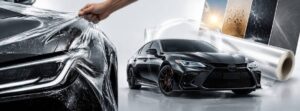
A car wrap is a large sheet of coloured vinyl film applied panel by panel over the existing paint.
How Vinyl Wrap Film Is Made
A premium wrap film has three parts:
- Face film – a coloured PVC film, around 80 microns (about 3.2 mil) thick on leading wrap films. The colour runs through the film itself rather than sitting on the surface.
- Adhesive – a pressure-sensitive acrylic adhesive. It grips when pressed down, and on good films it is designed to release cleanly within the film’s rated life.
- Air-release channels – tiny channels in the adhesive that let trapped air escape during installation, so the film lies flat without bubbles.
Cast Vinyl vs Calendered Vinyl
This is the most important quality difference in wrap film.
- Cast vinyl is made by pouring liquid PVC onto a casting sheet and curing it flat. It holds almost no internal stress, so it stays where it is stretched. It conforms to bumpers, mirrors and deep recesses without trying to pull back. Full-colour-change films from the major manufacturers are cast.
- Calendered vinyl is made by squeezing heated PVC through rollers. It keeps a “memory” of that stretching and tries to shrink back to its original shape, especially in heat. It is cheaper and fine for flat signs, but on a full car wrap in the UAE it tends to shrink, crack and lift.
Low-priced wrap quotes are often low because they use calendered film.
Car Wrap Finishes
Wraps come in finishes that are difficult or very expensive to achieve in paint:
- Gloss, satin and matte
- Metallic and pearl
- Colour-shift (changes colour with the viewing angle)
- Brushed metal, carbon-fibre texture and chrome
The finish affects lifespan. Wrap film manufacturers rate metallic, chrome and textured films for a noticeably shorter outdoor life than standard gloss colours.
Car Wrap vs PPF vs Peelable Paint
These three are often confused, but they do different jobs:
- Vinyl colour wrap – changes the colour of the car. It gives some protection against light scratches and UV but very little against stone chips.
- Paint protection film (PPF) – a thicker, clear thermoplastic polyurethane film designed to absorb stone chips and sand impact. Many grades self-heal light scratches with heat. Coloured PPF also exists. See our guides on ceramic coating vs PPF and 3M PPF in Dubai.
- Peelable paint – a removable coating that is sprayed on like paint and peeled off later. Because it is sprayed rather than laid in sheets, it has no seams or film edges. See our peelable car paint service.
If your main goal is protection rather than a new colour, our article on PPF vs wrap for G-Wagon protection compares the two directly.
Car Wrap vs Car Paint: Key Differences at a Glance
| Point | Car Paint | Car Wrap |
|---|---|---|
| Material | Cured 2K coating (primer, basecoat, clear coat) | PVC vinyl film with acrylic adhesive |
| How it holds on | Chemically bonded to the panel | Adhesive on top of the existing paint |
| Typical job time | About 5–14 working days for a full repaint | About 2–5 days for a full wrap |
| Realistic life in UAE conditions | Many years with proper care | Around 3–5 years for premium cast film |
| Light scratches | Polished out of the clear coat | Cannot be polished; the film is replaced |
| Stone chip resistance | Chips through to primer or metal | Limited; clear PPF is far better |
| Door jambs and openings | Painted on a full colour change | Usually left in the original colour |
| Reversible | No | Yes, when removed within the film’s life |
| Effect on original paint | Replaces it | Covers and preserves it |
| RTA colour change approval | Required | Required |
How a Car Wrap Is Installed
A good wrap is mostly preparation. The film itself goes on quickly, but the steps before and after decide how long it lasts.
- Paint inspection – The installer checks every panel with a paint depth gauge to find repainted areas, thin clear coat or failing paint. A wrap over weak paint is the main cause of paint damage later.
- Decontamination – The car is washed, clayed and wiped with a panel-prep solution to remove wax, sealant and road film. Adhesive will not bond properly to a waxed or ceramic-coated surface.
- Part removal – Door handles, badges, mirror caps, lights and sometimes bumpers are removed. This lets the installer wrap the film around panel edges instead of cutting it short where it is visible.
- Panel-by-panel application – The film is positioned, pressed down with a squeegee and heated so it can stretch into curves and recesses.
- Cutting – Professional installers use knifeless tape, a filament laid under the film that cuts it from below without a blade touching the paint. Blade cutting on the car leaves fine scores in the clear coat that later rust or crack.
- Post-heating – Every stretched area, edge and recess is heated to a set temperature. This tells the film to “forget” its flat shape. Skipping this step is the main reason wraps pull out of recesses a few weeks later.
- Settling – The car should stay indoors and unwashed for a short period so the adhesive can build its bond.
How a Car Is Repainted
A proper repaint is a longer job, and most of the time goes into preparation.
- Strip-down – Lights, handles, trims, badges and seals are removed so paint can reach every edge.
- Sanding and repair – Old paint is sanded down to a sound base. Dents are repaired, rust is treated and filler is applied where needed.
- Primer – A two-pack primer is applied and sanded smooth.
- Colour match – The colour is matched using the paint code from the VIN and a spectrophotometer scan, then confirmed with a spray-out test card.
- Basecoat and clear coat – Usually two to three coats of colour, then at least two coats of clear.
- Baking – The car is baked in a booth oven at around 60°C so the 2K paint cures properly.
- Cut and polish – The new paint is machine polished to remove dust nibs and to match the texture of the original finish.
A full colour change is a much bigger job than a same-colour respray. To look right, the door jambs, the bonnet and boot openings, and often the engine bay edges are painted too. Cheap colour changes skip these areas, and the original colour shows every time a door is opened.
Our guides on the car repaint process in Dubai and full exterior car repaint go through each stage in more depth.
Car Wrap vs Car Paint Cost in Dubai
Price is usually the first question, but the upfront price alone is misleading.
Car Wrap Cost
Most full colour-change wraps in Dubai are quoted between roughly AED 3,000 and AED 15,000. Supercars, large SUVs and specialist films such as chrome or colour-shift cost more. The main factors are:
- Vehicle size and body complexity (deep bumper vents and complex mirrors take hours)
- Film grade (cast vs calendered) and finish
- Whether door jambs are wrapped
- How many parts are removed and refitted
Car Paint Cost
At Carzilla, a full car repaint starts from around AED 3,500 for a standard sedan in a solid colour. It goes to AED 12,000 and above for luxury cars in metallic, pearl, matte or three-stage paint. Single panel resprays start at around AED 450 to AED 800. Very cheap full repaints are available in the market, but they usually use single-pack (1K) paint that fades quickly in UAE sun.
Peelable Paint Cost
A full-body peelable paint colour change at Carzilla is typically AED 6,000 to AED 12,000, with partial coverage of the roof, bonnet, mirrors or calipers from around AED 2,000.
The Real Cost Over Ownership
When comparing prices, look at the full ownership period, not just the first invoice:
- A wrap usually needs professional removal at the end of its life, and often a paint polish afterwards.
- In UAE conditions, a wrap may need replacing two or three times over ten years of ownership.
- A colour change by either method needs RTA approval and registration fees (covered below).
- A repaint is a one-time cost but is permanent, and a non-original colour can reduce resale value on high-end cars.
For short-term ownership or a leased car, a wrap often works out cheaper. For a car you will keep for many years in a colour you will not change, a quality repaint usually works out cheaper overall.
How Long Does a Car Wrap Last Compared to Car Paint?
Manufacturer Ratings for Wrap Film
Wrap film manufacturers publish durability ratings, and they are higher than what UAE owners actually get. Two points matter:
- Vertical vs horizontal surfaces. Ratings are split by how the panel faces the sun. 3M, for example, warrants its 2080 wrap film for up to 8 years on vertical surfaces but only up to 3 years on horizontal ones. Horizontal means the roof, bonnet and boot lid.
- Climate. Ratings are based on test climates, and in hot regions the horizontal rating is shorter still. Avery Dennison’s data for its Supreme Wrapping Film lists 2–3 years on horizontal surfaces for hot Asia-Pacific conditions. It also rates metallic finishes for far less time than solid colours, even on vertical panels.
Realistic Car Wrap Life in the UAE
In practice, a premium cast wrap on a car parked outdoors in the UAE lasts around 3 to 5 years. The roof and bonnet usually show fading or cracking first, often after two or three summers. Cars kept in covered parking and washed correctly sit at the upper end of that range.
Realistic Car Paint Life in the UAE
Factory paint lasts the life of the car if the clear coat is protected and not polished away. A properly applied 2K repaint, baked and cared for, also lasts many years. Paint does wear, through clear coat oxidation, swirl marks and chips, but it wears slowly and can usually be repaired rather than replaced.
Why Car Wraps Fail in UAE Heat
Most wrap failures in the UAE are not caused by faulty film. They are caused by heat, UV light and the way the car is washed.
UV Light and Fading
UV radiation breaks down both the PVC and its pigments. Reds, yellows and dark colours fade first. Matte films lose their even finish and turn chalky.
Heat, Plasticiser Loss and Cracking
PVC film stays flexible because it contains plasticisers. Heat slowly drives these out, and the film becomes brittle. Exterior surfaces of a parked car in a UAE summer afternoon can reach around 80–90°C, and dark roofs and bonnets run hottest. Those are the panels that crack first.
Edge Lifting and Lifting in Recesses
At high panel temperatures the adhesive softens. Wherever the film was stretched into a deep area, such as a door handle cup, bumper vent, mirror base or number plate recess, it slowly pulls back out. This is especially common if the installer skipped post-heating.
Shrinkage at the Edges
Calendered film shrinks in heat. A thin line of the original colour appears along panel edges and around badges.
Bubbles and Tenting
Bubbles usually come from dust trapped during installation, from moisture, or from paint underneath that was still releasing solvent. Tenting is when the film lifts and bridges across a recess like a tent.
Sand, Scratches and Wash Damage
Fine sand dulls gloss film and scuffs matte film. Unlike paint, vinyl cannot be machine polished back. Pressure washers aimed at edges and brush car washes catch film edges and lift them.
Chemical Staining
Bird droppings, tree sap and spilled fuel stain and soften vinyl quickly in heat.
How Car Wrap Problems Are Fixed
- A small lifted edge can sometimes be cleaned, re-heated and pressed down, provided the adhesive is still clean and active.
- A lifted recess usually needs the film re-laid and properly post-heated, or a new section fitted.
- Cracked, faded or chalky film cannot be restored. The affected panel, or the whole car, is re-wrapped.
- Colour matching a replacement panel can be difficult. Film batches vary slightly, and the original film has aged. If the colour has been discontinued, a whole side or the whole car may need re-wrapping.
Why Car Paint Fails in UAE Heat
Paint fails differently. It wears down gradually, and in most cases it can be repaired.
Clear Coat Oxidation and UV Damage
The clear coat contains UV absorbers that are slowly used up. Once they are gone, the clear coat turns dull, then cloudy, and eventually it cracks and peels. Roofs, bonnets and the tops of wings show it first.
Swirl Marks and Sand Scratches
Most swirl marks come from washing. Wiping sand across a dry or lightly wet panel works like fine sandpaper on the clear coat.
Stone Chips
Highway driving throws stones and sand at the bonnet, front bumper and mirror caps. Chips that reach the metal can start to corrode if left open.
Etching from Bird Droppings and Water Spots
In heat, bird droppings and hard-water spots etch into the clear coat within hours, leaving marks that washing cannot remove.
Poor-Quality Repaints
Rushed curing, poor preparation, wrong primer on plastic bumpers or 1K paint lead to solvent pop (tiny pinholes), dull patches, colour fade and early peeling.
How Car Paint Problems Are Fixed
- Paint depth check – A paint gauge measures how much clear coat is left before any work starts.
- Machine polishing – Removes swirls, light scratches and mild oxidation from the clear coat.
- Spot repair and blending – Chips and deeper scratches are filled, painted and blended into the surrounding area. See our car scratch repair guide and mobile car scratch repair.
- Panel respray – Used where the clear coat has failed or the damage is too large to blend.
For larger damage, our luxury car denting and painting guide and the article on how common car body damage is fixed explain the full repair process.
Does a Car Wrap Damage Paint?
On sound factory paint, a premium wrap that is installed correctly and removed within its rated life should not damage the paint. Factory paint is bonded to the panel far more strongly than wrap adhesive is bonded to the paint, so the film releases first.
Problems happen in five situations.
1. Wrapping Over Repainted Panels
Refinish paint is cured at a lower temperature than factory paint, and its adhesion depends on how well the body shop prepared it. If the bond between the repaint and the layer below is weaker than the wrap adhesive, the paint comes off with the film during removal.
Wrap film manufacturers recognise this risk. 3M’s wrap film warranty, for example, specifically excludes paint pulled off during removal. Many wrap installers will not guarantee removal on repainted panels for the same reason.
2. Wrapping Over Fresh Paint
New paint keeps releasing solvent while it cures. Film applied too early traps that solvent, which causes bubbles under the wrap and can soften the paint. The safe waiting time depends on the paint system and how it was baked. The body shop’s paint supplier guidance should decide it, and many installers wait several weeks to be safe.
3. Wrapping Over Failing Paint
Peeling clear coat, deep oxidation, rust and filler will not hold up under a wrap. The film can hide them for a while, but removal pulls the weak layer up with it. A wrap does not fix bad paint.
4. Blade Cuts on the Car
Trimming film with a blade directly on the panel leaves fine cuts in the clear coat. These are invisible under the wrap but show up as lines, and sometimes rust, once it is removed.
5. Leaving the Wrap On Too Long
Past its life, the film turns brittle and the adhesive bonds harder. Removal becomes slow, the film breaks into small pieces, and the risk to the paint rises sharply.
Removing a Car Wrap: What to Expect
A well-timed removal is a controlled job:
- The panel is warmed with a heat gun to soften the film and adhesive.
- The film is peeled back slowly at a low angle, so the adhesive stays on the film rather than on the paint.
- Remaining adhesive is dissolved with a paint-safe adhesive remover.
- The car is washed and inspected under strong light.
- The paint is usually machine polished to even out the finish.
Ghosting After Wrap Removal
After a wrap comes off, owners often notice faint outlines or slight colour differences. This is called ghosting. The paint under the film has been shielded from UV for years, while uncovered areas kept ageing. These include door jambs, the area under the bonnet edge, and any gaps the wrap did not cover. In most cases, light polishing evens it out.
Old Wrap Removal
Film left on for many years in UAE sun often comes off in small brittle chips with heavy adhesive residue. It takes much longer, and it should only be done by a professional.
Car Wrap vs Car Paint for Resale Value in the UAE
How Buyers Check Paint
Used luxury cars in the UAE are routinely checked with a paint depth gauge. A reading well above the original factory range on a panel tells the buyer the panel has been repainted, and buyers usually assume repainted panels mean an accident. A pre-purchase car inspection at a proper workshop always includes these readings. Our checklists for Range Rover, Rolls-Royce and BMW pre-purchase inspections show what is measured.
Why Original Paint Matters
On high-end cars, original factory paint in good condition is a strong selling point. A full repaint in a non-original colour can lower the value of a Lamborghini, a Rolls-Royce or a G-Class, even if the work is excellent. Buyers cannot be sure what the repaint is hiding. A UAE VIN check also shows the car’s original colour, so a colour change is easy to spot.
How a Wrap Helps or Hurts Resale
A wrap removed in time, over factory paint, can protect resale value because it leaves the original finish intact underneath. A wrap that is left on too long, or that hides old accident damage, does the opposite. Buyers looking at a wrapped car should have paint depth readings taken through the film or ask for removal before purchase.
Car Wrap, Car Paint and Your Car’s Sensors
Modern cars carry radar, cameras and ultrasonic sensors in the bumpers, grille and mirrors. Both wraps and paint can affect them.
- Radar behind the front badge or grille. Many cars with adaptive cruise control and automatic emergency braking have a radar unit behind the front emblem or a smooth panel in the grille. These parts are designed to let radar signals pass through. Research on automotive radar materials has shown that chrome foil can cause strong signal loss. Chrome, metallic-flake and some colour-shift films should never be applied over these areas.
- Parking sensors. Thick or uneven film over ultrasonic sensors can cause false warnings. A good installer either leaves sensor caps uncovered or uses a thin, compatible film on them.
- Paint over sensor zones. Carmakers limit how much paint can be built up over radar areas of the bumper, so a respray in these zones must follow the manufacturer’s repair guidance.
- Recalibration. If bumpers, mirrors or the windscreen are removed for wrapping or painting, the sensors may need recalibration afterwards. Our windshield replacement guide explains how camera calibration works.
RTA Rules for Car Wrap and Paint Colour Change in Dubai
In the UAE, a colour change is a colour change, whether it is done with paint or with a wrap.
The Process in Dubai
- Apply for a colour change NOC from Dubai Police before the work is done. The request is made online with photos of the car and the new colour. The fee is around AED 120.
- Carry out the wrap or repaint.
- Pass an inspection at an RTA-approved testing centre.
- Update the Mulkiya so the registration shows the new colour.
Fines and Registration Problems
Driving a car whose colour does not match its registration is a traffic violation. Changing a vehicle’s colour without police approval can result in an AED 800 fine. The mismatch also shows up at the annual registration renewal.
What Does Not Need a Colour Change Approval
Clear PPF does not change the colour, so it does not need a colour change approval. Wraps with text, logos or advertising are treated as vehicle advertising and need separate RTA approval.
In Abu Dhabi, colour change requests are handled through TAMM. For the wider rules, read our guide on car modification rules in Dubai, or see our RTA vehicle inspection and car modification services.
Car Wrap, Car Paint and Insurance in the UAE
A colour change by wrap or by paint should be declared to your insurer. UAE insurers generally expect to be told about modifications. An undeclared change can give the insurer grounds to refuse a claim, and a car whose colour does not match its registration raises questions immediately after an accident.
Wraps also add a cost that many owners forget. After an accident, the damaged panel has to be repaired, painted in its original colour and then re-wrapped. Ask your insurer whether wrap replacement is covered and at what value. It is also worth asking the installer to keep spare film from the same batch for future repairs.
Accident Repair on a Wrapped Car vs a Painted Car
Repairing a Painted Car
On a painted car, the body shop repairs the panel, matches the colour from the paint code and a spectrophotometer reading, and blends the new paint into the adjacent panels so the join cannot be seen.
Repairing a Wrapped Car
A wrapped car needs extra steps:
- Remove the film from the damaged area.
- Repair the panel and paint it in the car’s original colour, so the paint under the wrap stays correct for when the wrap is removed later.
- Re-wrap the repaired panel.
The new film may not match the aged film on the next panel perfectly. If the colour has been discontinued, a whole side or the whole car may need re-wrapping.
For collision work on specific brands, see our guides on Audi accident repair, Range Rover accident repair, choosing a Mercedes-Benz body shop and choosing a Rolls-Royce body shop.
Matte Wrap vs Matte Paint
Matte is one of the most popular colour changes in Dubai, and it is where the difference between wrap and paint matters most.
- Matte paint uses a special clear coat that cannot be machine polished, waxed or blended like gloss paint. A scratch or a polishing mistake usually means refinishing the whole panel. It is also expensive to repair after an accident.
- Matte wrap gives the same look at a lower cost. A damaged panel is simply re-wrapped, and the original gloss paint underneath stays protected.
For owners who want a matte look on a car with gloss factory paint, a matte wrap or matte peelable paint is usually the more practical choice. For cars that came from the factory in matte paint, clear matte PPF is the best way to protect the original finish.
Car Wrap or Car Paint: Which Should You Choose?
New Car with Perfect Factory Paint
If you want a new colour, a premium cast wrap or peelable paint keeps the factory finish safe underneath. If you only want protection, choose clear PPF instead.
Car with Damaged, Faded or Peeling Paint
Repair the paint first. A wrap over failing paint does not fix it and can make removal much worse later.
Permanent Colour Change on a Car You Will Keep for Years
A full repaint that includes the door jambs, bonnet and boot openings gives the longest-lasting result. It also needs the least ongoing care.
Leased or Short-Term Car
A wrap or peelable paint makes sense because it can be removed before the car is returned or sold.
Exotic Car with Matte, Pearl or Special-Order Paint
These paints are costly to repair and hard to match. Clear PPF protects them best. If a colour change is wanted, a wrap avoids touching the original paint.
Company Branding
Branding is done with printed wrap film, and it needs RTA advertising approval.
How to Make a Car Wrap Last Longer in Dubai
- Hand wash every one to two weeks with a pH-neutral shampoo, and rinse off loose sand first.
- Keep a pressure washer at least 30 cm away from the surface, and never aim it at film edges.
- Avoid brush car washes. Choose a touchless wash if a hand wash is not possible.
- Never machine polish vinyl or use cutting compounds.
- Do not use normal wax on matte or satin films, because it leaves shiny patches.
- Apply a ceramic coating or sealant made for vinyl. Use a matte-specific product on matte films.
- Remove bird droppings, sap and fuel spills the same day.
- Park in shade or covered parking whenever possible, especially from May to October.
- Book removal before the film starts cracking, not after.
How to Protect Car Paint in Dubai
- Pre-rinse sand and dust off before any contact wash. This prevents most swirl marks.
- Use the two-bucket method and clean microfibre mitts and towels.
- Add a ceramic coating for UV and chemical resistance, and PPF on the bonnet, bumper and mirrors for chip protection.
- Remove bird droppings and water spots quickly in summer.
- Have the paint checked once a year so light defects are polished before the clear coat gets too thin.
- Avoid repeated heavy machine polishing, because every polish removes some clear coat.
Our guides on choosing a car detailing workshop in Dubai, luxury car detailing in Dubai, car detailing vs car washing and caring for a luxury car in Dubai’s climate cover exterior care in more detail.
Car Wrap vs Car Paint: Frequently Asked Questions
Is it cheaper to wrap or paint a car in Dubai?
A full wrap is usually cheaper upfront than a quality full repaint, especially once door jambs are included in the repaint. A very cheap repaint may cost less than a wrap, but it usually uses lower-grade paint that fades quickly in UAE sun. Over long ownership, a wrap may need replacing more than once.
Which lasts longer, a car wrap or car paint?
Paint lasts much longer. Quality paint lasts many years, while a premium wrap on a car parked outdoors in the UAE typically lasts around 3 to 5 years. Roofs and bonnets fail first.
Can you wrap a car with bad paint?
It is not recommended. A wrap will show dents and chips underneath, and on removal it can pull peeling clear coat or a weak repaint off with it. The paint should be repaired first.
Can a car wrap be polished?
No. Vinyl has no clear coat to level, so scratches in the film cannot be machine polished out. Damaged film is replaced. Some light marks on certain gloss films soften with gentle heat, but this is not the same as polishing.
Does wrapping a car protect the paint?
It protects against UV, light scratches and contamination, but it gives little protection against stone chips. For chip protection, clear PPF is the right product.
Do I need RTA approval to wrap my car?
Yes, if the wrap changes the car’s colour. You need a Dubai Police NOC before the work, then an inspection and a Mulkiya update afterwards. Clear PPF does not need this.
Can you take a wrapped car through a car wash?
Brush car washes can scratch the film and lift its edges, so they should be avoided. A gentle touchless wash is acceptable occasionally, but hand washing is best.
What happens to the paint after a wrap is removed?
If the wrap was applied over sound factory paint and removed in time, the paint underneath is usually in very good condition. Slight ghosting may need a light polish.
Car Painting, Peelable Paint and Paint Protection at Carzilla
Whether you are choosing between a wrap and a repaint, or repairing either one, it should start with an honest check of the paint. At Carzilla’s auto body shop in Al Quoz Industrial Area 2, every car is measured panel by panel with a paint depth gauge before any recommendation is made. That check shows thin clear coat, previous repaints and hidden repairs that would affect a wrap or a new paint job.
Our car painting service uses 2K paint systems with VIN-based colour matching, spectrophotometer scanning and a 60°C oven bake. For colour changes that keep the original paint underneath, we offer peelable car paint across all finishes. You can also see our Range Rover peelable paint and Lamborghini paint and repaint articles for examples. Our car detailing service covers ceramic coating and PPF.
We work on all major luxury brands, including Mercedes, BMW, Porsche, Range Rover, Rolls-Royce, Bentley, Lamborghini and Ferrari.
Free Pickup and Delivery* is available across Dubai, with Warranty on Repair. Contact Carzilla to book a paint inspection before you decide between a wrap and a repaint.