
A tyre that keeps going soft with no nail, no cut and no puncture is one of the most common tyre complaints on alloy wheels. In many of these cases, the tyre is not the problem. The air is escaping through corroded rims, at the narrow strip of metal where the tyre bead seals against the wheel.
A corroded rim air leak is easy to ignore because it is slow. The tyre drops a few psi a week, the driver tops it up, and the cycle repeats. In the meantime, the tyre runs under-inflated, heats up, wears unevenly and can be damaged at the bead. On a heavy luxury SUV in Dubai summer heat, that is a real safety risk.
This guide explains how a tyre seals on an alloy rim and why alloy wheels corrode. It covers why rim corrosion is so common in the UAE, how corrosion causes air leaks and the tyre problems that follow. It then explains how a rim leak is diagnosed and fixed properly, what the repair costs in Dubai and how to prevent it.
For damage caused by impacts, see our guides to rim repair cost in Dubai and whether a cracked rim should be repaired or replaced.
How a Tyre Seals on an Alloy Rim
Modern car tyres are tubeless. There is no inner tube, so the tyre and the wheel together form the air chamber. The tyre holds air only as long as it seals perfectly against the rim.
That seal is made in three places:
- The two bead seats. The bead is the stiff edge of the tyre, built around a bundle of steel wire. When the tyre is inflated, air pressure pushes the bead outward onto the bead seat, a narrow tapered ring on each side of the rim. The taper makes the bead wedge tighter as pressure rises.
- The rim flanges. The raised outer edges of the rim stop the bead from moving sideways.
- The valve hole. The rubber valve or the TPMS sensor grommet seals the only hole drilled through the rim.
The bead seal needs a clean, smooth, continuous metal surface all the way around. Tyre rubber can fill very fine machining marks, but it cannot seal over a crust, a pit or a raised blister. Even a very small gap across the bead seat gives the air a path out.
What Is Rim Corrosion on Alloy Wheels?
Almost all car wheels today are made of aluminium alloy. Aluminium protects itself with a very thin natural oxide film, but salt, moisture and harsh chemicals break that film down. Once the paint, powder coat or lacquer is damaged, the bare metal oxidises.
Alloy wheel corrosion does not look like red steel rust. It shows up as white or grey powder, a rough crust, or bubbles and blisters lifting the wheel finish. The corrosion takes up more space than the metal it replaces, so it pushes the coating up and leaves small pits in the metal underneath.
There are four main types of corrosion on a wheel.
Bead Seat Corrosion
This is the type that causes most rim leaks. General Motors explains the cause in its own service bulletin on aluminium wheel bead seat corrosion. Abrasive particles such as sand get between the tyre and the wheel. Because the tyre always moves very slightly on the rim while the car is driven, those particles wear both the tyre and the wheel. Corrosive moisture then gets into the worn area, until a path for air forms and a slow leak begins.
The bulletin also notes that this corrosion can form on the inner or outer bead seat, and that it cannot be seen until the tyre is removed from the wheel.
Corrosion Under the Wheel Lacquer (Filiform Corrosion)
On diamond-cut and polished wheels, the bright aluminium face is protected only by a thin clear lacquer. A stone chip or kerb scrape lets moisture in under the lacquer, and corrosion spreads sideways in thin white threads. On the wheel face this is mostly cosmetic. When it starts on the rim lip, it can creep toward the bead seat. The same lacquer breakdown is explained in our guide to why car paint peels.
Galvanic Corrosion at the Valve and Hub
When two different metals touch in the presence of moisture, the more reactive metal corrodes. On a wheel, that is usually the aluminium. Common examples are:
- A brass valve core inside an aluminium TPMS valve stem
- Steel clip-on balance weights hammered onto the rim flange
- The steel wheel hub pressed against the aluminium wheel centre
Corrosion From Moisture Inside the Tyre
The inside of the wheel is not always dry. Compressed air from poorly maintained forecourt compressors can carry water. Soapy water used instead of proper mounting paste can be left behind. Many emergency tyre sealants are water-based. That moisture is sealed inside a hot tyre and attacks the inner barrel and the inside of the bead seat.
Why Alloy Rims Corrode in Dubai and the UAE
There is no road salt in the UAE, yet corroded bead seats are common on cars here. Several local conditions explain why.
High coastal humidity. In summer, the National Centre of Meteorology regularly reports humidity of 70 to 90 percent along the coast in Dubai, Abu Dhabi and Sharjah. Cars parked in Dubai Marina, JBR, Palm Jumeirah and other coastal areas are coated in salty dew overnight.
Salt in the air. Air near the sea carries fine salt particles. Chloride, the active part of salt, is what breaks down aluminium’s protective oxide film.
Heat cycling. Wheels sit next to brake discs that run at several hundred degrees, and summer road surfaces can reach around 70°C. Repeated heating and cooling opens fine cracks in the coating, and moisture gets in.
Sand at the bead. Fine sand gets into the bead area during tyre fitting on dusty forecourts, and during desert driving when tyres are aired down and the bead flexes on the rim.
Brake dust. Performance brake pads produce iron-rich dust that bakes onto hot wheels, rusts and holds moisture against the finish. Our guides to brake pad replacement and car brake repair explain how pad choice affects dust.
Harsh car wash chemicals. Strong acidic or alkaline wheel cleaners remove baked-on dust quickly, but they also attack lacquer and bare metal, especially when sprayed onto hot wheels and left to dry in the sun.
Long parking. Cars left for weeks in summer keep moisture trapped around the bead and hub, while tyre pressure slowly drops.
Poor tyre fitting. Metal mounting heads and tyre levers scrape the coating off the rim flange. A bead seat that is not cleaned before a new tyre goes on carries the old corrosion straight into the new seal. Our guide on how to spot the best tyre shop in Dubai explains what correct fitting looks like.
How Corroded Rims Cause Air Leaks
A corroded wheel can lose air in several different ways. Knowing which one is involved decides the repair.
Bead Seat Corrosion Leak
This is the most common rim leak. Corrosion builds up as a rough, porous crust on the bead seat, so the tyre bead sits on the crust instead of solid metal. Air works its way through the crust and out past the bead. When the leaking area is sprayed with soapy water, a line of bubbles appears along part of the rim edge.
Corrosion also raises blisters under the wheel finish. The bead then sits high in one place and low in another, and the seal is broken at the low points.
Pitting Across the Bead Seat
Where corrosion has eaten into the metal, small pits remain after the white crust is brushed off. A line of pits running across the full width of the bead seat forms a tiny channel from inside the tyre to outside. This is why a wheel that was only wiped clean can still leak after a new tyre is fitted.
Valve Stem and TPMS Sensor Leaks
Most luxury cars use TPMS sensors with an aluminium valve stem. If a plain brass valve core is fitted instead of the correct nickel-plated one, galvanic corrosion attacks the stem from the inside and can seize the core. Metal valve caps can fuse to the stem, which often snaps when someone tries to remove the cap. Corrosion around the valve hole also stops the rubber grommet from sealing. On cars with rubber snap-in valves, heat hardens and cracks the rubber, which leaks in the same place.
Porous Alloy Wheel Leaks
Cast alloy wheels can contain tiny voids from the casting process. If corrosion opens a path into these voids, air seeps out through the metal itself, away from the bead seat. Porosity is real, but it is much less common than bead seat corrosion. Carmakers treat it as a separate fault with its own repair, an adhesive sealant applied to the inside of the rim at the leak point. A leak through the metal that is not at the bead can also be a hairline crack, which needs a different decision altogether.
Why a Rim Leak Gets Worse in Heat and While Driving
Rim leaks are often hard to pin down because they change with conditions:
- Temperature. Tyre pressure changes by about 1 psi for every 10°F (roughly 5 to 6°C). A hot tyre pushes harder through the leak path, so pressure loss is often worse on hot days and after long highway drives.
- Cornering and bumps. The bead shifts very slightly under side load and over speed bumps, which can open the leak path for a moment each time.
- Time. The corrosion keeps growing. A wheel that loses 1 psi a week this month can lose 5 psi a week a few months later.
- A new tyre. A fresh bead can press into the crust and stop the leak for a few weeks. When the bead settles, the leak returns.
Tyre Problems Caused by Corroded Rims
The air leak is only the start. A tyre that is always slightly under-inflated, or that sits on a rough and uneven bead seat, develops a chain of problems.
Low Tyre Pressure and Heat Build-Up
An under-inflated tyre flexes more in the sidewall and shoulders with every turn of the wheel, and that flexing produces heat. Heat weakens the bond between the rubber and the steel belts inside the tyre, which over time leads to tread separation and blowouts.
The US road-safety agency NHTSA found that tyres under-inflated by 25 percent or more are three times as likely to be involved in a crash caused by tyre problems. The UAE Ministry of Interior recorded 65 accidents caused by tyre blowouts between 2023 and 2025. Abu Dhabi Police name low tyre pressure as one of the main causes of summer tyre bursts.
TPMS does not prevent this. Systems built to the US standard only warn when a tyre is 25 percent or more below the recommended pressure, and many others use a similar threshold. A slow rim leak can keep a tyre 10 to 15 percent low for weeks without any warning light.
Uneven Tyre Wear
When a tyre runs below its correct pressure, the load moves to the outer edges of the tread. Both shoulders wear faster than the centre, steering response becomes vague and braking distances increase. Low pressure also raises rolling resistance and fuel use, as explained in our guide on how to reduce fuel consumption in cars.
Damaged Tyre Bead
The rough corrosion crust rubs against the rubber of the tyre bead every time the tyre flexes. Each time the tyre is removed and refitted to chase the leak, the crust scrapes it again. A bead with torn or worn rubber may leak even on a clean rim, and the tyre then has to be replaced.
Wheel Vibration and Balancing Problems
If the bead sits higher on a patch of corrosion, the tyre does not run perfectly round on the wheel. This shows up as vibration at highway speeds and a need for more balance weight than normal. Stick-on weights fitted over corroded areas also tend to fall off, which brings the vibration back.
Corrosion on the hub face causes a similar problem. A wheel that does not sit flat against the hub runs slightly out of true, causing steering shake and a judder under braking that feels like a warped brake disc. Our pages on Range Rover vibration repair, Mercedes vibration repair, Porsche vibration repair and Lamborghini vibration repair explain how each cause of vibration is separated. Our article on Porsche brake noise covers wheel faults that are mistaken for brake problems.
Run-Flat Tyre Damage
Run-flat tyres, fitted to many BMW and MINI models and some Mercedes-Benz models, can carry the car with very little air. That hides a slow rim leak. By the time the driver reacts to the TPMS warning, the tyre may have run some distance at very low pressure. Running in this condition can damage the inside of the sidewall, and many tyre makers then require replacement rather than repair.
Repeated TPMS Warnings
A rim leak brings the TPMS warning back days after the tyre is inflated. Corrosion at the sensor causes its own failures as well: seized valve cores, snapped stems, leaking grommets and sensors clogged with emergency sealant. A genuine TPMS sensor for a luxury car can cost several hundred dirhams.
Wheel Stuck to the Hub
Corrosion between the steel hub and the aluminium wheel centre can bond the wheel to the car. A driver with a flat tyre may be unable to remove the wheel at the roadside, and hammering it off can damage the wheel, hub or wheel bearing. Our guide to choosing roadside assistance in Dubai covers what to do in that situation.
Signs Your Tyre Is Losing Air From a Corroded Rim
Every tyre loses a small amount of air through the rubber. Tyre and car makers put this natural loss at about 1 psi per month. One tyre that loses that much in a week or less has a leak.
| Sign | What it usually means |
|---|---|
| One tyre loses 2 to 5 psi a week, no puncture found | Bead seat corrosion or a valve leak |
| Leak returns weeks after a new tyre is fitted | Bead seat was not cleaned back to sound metal |
| Pressure drops faster on hot days or after long drives | Bead leak opening under higher hot pressure |
| White powder or blistered paint at the rim edge | Corrosion under the finish near the bead |
| White or green deposits around the valve | Valve or TPMS sensor corrosion |
| Valve cap is stuck to the stem | Galvanic corrosion between cap and aluminium stem |
| Vibration at highway speed with a slow leak | Bead sitting unevenly on corrosion, or hub face corrosion |
| Bubbles on the wheel barrel, away from the bead | Porous casting or a hairline crack |
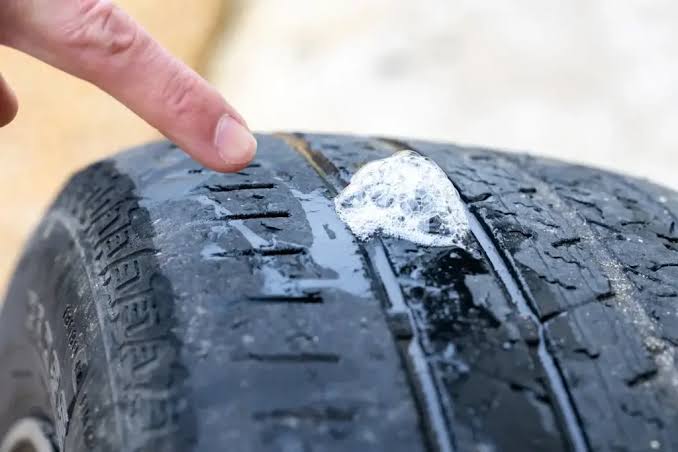
The soapy water test. With the tyre at full pressure, spray a mix of water and washing-up liquid around the rim edge, the valve and the tread. Growing bubbles show where air is escaping. Bubbles along the rim edge point to a bead leak, and bubbles at the valve point to the valve or sensor. Many bead leaks are on the inner side of the wheel, so a test at home that shows nothing does not prove the rim is sound.
How a Rim Leak Is Diagnosed
A proper diagnosis finds the exact leak point before any work is done. GM’s bulletin starts the same way, with a water dunk tank test before the tyre is removed.
- Water tank test. The wheel and tyre are inflated and lowered into a water tank, which shows the leak point within seconds.
- Tyre removal. If the leak is at the bead, the tyre is removed so both bead seats can be inspected. Bead seat corrosion appears as blistering of the wheel finish that leaves a rough, uneven surface.
- Wheel inspection. The inner barrel is checked for cracks, bends and earlier repairs, because a hairline crack can look very similar to a line of corrosion. If a crack is suspected, our cracked rim repair or replace guide explains how it is confirmed.
- Valve and sensor check. The valve, grommet, core and cap are checked for corrosion and wear.
- Tyre check. The tyre bead is inspected for damage, and the inside of the tyre is checked if it has been run low.
A slow leak can also come from a puncture in the tyre shoulder or a bent rim lip after a kerb strike. Each needs a different repair, so the leak should be found, not guessed.
How to Fix a Corroded Rim Air Leak
There is no permanent fix for a bead leak with the tyre still fitted. A lasting repair follows this order.
- Remove the tyre and clean the bead seats. Corrosion and flaking paint are removed from both bead seats with a fine-cut sanding disc or abrasive pad, back to stable metal that is firmly bonded to the wheel. The edges of the remaining paint are tapered so no sharp step is left for air to escape past. A carbon steel wire brush should not be used, because it leaves steel particles in the aluminium that start new corrosion.
- Keep the bead seat shape. Only the material needed to remove the corrosion is taken off. GM’s bulletin stresses keeping the sealing surface as smooth and level as possible. A bead seat that has been ground out of shape will not seal properly afterwards.
- Seal the cleaned bead seat. A professional bead sealer is brushed onto the cleaned area. Bead sealers are black, rubber-like coatings that fill fine pitting and protect the bare aluminium. At around 21°C, a typical sealer sets enough for tyre mounting in about 10 minutes.
- Service the valve or TPMS sensor. The sensor gets a new rubber grommet, retaining nut, nickel-plated valve core and correct cap. Rubber snap-in valves are replaced. A seized or badly corroded stem means a new sensor, which may need programming to the car.
- Clean the hub face and wheel centre. Rust and corrosion are removed so the wheel sits flat, and a very thin film of anti-corrosion compound is applied to the hub centring spigot. Wheel bolt threads are left clean and dry unless the car maker specifies otherwise.
- Mount the tyre with the correct lubricant. Continental’s tyre mounting instructions say rims must be clean and free of rust and corrosion. Only approved tyre fitting lubricant may be used, never silicone, petroleum or solvent-based products. Soapy water is not a substitute.
- Leak test, balance and torque. The tyre is inflated with dry air or nitrogen and checked again in the water tank. The wheel is then balanced, with stick-on weights placed on clean metal, and tightened to the car maker’s torque figure with a torque wrench. A pressure check a day or two later confirms the leak is fixed.
What Bead Sealer Can and Cannot Do
Bead sealer works only on a properly cleaned bead seat. Brushed over existing corrosion, it may stop the leak for a few weeks, but the corrosion keeps growing under it.
Bead sealer also does not fix a bent rim, a cracked rim or a damaged tyre bead. Deep pitting needs the bead area refinished, not just sealed.
Quick Fixes That Do Not Last
- Tyre sealant through the valve. Liquid sealant is designed for tread punctures and does not seal a bead leak. Many sealants also add moisture inside the wheel and can block the TPMS sensor.
- Over-inflating the tyre. A tyre above its correct pressure has less grip and a harsher ride, and it still leaks.
- Repainting the wheel face. A cosmetic respray does nothing for the bead seat hidden under the tyre.
- Fitting a new tyre on the uncleaned rim. The leak usually returns within weeks, and the new tyre’s bead is damaged in the process.
Corroded Rim Repair or Wheel Replacement
Most corroded bead seats can be cleaned and sealed. GM’s bulletin says a wheel should not be replaced for slow air loss until this repair has been tried. The same bulletin sets clear limits:
- On cars with up to about 32,000 km, the wheel is replaced if the total length of corroded bead seat is more than 100 mm.
- On higher-mileage cars, the limit is 200 mm.
- If loose coating or corrosion has spread onto the visible face of the wheel, the wheel is replaced.
These are one carmaker’s figures, but they show the principle. Light, local corrosion is repaired, and widespread corrosion means a new wheel or a full refurbishment.
Replacement or full refurbishment is also the right choice when:
- Corrosion has eaten deep into the bead seat or flange, or thinned the rim lip.
- The bead seat has already been ground out of shape by earlier repairs.
- Corrosion appears together with a crack, especially near the valve hole or a spoke.
- A diamond-cut face has been re-machined so often that too little metal is left.
Full refurbishment strips the wheel, removes the corrosion, and re-primes and recoats it. The bead seat area must be left smooth and thinly coated, because a thick or rough coating on the bead seat can cause a leak of its own. Our rim repair cost guide and earlier article on how a wheel rim is repaired explain the refinishing options for painted, diamond-cut, chrome and forged wheels.
Corroded Rim Leak Repair Cost in Dubai
The table below gives indicative Dubai prices per wheel in 2026. Final prices depend on wheel size, tyre type and how far the corrosion has spread.
| Repair | Typical price per wheel |
|---|---|
| Bead seat cleaning and sealing, including tyre removal, refitting and balancing | AED 100 – 250 |
| TPMS sensor service kit (grommet, nut, nickel-plated core, cap) | AED 50 – 100 |
| New TPMS sensor, luxury car | AED 250 – 600 |
| Full refurbishment, painted wheel | AED 450 – 900 |
| Full refurbishment, diamond-cut wheel | AED 500 – 950 |
| Replacement premium tyre, if the bead or sidewall is damaged | AED 900 – 3,000+ |
| New genuine wheel, premium German or British car | AED 3,000 – 9,000 |
Cleaning and sealing the bead seat costs a fraction of a new tyre or wheel. Fixing the leak early also prevents the tyre damage that turns a small repair into a large bill.
How to Prevent Rim Corrosion and Tyre Air Leaks
Check tyre pressure cold, every two weeks in summer. Check in the morning or after the car has been parked in shade for at least an hour, using the figure on the door frame label. Warm tyres read 4 to 6 psi higher than cold ones. A tyre that drops faster than the other three is an early warning of a rim leak.
Wash wheels with a pH-neutral cleaner. Rinse thoroughly and dry the rim lip. Avoid strong acidic cleaners and never let cleaner dry on a hot wheel. Our car detailing service and guide to choosing a detailing workshop in Dubai cover safe wheel cleaning.
Protect the wheel finish. A ceramic coating on the wheels makes brake dust easier to remove and gives the lacquer an extra barrier against heat and chemicals. See our guides on ceramic coating vs PPF and how long ceramic coating lasts in the UAE.
Repair chips and kerb scrapes early. A chip in the lacquer near the rim lip lets corrosion start under the finish. Small repairs are cheap compared with refurbishment, as our car scratch repair guide explains for bodywork.
Ask for bead seat cleaning at every tyre change. A good tyre shop cleans and inspects both bead seats, fits a new TPMS service kit and uses approved mounting paste. Our auto tyre services include this as standard.
Inflate with dry air or nitrogen. The real benefit of nitrogen in a corrosion-prone climate is that it is dry, so it keeps moisture out of the wheel. Clean, dry air from a well-maintained compressor does the same job.
Rinse wheels after desert, beach and flooded roads. Wash sand, salt and dirty water out of the rim well and inner barrel. After desert driving, re-inflate to road pressure before driving on tarmac so the bead is fully seated.
Prepare the car for long parking. Set the tyres to the upper end of the placard range, park in shade or under cover and move the car every couple of weeks. Our guide to caring for a luxury car in Dubai’s harsh climate covers summer storage.
Have the wheels checked at every service. Bead seat corrosion, inner barrel damage and hub corrosion cannot be seen from outside. A check during routine servicing or a car inspection finds them early. Our article on luxury car maintenance schedules in the UAE shows where wheel checks fit into a service plan.
Fix the cause of uneven tyre wear. Shoulder wear can come from a rim leak, from alignment or from suspension faults. Our articles on how wheel alignment protects your tyres in Dubai, professional wheel alignment for luxury cars and the signs of bad shock absorbers explain how to tell them apart.
Keep tyres legal and in good condition. Driving with damaged or expired tyres in the UAE carries a AED 500 fine, four black points and a one-week vehicle impoundment. Our guides to choosing the right tyres and the SUV tyre load index explain tyre specifications for UAE roads. Wheels and tyres are also checked at the RTA vehicle test.
Think about finishes when changing wheels. Diamond-cut and chrome finishes need the most care in a hot, humid coastal climate. Any change of wheel size or offset must follow the car modification rules in Dubai. Our look at luxury car customization trends in Dubai covers popular wheel upgrades.
Frequently Asked Questions About Corroded Rims and Air Leaks
Can corroded rims cause a slow leak?
Yes. Corrosion on the bead seat, where the tyre seals against the rim, is one of the most common causes of a slow leak with no puncture. The corrosion leaves a rough, porous surface that the tyre bead cannot seal against, so air escapes slowly between the tyre and the wheel.
How do I know if my tyre is leaking from the rim?
Spray soapy water around the rim edge, valve and tread with the tyre at full pressure. Bubbles along the rim edge point to a bead leak. Because many rim leaks are on the inner side of the wheel, a water tank test at a workshop is the most reliable way to find them.
Can a corroded rim be fixed without replacing the wheel?
In most cases, yes. The tyre is removed, the corrosion is cleaned off the bead seat back to sound metal, a bead sealer is applied and the tyre is refitted. A wheel only needs replacing when the corrosion is widespread, has eaten deep into the metal or appears together with a crack.
Does bead sealer fix a corroded rim permanently?
Bead sealer gives a lasting repair when it is applied to a properly cleaned bead seat. Applied over corrosion that has not been removed, it usually fails within weeks. It does not fix bent rims, cracks or damaged tyre beads.
Will tyre sealant fix a leak around the rim?
No. Liquid tyre sealant injected through the valve is designed for small punctures in the tread. It does not seal a leak at the bead, it can add moisture inside the wheel, and it can damage the TPMS sensor.
Is it safe to drive with a tyre leaking from the rim?
A slow rim leak is not an immediate emergency, but it is not safe to ignore. The tyre spends most of its time under-inflated, which raises its temperature and the risk of tyre failure, especially at highway speed in summer. The leak should be repaired as soon as possible.
Why do alloy wheels corrode in Dubai if there is no road salt?
Coastal humidity, salt in the sea air, sand at the tyre bead, baked-on brake dust, harsh car wash chemicals and long periods of parking all attack the wheel finish. Once the coating is damaged, the bare aluminium corrodes, starting at the bead seat.
How much does it cost to fix a rim leak in Dubai?
Cleaning and sealing a corroded bead seat usually costs around AED 100 to AED 250 per wheel, including tyre removal, refitting and balancing. A TPMS service kit adds around AED 50 to AED 100. Full refurbishment or a replacement wheel costs considerably more.
Corroded Rim and Tyre Leak Repair in Al Quoz, Dubai
At Carzilla in Al Quoz Industrial Area 2, a tyre that keeps losing air is tested in a water tank to find the exact leak point before any work is quoted. The tyre is removed and both bead seats and the inner barrel are inspected. Corrosion is cleaned back to sound metal and the bead seats are sealed or refinished. TPMS sensors are serviced with new seals and nickel-plated cores and the hub faces are cleaned. Finally, the wheel is leak-tested, balanced and torqued to specification. If the tyre has been damaged by running low, or the wheel is beyond repair, we say so clearly.
We handle wheels and tyres for Range Rover, Mercedes-Benz, BMW, Porsche, Bentley, Rolls-Royce, Lamborghini and Ferrari, as well as the other luxury car brands we specialise in. Wheel refinishing is carried out through our car painting service. Any suspension or steering faults found are handled by our car suspension repair and car steering repair teams.
Every job comes with a clear estimate before work starts, Warranty on Repair and Free Pickup and Delivery* across Dubai. To book a rim leak inspection, contact Carzilla or browse our full range of car services in Dubai.