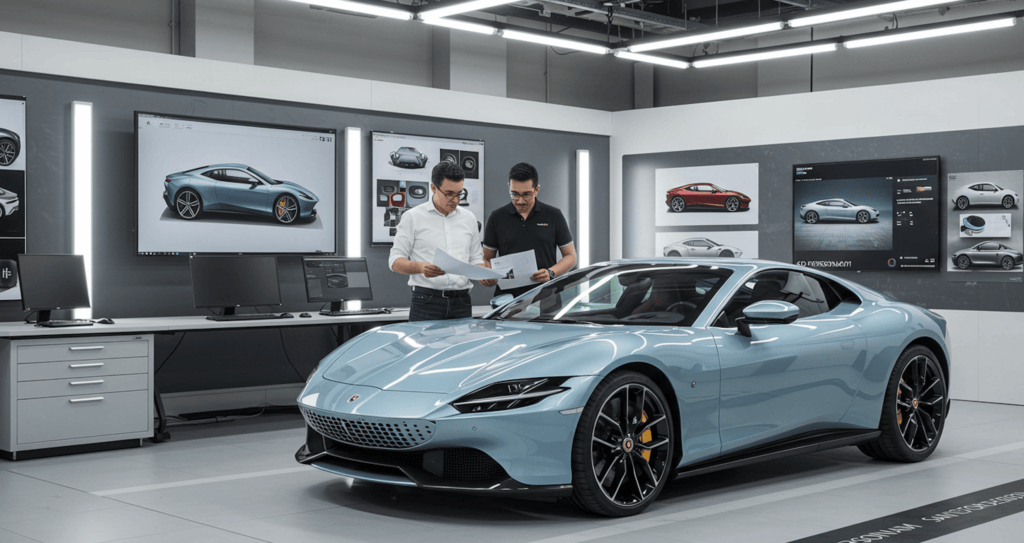
Luxury car customization trends in 2026 are moving away from loud engines and toward personal finishes, bespoke interiors, smart lighting and paint protection. In Dubai and across the UAE, owners of Rolls-Royce, Bentley, Lamborghini, Ferrari, Mercedes-AMG, Porsche and Range Rover models now spend most of their customization budget on color PPF, satin wraps, forged carbon parts, quilted interiors, starlight headliners, forged wheels and lowered air suspension.
Each of these trends also brings its own set of faults in UAE heat, sand and humidity. This expert guide explains the top luxury car customization trends for 2026, why problems happen with each one, how they are repaired, and how to prevent them, written from a luxury car repair workshop’s point of view.
What Is Driving Luxury Car Customization Trends
Three forces are shaping car customization in Dubai this year: the factory bespoke boom, stricter UAE rules on engine and noise modifications, and the demand for protection against the climate.
The Factory Bespoke Boom
Car makers have turned personalization into one of their biggest businesses, and owners of standard-specification cars now look to the aftermarket for the same look. The numbers show how far this has gone:
- Lamborghini: 94% of the 10,747 cars delivered in 2025 were personalized in at least one element through the Ad Personam program.
- Rolls-Royce: 5,664 Bespoke cars were built in 2025, and commissions through its Private Offices more than doubled year-on-year. The Dubai Private Office has delivered more than 100 complex commissions since it opened.
- Bentley: more than 70% of buyers now choose some level of Mulliner personalization.
- Aston Martin: around 90% of owners now ask for carbon fiber in the cabin in place of traditional wood veneer.
- Mercedes-Benz: the Manufaktur program now prints patterns directly into paint with its PixelPaint process, first used on the bonnet of the Mercedes-Maybach SL 680 Monogram Series.
UAE Rules Have Pushed Owners Toward Legal Upgrades
In July 2026 the RTA confirmed that it does not issue permits for major engine upgrades or for modifications that make a car louder, and that the approved maximum noise level is 95 decibels. As a result, customization spending in the UAE has moved toward changes that are allowed or easy to register: finishes, interiors, wheels, lighting and protection. Our guide to car modification rules in Dubai covers the full rulebook.
Protection Has Become Part of Customization
The UAE automotive aftermarket was valued at around USD 7.3 billion in 2024, and customization is one of its main growth drivers. In this climate, owners want upgrades that look good and protect the car at the same time: films that absorb sand chips, tints that cut cabin heat, and interior materials that do not fade behind the glass.
Luxury Car Customization Trends at a Glance
| Customization trend | What owners are choosing in 2026 | Most common problem in the UAE | Key prevention step |
|---|---|---|---|
| Color PPF and satin PPF | Satin black, satin grey, dark green, clear satin over factory paint | Edge lifting, bubbles, yellowing | Fully cured paint, wrapped edges, UV-stable film |
| Car wraps | Satin greys, military greens, desert tans, color-shift films | Shrinking, fading, unregistered color change | Cast vinyl, color change permit, Mulkiya update |
| Matte and bespoke paint | Factory matte, two-tone, coachlines, tri-coat pearls | Shiny patches, etching, poor color match | Matte-safe care, panel-by-panel repair |
| Carbon fiber and forged carbon | Mirror caps, splitters, diffusers, interior trim, full body kits | Cloudy clear coat, cracks, sensor faults | UV-stable clear, correct fitment, ADAS calibration |
| Blackout and chrome delete | Black trims, grilles, badges, painted calipers | Lifting film, flaking caliper paint, blocked radar | Heat-rated paint, radar-safe materials |
| Forged wheels and lowered stance | 22 to 24-inch forged wheels, lowered air suspension | Vibration, cracked rims, suspension warnings | Correct hub fit, bolts, load rating, alignment |
| Custom interiors | Quilted leather, Alcantara, two-tone, color change | Airbag warnings, fading, sagging | Airbag-safe seams, heat-rated adhesive |
| Starlight headliner and ambient lighting | Fiber-optic star roofs, multi-color LED strips | Battery drain, airbag routing, sagging roof lining | Switched power feed, correct trim refitting |
| Ceramic tint and lighting | Heat-rejecting tint, smoked lights, LED upgrades | Illegal tint, fines, bulb warnings | Stay within 50% tint, vehicle-matched LEDs |
| Performance and exhaust | Brake upgrades, cooling upgrades, factory-tune cars | Heat damage, gearbox stress, noise fines | Stay within RTA rules and 95 dB |
1. Color PPF and Satin Paint Protection Film
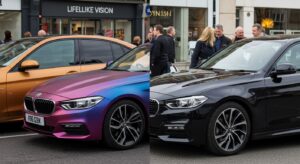
Color paint protection film (color PPF) is the biggest exterior customization trend in Dubai for 2026. It is a thermoplastic polyurethane (TPU) film with the color built into the film. It changes the look of the car like a wrap, but it is around 7.5 to 8 mil thick (roughly 190 to 200 microns), self-heals light swirl marks with heat, and absorbs stone chips that would go straight through thin vinyl. Clear satin PPF is also popular with owners who want a satin finish without changing the factory color.
For a full comparison, see our guides on the best PPF in Dubai, 3M PPF for sand and sun protection and PPF vs wrap for G-Wagon protection.
Why Color PPF Peels, Bubbles or Yellows in Dubai Heat
Most PPF failures come from the installation, not the film brand:
- Film applied over uncured paint. Fresh paint keeps releasing solvent for weeks. Film traps the solvent, and small bubbles or a hazy patch appear later. After a respray, the paint usually needs 30 to 90 days to cure, depending on the paint system.
- Film overstretched on curves. TPU has a memory. When it is pulled hard around mirror caps, bumper corners and door handle recesses, it shrinks back the first time the panel heats up, and the edges lift.
- Poor surface preparation. Wax, sealant, old ceramic coating or polishing oil under the film stops the adhesive from bonding.
- Cutting film on the car. A blade used on the panel can score the clear coat. The cut stays hidden until the film is removed, then the paint can crack or peel along that line.
- Low-grade film. TPU without proper UV stabilizers yellows (clear film) or fades unevenly (color film), starting on the roof, bonnet and boot lid.
- Heat and pressure washing. Dark panels in a Dubai summer get far too hot to touch, which softens the adhesive. A pressure-washer nozzle held close to a film edge finishes the job.
How Lifted or Damaged PPF Is Repaired
A small lifted edge on clean film can sometimes be cleaned, warmed and re-seated. If sand or dirt has already got under the edge, that panel’s film must be replaced. The old film is removed slowly with controlled heat so the adhesive releases from the film and not from the paint. Adhesive residue is cleaned with a paint-safe remover, and the paint is inspected for knife marks and clear coat damage before new film goes on. Our article on whether PPF damages paint when removed explains why resprayed panels are most at risk. Damaged paint underneath needs car scratch repair or a panel respray first.
How to Make Color PPF Last Longer in the UAE
- Install film only on fully cured paint.
- Choose film with proper UV stabilizers and a registered manufacturer warranty.
- Ask for wrapped edges where the panel shape allows, not relief cuts in visible areas.
- Hand-wash the car and keep pressure-washer nozzles away from film edges.
- Add a ceramic coating on top if needed; see ceramic coating vs PPF for how the two work together.
2. Satin, Matte and Color-Shift Car Wraps
Vinyl car wraps remain popular because they are cheaper than color PPF and fully reversible. The wrap color trends for 2026 are satin greys (especially Nardo-style grey), military greens, desert tans, color-shift films and two-tone designs with a contrast roof. Matte black is still the most common single color. Our guide on car wrap or paint explains when each makes more sense.
Why Car Wraps Shrink, Fade or Lift in the UAE
- Calendered vinyl instead of cast vinyl. Cheaper calendered film shrinks with heat and pulls back from edges and recesses. Premium wraps use cast vinyl, which stays stable.
- UV fading. Bright colors and color-shift films fade fastest on horizontal panels. A color-shift wrap can end up with the roof and doors showing different colors.
- Seams and panel mismatch. Color-shift and metallic films look different depending on the direction they were laid. Panels wrapped from different rolls or in different directions do not match.
- Wrap over damaged paint. A wrap over chipped or peeling paint lifts the loose paint with it when removed.
How Car Wrap Problems Are Fixed and Prevented
Failed panels are re-wrapped from the same batch of film, laid in the same direction as the rest of the car. Faded or cracked wraps are removed with heat and the adhesive residue is cleaned off before inspection of the paint. To prevent problems, choose cast vinyl from a known brand, fix paint damage before wrapping, keep the car in shade where possible, and plan for re-wrapping horizontal panels sooner than vertical ones. Paint defects found under a wrap are often the ones covered in our article on why car paint peels.
Car Color Change Rules in Dubai: Permit, Inspection and Mulkiya Update
A wrap or color PPF that changes the color of a car is legal in Dubai, but it must be approved and registered:
- Apply for the vehicle color change permit through the Dubai Police app or DubaiNow before the work starts. The permit costs AED 120 and is normally issued within one working day.
- Complete the wrap, PPF or paint work.
- Have the car inspected at an RTA-authorized testing center. Carzilla’s RTA testing center guide explains the inspection.
- Update the color on the Mulkiya. This also keeps your insurance valid.
If the new film is the same color as the factory paint (for example, white gloss to white satin), no Mulkiya update is needed. Chrome and mirror-finish films are not allowed, and neither are color schemes that look like police, ambulance, civil defense or taxi vehicles. Changing the color without a permit can bring an AED 800 fine, and not having a modified car inspected can bring an AED 400 fine.
3. Matte Paint, Two-Tone Paint and Bespoke Paint Finishes
Factory matte paint, two-tone bodies with a contrast upper half, hand-painted coachlines and multi-stage pearl finishes are now common on luxury cars in Dubai. Many owners try a two-tone look first with peelable paint before committing; our Range Rover peelable paint article shows how it works on a large SUV.
Why Matte and Bespoke Paint Is Difficult to Repair
- Matte paint cannot be polished. Its rough texture is what makes it matte. Polishing flattens the texture and leaves a shiny patch that never matches.
- Gloss waxes and car wash brushes leave shiny marks. Automatic washes and gloss products are the most common cause of patchy matte paint.
- Bird droppings and tree sap etch quickly. In UAE sun, they bake into the clear coat within hours.
- Matte paint cannot be blended. A gloss repair can be faded into the next panel. A matte repair has to cover the whole panel.
- Tri-coat and bespoke colors are hard to match. They need the original paint formula, spectrophotometer readings and test spray-out cards before the paint goes on the car.
- Laser-etched and printed finishes cannot be spot-repaired. The whole panel must be refinished or replaced.
How Matte and Bespoke Paint Damage Is Fixed
Matte paint is repaired panel by panel, using a matte clear coat that matches the factory gloss level. Bespoke colors are mixed from the original formula and checked on spray-out cards under daylight lamps. Hand-painted coachlines are removed and reapplied by hand after the repair. On electric cars and plug-in hybrids, a lower-temperature bake is often used so the high-voltage battery is not heated beyond the maker’s limit. See our guides to luxury car denting and painting, Lamborghini paint and repaint and the best car repaint service in Dubai.
How to Care for Matte Paint in the UAE
- Hand-wash only, with matte-specific shampoo and clean microfiber.
- Never use gloss wax, polish or brush car washes.
- Remove bird droppings the same day.
- Protect matte paint with clear satin PPF or a matte-safe ceramic coating; our article on how long ceramic coating lasts in the UAE explains what to expect.
- Use a detailer who uses matte-safe products throughout; see our guide to luxury car detailing in Dubai.
4. Carbon Fiber and Forged Carbon Body Kits
Carbon fiber is one of the strongest luxury car customization trends, and forged carbon has joined traditional woven carbon. Forged carbon is made from short carbon fibers pressed in resin, which gives its marbled look. Lamborghini developed a patented forged composite process and uses it for factory interior trim. In the aftermarket, the Lamborghini Urus, Rolls-Royce Cullinan, Mercedes-AMG G 63 and Bentley Bentayga are the most common base cars for body kits in Dubai, often with exposed carbon splitters, diffusers, wide arches and spoilers.
Carzilla covers the fitting side on the car body kits and carbon fiber kit pages, and in our articles on body kits for Bentley, G-Class, Urus and Porsche, body kits for Lamborghini, Rolls-Royce and Porsche and adding a carbon kit to a Ferrari F8 Tributo.
Why Carbon Fiber Parts Go Cloudy, Crack or Fit Poorly
- Weak UV protection in the clear coat. Carbon fiber does not fade, but the resin and clear coat over it do. Without UV-stable clear, parts turn yellow or cloudy within one or two UAE summers.
- Low-temperature resin. Wet-lay parts use resin that softens at lower temperatures than the prepreg carbon used for factory parts. Near vents or the exhaust, the part can distort and crack.
- Copied moulds. Many kits come from copies of copies. Each new mould shrinks slightly, so the part is a few millimeters off at every mounting point and is forced into place. That stress causes cracks around bolt holes, uneven gaps and rattles.
- Galvanic corrosion. Steel screws in aluminium body panels cause white corrosion and bubbling paint around the fixings.
How Body Kits Affect Engine Cooling and Parking Sensors
A front bumper on a modern luxury car feeds air to the radiators, charge-air coolers and AC condenser. A replacement bumper with smaller or blanked-off openings can raise coolant and intake temperatures in Dubai traffic and reduce AC performance. Our article on how Dubai heat damages car engines explains why cooling margin matters so much here.
The bumper also carries the parking sensors, the front radar for adaptive cruise and emergency braking, and on many cars the surround-view cameras. Wrongly angled sensor holes or a thick, painted radar cover cause parking sensor faults, “radar blocked” messages and false emergency braking. If the car becomes wider or longer, the new dimensions also need to be recorded on the registration.
How Carbon Fiber and Body Kit Problems Are Fixed
Cloudy carbon is repaired by sanding back the failed clear coat without cutting into the fiber, then re-clearing with a UV-stable 2K clear and baking it. Cracks in non-structural parts can be repaired with matched resin and cloth. Cracked splitters, wings and mounting points should be replaced. Badly fitting parts need corrected mounting points so they sit without stress. After any bumper change, the radar and cameras must be calibrated with the correct diagnostic equipment, the same principle covered in our windshield replacement guide.
How to Choose a Body Kit That Lasts
Choose prepreg or quality forged carbon with a UV-stable clear coat, ask whether the kit keeps the factory cooling openings, check that sensor and radar positions match the original bumper, and budget for calibration. Our article on how a custom body kit affects G-Wagon value covers the resale side.
5. Blackout Packages, Chrome Delete and Painted Brake Calipers
The blackout look, inspired by factory dark editions, remains one of the most popular luxury car styling trends. Owners wrap or paint chrome window trims, grilles, badges and mirror caps in gloss or satin black, often with contrast-colored brake calipers. Chrome delete is now offered by most wrap studios in Dubai. Our articles on the black edition look with custom rims and tint and G63 wrap, tint and paint protection show typical builds.
Common Problems With Chrome Delete and Blackout Styling
- Lifting chrome delete film. Window trims are narrow, tightly curved and very hot behind the glass, so film edges lift first.
- Hidden trim corrosion. Film is sometimes used to hide anodized aluminium trim that has started to corrode white. The corrosion keeps spreading underneath.
- Flaking caliper paint. Standard paint is not rated for brake temperatures, especially on heavy SUVs or cars with carbon-ceramic brakes. It discolors, blisters and flakes.
- Blocked front radar. On many cars the front radar sits behind the grille badge or a smooth plastic cover. Metallic paint, chrome vinyl or thick film over that cover can blind the radar and switch off adaptive cruise and emergency braking.
How Blackout Styling Problems Are Fixed and Prevented
Lifted trim film is replaced, and corroded trims are refinished or replaced before new film goes on. Calipers are stripped and repainted with high-temperature caliper paint, with pistons, seals and bleed nipples masked; if the calipers come off the car, the brakes are bled and tested by a brake repair specialist. Radar covers should be left original or finished only with a radar-safe material approved for that part.
6. Forged Wheels and Lowered Air Suspension
Large forged wheels are a defining part of the 2026 luxury look: 22 to 24-inch wheels on SUVs, staggered widths on sports cars, and monoblock forged designs in satin and two-tone finishes. Many owners combine them with lowered air suspension for a tighter wheel-to-arch gap.
Why Aftermarket Wheels Cause Vibration and Warning Lights
- Hub centering. A wheel with a larger center bore than the hub needs the correct hub-centric rings. Without them, it sits slightly off-center and vibrates even after balancing.
- Wrong wheel bolt seat. Many German luxury cars use ball-seat (radius) wheel bolts, while many aftermarket wheels are machined for cone-seat bolts. The wrong combination can let the bolts loosen.
- Load rating. A large luxury SUV weighs around 2.5 to 2.8 tonnes. A wheel designed for a lighter sports car can crack under that load on speed bumps and ramps.
- Offset and width. Wheels that sit further out increase wheel bearing load, change steering feel and can rub the arch liners.
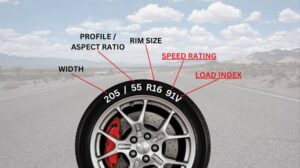
- Rolling diameter. If the overall wheel and tyre diameter changes noticeably, the speedometer, ABS, stability control and all-wheel-drive systems read the wrong wheel speeds.
- TPMS sensors. Tyre pressure sensors must be the correct type and coded to the car, or the warning stays on.
- Low-profile tyres. Thin sidewalls give the rim little protection, which is why cracked and bent rims are a common job in Dubai. See rim repair cost in Dubai and how a wheel rim is repaired.
Problems With Lowering Luxury Cars on Air Suspension
Air suspension cars are usually lowered with shorter ride-height sensor links or an electronic lowering module. This works, but it has side effects:
- Air springs sit at a height they were not designed for, so the rubber folds in new places and wears faster.
- The air compressor may run more often and overheat.
- On some cars, the same ride-height sensors control headlight levelling and camera angles.
- Camber and toe move out of the factory range, wearing the inside edges of expensive tyres.
- The car can bottom out on speed bumps and villa ramps, damaging the underbody and front spoiler.
For more detail, see what causes Range Rover air suspension failure in Dubai, Mercedes air suspension problems and signs of bad shock absorbers.
How Wheel and Suspension Problems Are Fixed and Prevented
Wheel problems are fixed by checking the center bore and hub rings, bolt seat type and length, tightening torque, load rating and tyre size, then balancing on a road-force balancer. TPMS sensors are matched and coded. After any ride-height change, the car needs a full wheel alignment for luxury cars at the new height, and the driver-assistance systems need checking. Worn air springs and valve blocks are handled through car suspension repair. Tyre choice for large wheels is covered on our tyre services page and in our article on how wheel alignment protects your tires in Dubai.
7. Custom Car Interiors: Quilted Leather, Alcantara and Interior Color Change
Interior customization is where factory bespoke influence is strongest. Diamond-quilted leather, Alcantara headliners and steering wheels, two-tone seats, colored seat belts, embroidered headrests, forged carbon trim and full interior color changes are all in high demand in Dubai. See our car upholstery service page and our articles on changing the interior color on a Lamborghini Urus and Brabus upholstery.
Custom Upholstery, Airbags and Seat Sensors
A luxury car seat is a safety and electronics component, not just a frame with leather on it:
- Side airbag seams. Front seats on most luxury cars have a side airbag that deploys through a dedicated seam in the seat cover, sewn with a specific tear-away thread. A re-trim with ordinary thread or a moved seam can stop the airbag from deploying correctly.
- Occupant detection sensor. The front passenger seat usually has a sensor mat under the cushion that tells the airbag system who is in the seat. Changing the foam, overstretching the cover or damaging the mat causes an airbag warning light, or a wrong airbag decision in a crash.
- Heated and ventilated seats. Heating mats and fans sit under the cover. Ventilated seats need perforated leather in the right places, or the fans run but no air reaches the occupant.
All of these parts must be refitted exactly as they came out, and the airbag system should be scanned for faults after the work.
Why Custom Interiors Fade, Shrink or Peel in UAE Heat
- UV light through the glass fades low-grade leather dye, starting on the rear seat tops and dashboard.
- Leather that was not properly conditioned before re-trimming shrinks and pulls away from its seams.
- Contact adhesive not rated for high cabin temperatures softens, causing sagging headliners and bubbling door cards.
- Alcantara pills and turns shiny where hands touch it, especially on steering wheels, if it is not cleaned correctly.
How Custom Interior Problems Are Fixed and Prevented
Airbag warnings after a re-trim are traced with a diagnostic scan, then the seam, sensor mat or connector is corrected. Faded or shrunk panels are re-trimmed with automotive-grade leather with UV-stable dye and high-temperature adhesive. Prevention comes down to the right materials, a quality heat-rejecting tint and regular interior care; our guide on choosing a car detailing workshop in Dubai explains what proper interior care involves.
8. Starlight Headliners and Ambient Lighting
The starlight headliner started at Rolls-Royce and is now one of the most requested aftermarket upgrades for other luxury cars. Hundreds of fiber-optic points are fed by a light engine hidden in the roof space or boot. Multi-color ambient LED lighting in the doors, dashboard and footwells is often fitted at the same time.
Why Starlight Headliner Installations Cause Problems
To fit the fibers, the headliner has to come out, which means removing the A, B and C pillar trims. On most luxury cars, the curtain airbags run along the roof rails right behind the headliner edges. Common installation problems include:
- Fibers or wiring routed across the curtain airbag’s deployment path.
- Pillar trim clips that are designed for single use being reused.
- Roof lining re-glued with adhesive that softens in summer heat, so it sags.
- A light engine overheating in an unventilated roof space.
- Rattles from loose fiber bundles.
- Damaged sunroof drain tubes, which later leak water into the headliner and wiring.
Battery Drain From Aftermarket LED and Starlight Kits
Most luxury cars put their control modules to sleep shortly after they are locked, and the standby current drops to a very small level. A lighting kit wired to a permanent power feed keeps drawing current. If it is connected to a wire that keeps one of the car’s data networks awake, the whole car can stay partly active, and the battery goes flat after a few days parked. Kits spliced into factory lighting wires also cause bulb failure messages, flickering and body control module fault codes. These problems add to the battery stress UAE heat already causes, as explained in our articles on battery drain in the UAE summer, Bentley battery drain problems and Mercedes electrical system warnings.
How Starlight and Lighting Problems Are Fixed and Prevented
The parasitic draw is measured after the car has gone to sleep to find which circuit keeps it awake. The kit is then rewired to a switched, fused supply that turns off with the car, and splices into factory data or lighting wires are removed and repaired. A sagging roof lining is re-bonded with heat-rated adhesive, and airbag paths and clips are corrected. A skilled car electrician for modern luxury cars can do this without disturbing the factory wiring.
9. Ceramic Window Tint and Lighting Upgrades
Heat-rejecting ceramic window tint is now standard on most customized luxury cars in Dubai, along with smoked light films, LED bulb upgrades and “black edition” light units.
UAE Window Tint Law: What Is Legal
- The maximum tint on side and rear windows is 50%.
- The front windscreen must stay clear, apart from a strip of up to 15 cm at the top.
- Tint beyond the legal limit can bring an AED 1,500 fine, and in Dubai a car can be impounded, with a release fee of AED 10,000.
Common Window Tint and Lighting Problems
- Cheap dyed film bubbles and turns purple in the sun.
- A razor blade used to remove old film from the rear window cuts the heating element lines.
- Tint or stickers over the windscreen camera, rain sensor or head-up display area stop these systems working properly.
- Smoked or tinted light lenses that reduce light output can fail an RTA test.
- LED bulbs not matched to the car’s electronics cause bulb failure warnings and glare.
- Opening sealed headlights to paint the internals often leads to condensation inside the lens.
How Tint and Lighting Problems Are Fixed and Prevented
Old tint is removed with steam and patience rather than a blade on the rear screen. Choose ceramic film within the 50% limit, keep the camera and sensor area clear, and use vehicle-specific LED units. For headlight care, see our articles on luxury car headlight restoration and headlight restoration and paint protection.
10. Performance and Exhaust Upgrades Within UAE Rules
Performance customization has not disappeared, but it has changed direction. The RTA does not approve major engine upgrades or noise-increasing modifications, the 95 dB noise limit is enforced with noise radars, and exceeding the limit can bring an AED 2,000 fine and 12 black points. Our article on car engine and exhaust modification rules in Dubai explains where the line sits.
The 2026 trend among luxury owners is to keep the factory engine calibration and spend instead on brake upgrades, better cooling, high-quality fluids and stricter maintenance.
Why Modified Engines and Exhausts Cause Problems
- More torque pushes gearboxes and clutches beyond their design limits.
- More boost raises intake and coolant temperatures in summer traffic.
- Removing catalytic converters or fitting straight pipes breaks emissions and noise limits.
- Remote-controlled exhaust valves left in “loud” mode are an easy target for noise radars.
How Tuned Cars Are Returned to Standard
Returning a tuned car to factory specification usually means restoring the original engine and gearbox software, refitting the original exhaust and catalytic converters, and checking the engine and transmission for heat damage. Carzilla’s car engine repair and gearbox repair teams handle this work. Our articles on aftermarket engine upgrades and choosing a car modification shop in Dubai cover the subject in more depth, and our legal modification work is listed on the car modification Dubai page.
Why Luxury Car Customization Goes Wrong: Four Root Causes
Across all ten trends, almost every fault that reaches a workshop comes from one of four causes:
- Adhesives and heat. Film, roof lining, trim and body kit tape all rely on adhesive that can soften when a panel sits in Dubai sun.
- Electronics integration. Lighting kits, screens, dashcams, seat changes and lowering modules connect into the car’s network. Wired in the wrong place, they keep the car awake, create false faults or interfere with safety systems.
- Geometry. Wheels, ride height and bumper shape change suspension angles, sensor angles, radar aim and headlight aim. The car must be measured and calibrated again.
- Paperwork. An unregistered color change, changed dimensions or an undeclared modification causes trouble at renewal, sale or insurance claim time.
How to Plan a Luxury Car Customization That Lasts in the UAE
- Start with an inspection. Paint thickness readings show whether panels have been resprayed. A battery test shows whether the car can take extra electrical load. A suspension check shows whether air springs and dampers are healthy. Carzilla’s car inspection covers all three.
- Do mechanical work before cosmetic work. Repair leaks, suspension and electrical faults first.
- Follow the right order. Paint correction comes before PPF, and PPF before ceramic coating. Ride height is set before wheel alignment, and alignment before driver-assistance calibration.
- Choose reversible upgrades where possible. Film, wheels, bolt-on carbon parts and plug-in electronics can be returned to standard. Cut panels and drilled roof linings cannot.
- Get approvals first. Check color changes, dimension changes, lights, glass and noise against current RTA rules before booking the work.
- Keep the original parts and every receipt.
- Plan the aftercare. Our guides on how to take care of your luxury car in Dubai’s harsh climate and luxury car maintenance schedules in the UAE cover the basics.
Car Customization, Insurance and Resale Value in the UAE
Every customization that changes a car’s appearance or performance should be declared to the insurer. An undeclared color change or modification can complicate a claim even when it had nothing to do with the accident.
For resale, quality, documented and reversible work holds its value, while poor or permanent work reduces it. Buyers in the UAE often arrange a pre-purchase inspection with paint thickness readings, a full fault scan and a registration check. Our Rolls-Royce pre-purchase inspection and Range Rover pre-purchase inspection articles show what buyers check, and the free VIN check UAE tool helps confirm a car’s history.
Luxury Car Customization and Repair at Carzilla, Al Quoz
Carzilla works on both sides of luxury car customization in Dubai: fitting upgrades correctly, and repairing customizations that have gone wrong. That includes PPF and wrap removal and refitting, paint and body work in our auto body shop and car painting service, body kit fitting with sensor and radar checks, wheel and air suspension work, interior re-trims with airbag checks, car detailing and electrical fault finding on lighting kits.
Our workshop specializes in Rolls-Royce, Bentley, Lamborghini, Ferrari, Mercedes-Benz including the G 63 AMG, Porsche and Range Rover. Every job comes with Free Pickup and Delivery* and Warranty on Repair, and payment can be split with Tabby. Browse all Carzilla services and the brands we specialize in, or contact Carzilla to plan a customization or have an existing one checked.
*Terms and conditions apply.
Frequently Asked Questions About Luxury Car Customization in Dubai
What are the top luxury car customization trends in 2026?
The top luxury car customization trends in 2026 are color and satin PPF, satin and color-shift wraps, matte and two-tone paint, forged carbon and carbon fiber body kits, chrome delete, forged wheels with lowered air suspension, quilted leather and Alcantara interiors, starlight headliners, ambient lighting and heat-rejecting ceramic tint.
Is car wrapping legal in Dubai?
Yes. A wrap or color PPF that changes the car’s color needs a vehicle color change permit from Dubai Police (AED 120), an inspection at an RTA-authorized testing center and an updated Mulkiya. Chrome and mirror-finish wraps are not allowed.
Why does PPF peel or bubble in UAE heat?
PPF usually peels or bubbles because it was applied over paint that had not fully cured, stretched too hard around curves, applied over wax or coating residue, or because a low-grade film was used. High panel temperatures in summer then soften the adhesive at any weak edge.
Can matte paint be polished?
No. Polishing flattens the texture that makes matte paint matte and leaves a shiny patch. Damaged matte paint is repaired by refinishing the whole panel with a matching matte clear coat.
Do body kits affect parking sensors and cruise control?
Yes. A new bumper can change the angle of the parking sensors and cover the front radar used for adaptive cruise control and emergency braking. After a body kit is fitted, the sensors must be checked and the radar and cameras calibrated.
Does a starlight headliner drain the car battery?
A correctly installed starlight headliner does not. Battery drain happens when the kit is wired to a permanent power feed or to a wire that keeps the car’s control modules awake after it is locked.
Can custom seat upholstery affect the airbags?
Yes. Most luxury car front seats have side airbags that deploy through a special seam in the seat cover, and the passenger seat has an occupant sensor under the cushion. A re-trim must keep the airbag seam and sensor exactly as designed, or the airbag may not work correctly.
What is the legal window tint limit in the UAE?
The legal limit is 50% tint on side and rear windows. The front windscreen must stay clear apart from a strip of up to 15 cm at the top. Exceeding the limit can bring an AED 1,500 fine.